
Board & BedsideCLINICAL KNOWLEDGE FOR THE REAL WORLD

Category: Career

NP career and practice guidance from Board & Bedside: salary, specialties, contracts and practice authority.

  • How Much Does NP School Cost. Tuition and the Full Bill Behind It.

    How Much Does NP School Cost. Tuition and the Full Bill Behind It.

    By Daniel Borkert, FNP-C
    Last reviewed November 11, 2026. Figures checked against the sources named below on November 11, 2026.

    The price of becoming a nurse practitioner is usually quoted as a single tuition number, and that number understates the bill. Fees, clinical placement, health insurance, and the closing costs of the exam and the license sit behind tuition, and the way the bill gets paid changed in the middle of 2026 when the federal loan rules turned over. This guide prices the obligation from the schools’ own published figures, separates tuition from total cost at every step, and ends with the questions that price any specific program. It does not compute any one reader’s total, which turns on their school, their residency, and their aid.

    The short answer

    At the ranked programs whose prices were verified for this guide, estimated total tuition runs from $33,480 to $140,184 for a master’s degree, from $58,776 to $220,430 for a BSN to DNP, and from $18,364 to $114,905 for an online master’s. A post-graduate PMHNP certificate runs $16,351 to $28,800. Inside the same ranked master’s set, the least expensive program costs about a quarter of the most expensive one. Tuition is not the whole bill; fee stacks, placement, insurance, and closing costs sit behind it. How the bill gets paid changed on July 1, 2026. A student who started before that date with a loan disbursed keeps the old federal rules; a new borrower borrows under caps that turn on a program classification that is, as of November 2026, being decided in court.

    Tuition by route

    The totals here are built the way the schools publish their prices. Most are a per credit rate multiplied by the program’s published credit total, with public programs priced at the resident rate. Fees are excluded unless a school folds them into its per credit charge or publishes a total of its own, and where a school publishes its own total, that total is the figure used. The priced set comes from the U.S. News ranked master’s, DNP, and online master’s lists, plus a Seattle regional set and two published certificate totals, and every figure was re-verified against the school’s own page on November 11, 2026.

    Route Estimated total tuition
    Master’s at the ranked programs $33,480 to $140,184
    Low end example: UAB, $33,480
    High end example: NYU, $140,184
    BSN to DNP at the ranked programs $58,776 to $220,430
    Low end example: UAB, $58,776
    High end example: Duke, $220,430
    Online master’s at the ranked programs $18,364 to $114,905
    Low end example: East Carolina, $18,364 (Fall 2025 schedule)
    High end example: Duke, $114,905
    Post-graduate PMHNP certificates $16,351 to $28,800
    Low end example: Missouri, $16,351
    High end example: St. Catherine, $28,800

    Estimated total tuition by route, low to high

    Master’s at the ranked programs  $33,480 to $140,184
    BSN to DNP  $58,776 to $220,430
    Online master’s  $18,364 to $114,905
    Post-graduate certificates  $16,351 to $28,800
    $0Linear scale to $220,430

    Each span runs from the lowest to the highest verified total tuition for its route in the table above.

    Inside those ranges, the middle is wide. The University of Pennsylvania’s MSN totals $100,240 across 14 course units, with per term fees excluded, and Johns Hopkins’ family DNP totals $143,713. George Washington publishes its own MSN total of $82,080 on its 48 credit program. Ohio State’s MSN totals $75,308 to $80,328 at the university’s published 2025-26 combined charges. The Seattle regional set clusters tightly. The University of Washington’s DNP totals about $105,312 and Seattle University’s own estimated total runs $106,212 to $120,240. Seattle Pacific totals about $89,900 on the last nursing rate it publishes, a 2022-23 rate, with the date attached wherever the figure is used.

    Two figures in the set carry a basis that differs from the rest, and both are flagged where they print. UCLA’s two year MSN total of $60,524 is tuition and fees on UCLA’s own presentation, not tuition alone, and its health insurance is additional. UCSF’s post-BSN DNP totals $161,157 across three years at the resident rate, and that annual total includes the student health insurance premium, unlike the tuition only figures around it.

    The rest of the bill

    A tuition page is a partial invoice. The lines behind tuition are individually modest and collectively material, and they are easiest to see at the schools that itemize them. Duke’s fee schedule for 2026-27 lists a clinical placement fee of $1,500 charged once to new students, a clinical readiness fee of $650 charged once, a clinical lab fee of $125, and drug screening at $100 to $200 per year. Together they add thousands before the first clinical rotation.

    Fees scale with the program, not with the tuition level, which is why they hit low tuition programs hardest in proportion. Stony Brook’s rate chart stacks about $138.80 per credit in fees on top of its $471 per credit resident tuition, roughly $6,200 of fees across its 45 credit online master’s against $21,195 of tuition. George Washington prices its own lines beside its tuition, textbooks at about $765 per semester, about $3,062 across the program, and simulation and course fees at $350 per applicable course. Saint Xavier, at the low tuition end, publishes malpractice insurance at $83 per semester in clinical terms. Rush charges a clinical administrative fee of $644 per semester, fall and spring, $1,288 a year from a single fee line.

    Program Line Cost
    Duke, fee schedule for 2026-27 Tuition, MSN (49 credits at $2,345 per credit) $114,905
    Duke Clinical placement fee, charged once $1,500
    Duke Clinical readiness fee, charged once $650
    Duke Clinical lab fee $125
    Duke Matriculation fee $500
    Duke Technology fee, per semester $200
    Duke Health fee, fall and spring 2026-27 $523.50
    Duke Drug screening, per year $100 to $200
    George Washington, online MSN Tuition, the university’s published total (48 credits) $82,080
    George Washington Textbooks, per semester About $765, about $3,062 across the program
    George Washington Student health insurance, per year $2,999
    George Washington Simulation fee, per applicable course $350
    George Washington CLASI fee, per applicable course $350
    George Washington Complio account $123
    Stony Brook, online MSN at the resident rate Tuition (45 credits at $471 per credit) $21,195
    Stony Brook Fee stack, per credit About $138.80
    Stony Brook Fee stack across 45 credits About $6,246
    Stony Brook Tuition plus the fee stack, the lines above added About $27,441

    Health insurance deserves its own sentence, because the spread is wide. GW prices it at $2,999 per year and UCLA at $7,517 per year, on top of UCLA’s tuition and fees figure. Whether a school requires its own plan or waives coverage for students already insured decides whether that line is real money or a paper figure.

    The bill also has a front end and a closing end. At the front, South Carolina’s FNP page lists a $50 application fee and a $500 non-refundable seat deposit applied to tuition. Application costs vary by school, and no average is asserted here. At the closing end, the certification exam costs $240 to $395 by certifying body and membership. The NPCB examination fee is $315 for non-members and $240 for members, and ANCC’s initial FNP certification runs from $290 to $395 by membership class, with a $140 non-refundable administrative fee inside the price. Washington’s Board of Nursing lists the ARNP initial application at $130 per specialty, printed as one state’s verified example, because state fees vary and no national figure exists. Seattle University’s own cost page budgets the exam and license together as a single $525 closing line.

    When residency changes the price

    The method behind most published comparisons, including the ranges above, prices public programs at the resident rate. Whether residency changes a given program’s price depends on the school’s pricing model, not on the degree. At UAB, the campus graduate nursing rate is $646 per semester hour in state against $1,596 out of state, a premium of about two and a half times. UAB’s online rate is $744 for residents and nonresidents alike, so residency is worth roughly $950 per credit hour at that school on the campus rate and nothing online. The University of Washington runs both models at once. Its state tuition DNP tracks price at $12,082 per quarter resident against $17,238 nonresident. Its fee based DNP, the track that includes FNP, charges the same flat $1,097 per quarter credit to everyone, and UConn’s online comprehensive fee is $1,200 per credit for every student alike.

    Where the premium survives, it is large. South Carolina publishes its online FNP totals directly, $46,878 in state against $80,370 out of state for students first enrolling in 2025-26, a difference of $33,492, and a third figure of $53,118 out of state with its nursing scholarship. East Carolina’s online program keeps a large per credit premium, resident components of $427.06 against nonresident components of $1,194.06 on its Fall 2025 schedule, a gap of $767 per credit and about $33,000 across the 43 credit program. Ohio State’s 2025-26 schedule prices the nonresident surcharge at $1,874.50 per credit hour on campus and a flat $200 per term for students in an online degree program, so the premium collapses when the program moves online. At the two University of California programs the nonresident addition is $12,245 per year at both UCSF and UCLA, about $36,700 across UCSF’s three year program. A nonresident reading resident priced ranges can understate a program’s real price by a third or more, as the South Carolina and East Carolina totals show.

    Program and basis Resident Nonresident
    South Carolina, online FNP total, first enrolling 2025-26 $46,878 $80,370
    UAB, campus graduate nursing, per semester hour $646 $1,596
    UAB, online graduate nursing, per semester hour $744 $744
    UCSF and UCLA, supplement per year No supplement $12,245 added per year

    Clinical placement as a cost

    Clinical placement is a cost center with its own line items, and it is also a selection criterion, because programs split into two models. In one the school arranges placements. In the other the student finds them, and the search time, the travel, and sometimes money move onto the student’s side of the ledger. The priced set shows the school side beginning to price the machinery. Duke charges its $1,500 placement fee once to new students, and Rush charges its $644 clinical administrative fee every fall and spring semester. GW names travel to clinical sites as a student cost on its own tuition page and does not price it, and that is the honest state of that line for most students, real and recurring, set by the reader’s own geography.

    In the forums where NP students compare programs, students treat the placement model as a first order reason to choose one program over another. Posters describe paying more for a program that arranges all clinical placements, set against cheaper programs that provide none, in threads running from 2008 to the present. A paid placement market also exists at the edge of the model. Students report being charged by third parties to secure clinical sites, with figures between $1,500 and $4,000 reported, unverified, in a September 2026 discussion, and the forums carry a standing warning that paid placement services are often poor value. No school in the priced set publishes a preceptor rate, and this guide prints none as a verified figure. What a reader can price is their own exposure under each model.

    Behind the money sits the time. Program standards call for 750 supervised direct patient care hours in each NP track under the 2022 NONPF and AACN standards, and the certifying bodies set their own eligibility floor at 500 faculty supervised clinical hours. Clinical hours are unpaid and site scheduled, and that displacement is priced as arithmetic in the opportunity cost section below.

    The debt students carry

    The most recent national survey of graduate nursing students is AACN’s, conducted from October 2016 to January 2017. Sixty-nine percent of graduate nursing students took out federal loans, and among nurse practitioner students specifically, 74 percent did. The median amount of debt students anticipated at completion was between $40,000 and $54,999, across all graduate levels. About one in six expected to owe more than $100,000, a share drawn from the survey’s published distribution. The survey’s framing is anticipation, what students expected to owe, not a count of what graduates actually owed.

    A second source measures the other end of the pipeline. The University of Michigan’s report of the Michigan Nurses’ Study, published in 2026, found that about a third of advanced practice nurses in that state’s workforce still hold active student loans. Holders carry a median balance of $66,420, and nearly 29 percent of them owe more than $100,000. The two sources measure different things and are not blended here into a trend. AACN measured what students expected at graduation in 2016-17, and Michigan measures what practicing clinicians in one state, across all advanced practice roles, still owe years later. In the survey, borrowing was the norm for NP students and a five figure anticipated balance was the middle of the distribution. In the Michigan workforce, a substantial minority of loan holders still carry six figure balances well into practice.

    How the bill gets paid

    Federal borrowing changed systems on July 1, 2026, and the first question is which system a given reader is in. A student who was enrolled as of June 30, 2026 and had a Direct Loan disbursed for that program before July 1, 2026 is grandfathered under the interim exception. That student keeps the pre-change rules for their expected time to credential, the lesser of three academic years or the time remaining. Under the exception the annual unsubsidized limit stays $20,500, Grad PLUS remains available up to the cost of attendance minus other aid, and the aggregate is the old $138,500 including undergraduate loans.

    For a new borrower, the federal loan on offer is the Direct Unsubsidized Loan. It is not based on financial need, interest accrues from the day the money is disbursed, and graduate students have had no subsidized eligibility since 2012. Grad PLUS is eliminated for new borrowers. Borrowing instead runs under fixed caps that turn on whether the program counts as graduate or professional. A graduate student may borrow up to $20,500 per year with a $100,000 aggregate limit; a professional student up to $50,000 per year with a $200,000 aggregate. The new aggregates do not count undergraduate borrowing, and a lifetime maximum of $257,500 applies across all federal loan levels combined, excluding Parent PLUS. Annual limits shrink proportionally for less than full time enrollment. The price of the money for 2026-27 is a fixed rate of 8.07 percent with an origination fee of 1.057 percent deducted from each disbursement, and a loan first disbursed in that year keeps that rate for its life.

    Graduate tier Professional tier
    Annual borrowing limit $20,500 $50,000
    Aggregate limit at this level $100,000 $200,000
    Interest rate, loans first disbursed in 2026-27 8.07 percent, fixed 8.07 percent, fixed
    Lifetime maximum, all federal levels combined $257,500 $257,500

    Caps for a new borrower, checked November 11, 2026. Which of the two tiers an NP program is originated under is provisional under a court stay, and the lifetime maximum runs across all federal loan levels combined, excluding Parent PLUS.

    Which cap tier an NP student lands in is, as of this guide’s check date of November 11, 2026, a litigation posture and not a settled rule. The Department of Education’s RISE final rule of May 1, 2026 lists eleven professional degree fields and nursing is not among them, which would place NP students at the graduate caps. On June 24, 2026 the U.S. District Court for the District of Columbia preliminarily stayed parts of that definition. The Department’s current guidance treats two nursing entries as professional for the stay’s duration, Registered Nursing awarding the MSN and Nursing Practice awarding the DNP, each extending to programs in the same nursing classification group awarding the same credential. A program is classified by the classification code and credential its own institution assigns, so NP programs awarding the MSN or the DNP under those designations are administered at the professional limits under the Department’s current guidance, provisionally, for the duration of the stay. The Department warns the designations may change as the litigation proceeds, and that schools may limit borrowing to the graduate caps meanwhile. The authority on a specific program’s tier is that school’s financial aid office, and a student planning around the higher tier should have that answer in writing.

    Public Service Loan Forgiveness (PSLF) forgives the remaining balance on eligible Direct Loans after the equivalent of 120 qualifying monthly payments under an accepted plan while working full time for an eligible employer. Eligible employers are government organizations and not for profit organizations, and eligibility turns on the employer, not the job title, which places most hospital and health system NP employment inside it. Which plans qualify is itself moving after the 2025 law, so this guide names the structure and sends readers to Federal Student Aid’s PSLF Help Tool for plan level detail and verification.

    The Nurse Corps Scholarship pays tuition, eligible fees, and reasonable costs, defined as books, clinical supplies and instruments, and uniforms, plus a monthly stipend, and the entire award is taxable. In exchange the scholar serves at a critical shortage facility, one located in, designated as, or serving a Health Professional Shortage Area, for one year per year of support, two years minimum and four maximum. The Nurse Corps Loan Repayment Program works the other end. It pays 60 percent of total outstanding qualifying nursing education loans across a two year full time contract at an eligible facility, with a possible third year paying a further 25 percent, for a headline figure of up to 85 percent. Its funds are not exempt from federal income and employment taxes. Both Nurse Corps programs’ 2026 cycles are closed as of November 11, 2026.

    The National Health Service Corps runs the parallel pair. Its scholarship is open to NP students in adult medicine, family medicine, geriatrics, pediatrics, psychiatric-mental health, and women’s health, as full time students at accredited U.S. schools; specialties limited to facility based practice, such as adult-gerontology acute care, are not eligible. The award covers tuition and eligible fees, an annual payment for other reasonable educational costs, and a monthly living stipend, and only the stipend is taxable. Service runs one year per year of support, two minimum and four maximum, at an approved site in a shortage area. The fiscal year 2026 deadline was April 16, 2026, so that cycle is closed at this check date, and a student may apply to both the NHSC and Nurse Corps scholarships but accept only one.

    The NHSC Loan Repayment Program serves licensed NPs at approved sites. Primary care participants receive up to $75,000 for a full time two year commitment and up to $37,500 half time. Other eligible disciplines receive up to $50,000 full time, and a one time $5,000 Spanish language proficiency enhancement raises the 2026 primary care full time ceiling to $80,000. Every award is bounded by the participant’s outstanding qualifying balance.

    Under a written Section 127 educational assistance program, an employee may exclude up to $5,250 per calendar year of employer provided assistance from gross income. The figure is a combined limit covering tuition assistance and employer payments toward the employee’s own student loans; the loan payment exclusion is now permanent under the 2025 law, per the IRS guidance in the Sources, and the limit is inflation adjusted for tax years after 2026. Anything an employer offers beyond that is a matter of its plan document, so no typical benefit is printed here. The measured reach is modest and dated. In AACN’s 2017 survey, 27 percent of graduate nursing students received some form of institutional or employer aid and 4 percent received Title VIII funding.

    The pay you give up while enrolled

    Tuition is the cost that arrives as an invoice. The larger cost for many students is the pay that stops arriving. The Bureau of Labor Statistics puts the May 2025 median RN wage at $97,550 a year, $46.90 an hour, and the median NP wage at $132,300, a gap of $34,750 a year. A student who cuts ten hours of paid RN work a week across a fifteen week clinical term, at that median wage, gives up roughly $7,000 of gross pay in that term alone. The reader’s own wage and the hours their program actually displaces govern their figure, and no survey in this guide’s sources measures how much students cut on average, so none is asserted.

    What can be said is that the term repeats. Master’s programs in the priced set run two years at their published plans, and the BSN entry DNP programs run three, while part time routes stretch the calendar and shrink the weekly displacement. Staying employed through school is the community’s own financing strategy, and route and format choices are routinely made to protect RN income rather than to minimize tuition. AACN’s 2017 survey found 51 percent of graduate nursing students have dependents. For a reader later in their career the same arithmetic runs in the other direction, working years left against the payback horizon, the years over which the $34,750 median gap has to repay the total bill and the forgone pay. The payback side is worked in this site’s guide to the highest paid nurse practitioner specialties, and the earnings figures are carried in the nurse practitioner salary guide.

    Pricing a program before you apply

    The sections above price a market. This closing set of questions prices a specific program, each one asked because a section of this guide found money hiding behind it.

    Price the whole program, not the credit hour. Multiply the per credit rate by the program’s published credit total, on the residency basis that will apply to you, and where a school publishes its own total, prefer it and ask what it includes.

    Ask which pricing model the school runs. Per credit, flat term, fee based, and published total models distribute the same costs differently, and the model decides whether residency matters at all.

    Get the fee stack in writing, and budget the closing costs with it. Placement, clinical administration, technology, simulation, malpractice insurance, and program fees are all verified lines at named schools, and at one low tuition school they add about $139 per credit on top of tuition. The certification exam runs $240 to $395 by body and membership, with the initial state license behind it. A fee schedule the school will not produce is itself an answer.

    Price the placement model, not just the placement fee. Ask who finds the preceptor, the school or the student, and what the school charges for the machinery around clinicals. A student found model is not necessarily cheaper once search time and travel are counted, and a school arranged fee is not necessarily value if it buys a list rather than a pairing.

    Match the financing to the start date. Start dates decide the system, grandfathered before July 1, 2026 or capped after it, and which tier an NP program is originated under is currently a litigation dependent classification the school’s aid office confirms. Compare the program’s total price against the applicable federal ceiling early, because the gap must come from somewhere else.

    Treat service obligation money as a priced choice, not free money. Nurse Corps and NHSC awards are the largest sums in this guide, and each binds specialty, site type, and geography for two to four years. Students repeat one rule of thumb in the forums where they compare programs, that total debt should not exceed the first year’s expected salary. It is printed here as what it is, a community heuristic rather than this site’s financial advice, and this site does not recommend it as a financial rule. It is at least checkable against the salary figures in this site’s salary guide.

    Frequently asked questions

    What is the total cost of NP school beyond tuition

    Budget tuition first, then add the fee stack, books, malpractice and program fees, health insurance where the school requires its own plan, travel to clinical sites, and the closing costs of the certification exam and initial license. At the schools itemized here, the lines behind tuition add thousands at a high tuition program and about $139 per credit at Stony Brook, one low tuition program in the set. No verified national total cost figure exists, and any single number offered as one should be read with suspicion.

    Can new NP students still get a Grad PLUS loan

    Under the rules as they stand in November 2026, a student who was enrolled as of June 30, 2026 and had a loan disbursed for the program before July 1, 2026 keeps Grad PLUS under the grandfathering exception, up to the cost of attendance minus other aid. New borrowers cannot, and borrowing runs under the Direct Unsubsidized caps described in the financing section.

    Which loan cap applies to an NP program

    As of November 11, 2026, the answer is being decided in court. The Department of Education’s rule would place nursing at the graduate caps of $20,500 per year and $100,000 in aggregate. A court stay in June 2026 and the Department’s interim guidance currently treat MSN and DNP awarding nursing programs as professional degrees, provisionally, at $50,000 per year and $200,000 in aggregate, for the stay’s duration. The Department warns the designation may change. Your school’s financial aid office is the authority on your program’s tier.

    Do Nurse Corps and NHSC actually pay for NP school

    Yes, in exchange for service. The scholarships pay tuition and fees, reasonable education costs, and a living stipend, and bind the recipient to two to four years of service at a shortage area site. The loan repayment programs pay down existing nursing debt, up to 85 percent across a Nurse Corps contract sequence and up to $75,000 for a two year full time NHSC primary care term. Both sets of 2026 cycles are closed as of November 2026, and each program’s obligation terms, not its headline figure, decide whether it fits.

    Change log and corrections

    First published November 11, 2026. Tuition, fee, and program figures checked against the schools’ and programs’ own published pages on November 11, 2026, and the federal financing material against the Department of Education’s rule record and Federal Student Aid’s announcements of the same date. This guide prices the federal borrowing system in force for new borrowers after July 1, 2026. Material describing Grad PLUS availability and the old aggregate limits without a start date describes the grandfathered system some current students still hold, not the system a new applicant faces.

    Endnotes

    Notes belonging to the figures above are collected here.

    UCLA’s basis. UCLA publishes its MSN price as tuition and fees together, $30,262 per year for 2026-27, made of University Tuition and Fees of $15,007 plus Professional Degree Supplemental Tuition of $15,255. The two year total of $60,524 is therefore a tuition and fees figure. Its books and supplies are priced at $2,004 per year and its student health insurance at $7,517 per year on the same cost of attendance page, both outside the $60,524.

    UCSF’s basis. The UCSF Registrar’s annual totals for the post-BSN DNP include the student health insurance premium. Most other totals in the priced set are tuition only or tuition and fees without insurance, so UCSF’s figures run on a broader basis than their neighbors in any table.

    Ohio State’s year basis. Ohio State’s MSN total is printed at the university’s published 2025-26 combined charges, $1,255.13 per credit in instructional, general, and program fee components, with the year attached in the text. Ohio State’s current online tuition table shows the instructional component higher for 2026-27, so a current year combined figure would be higher than the one printed. The figure stands on its stated year rather than mixing components from two years.

    East Carolina’s schedule. East Carolina’s figures rest on its published Fall 2025 distance education tuition schedule. A check on November 11, 2026 found no Fall 2026 distance schedule published by the university, so the Fall 2025 schedule stands as the basis, with its date attached where the figures print.

    Seattle University’s fee presentation. Seattle University’s own pages do not agree on the DNP program specific fee, presenting it at two different per quarter figures on two university pages. This guide therefore prints Seattle University on the university’s own estimated total basis and prints no program specific fee figure for it. Its $525 exam and license line is the university’s own presentation of those closing costs, and the primary fee figures are the certifying bodies’ and the Washington Board of Nursing’s, as printed in the text.

    The priced set’s method and limits. Totals are per credit rates multiplied by published credit totals, public programs at the resident rate, fees excluded unless a school folds them into its per credit charge or publishes a total of its own. Eight of the 31 ranked places could not be priced from their own published figures and are excluded rather than estimated; the 28 priced programs are the 23 priced from the ranked lists plus the Seattle regional set and the two certificate totals.

    The debt figures’ bases. The AACN survey’s median is what students anticipated owing at completion, across all graduate nursing levels, in a survey of 2,235 graduate nursing students at 328 schools conducted in late 2016 and early 2017. Its one in six share above $100,000 comes from the survey’s published distribution rather than a tabulated figure. The Michigan figures are current balances in the mid 2020s among advanced practice nurses in one state who still hold loans, across all advanced practice roles, not debt at graduation for nurse practitioners. Neither source supports a trend claim, and none is made.

    The clinical hours figures. The 750 hour figure is the 2022 NONPF and AACN program standard for supervised direct patient care hours per NP track. This site’s research read that figure in quotation from the standards rather than in the standards document itself, so it is carried as the accrediting and standards bodies publish it and should be confirmed against the standards document before a program decision relies on it. The 500 hour floor is the certifying bodies’ own eligibility minimum for faculty supervised clinical hours, stated on ANCC’s certification page.

    Sources for this page

    U.S. Department of Education. RISE final rule, Federal Register, May 1, 2026, and Federal Student Aid Knowledge Center announcement GENERAL-26-42, updated October 30, 2026, with the FSA loan limits FAQ of May 20, 2026. The Grad PLUS phase out, the graduate and professional caps, the interim exception, and the classification posture this guide prints with its check date.

    Federal Student Aid. Direct Subsidized and Unsubsidized Loans. The unsubsidized loan’s terms, need basis, and interest accrual that the financing section states.

    Federal Student Aid. Public Service Loan Forgiveness. The 120 payment and eligible employer structure, and the PSLF Help Tool named as the verification route.

    HRSA Bureau of Health Workforce. Nurse Corps Scholarship Program. Award components, tax treatment, service obligation, and cycle status.

    HRSA Bureau of Health Workforce. Nurse Corps Loan Repayment Program. The 60 percent contract, the additional third year, tax treatment, and cycle status.

    National Health Service Corps. NHSC Loan Repayment Program. Current award ceilings, the Spanish language proficiency enhancement, and continuation terms. The NHSC scholarship terms rest on the Corps’ prospective scholars pages and the fiscal year 2026 application and program guidance.

    Internal Revenue Service. Section 127 educational assistance guidance, including FS-2026-10. The $5,250 exclusion, its combined limit, and its permanence under the 2025 law.

    Bureau of Labor Statistics. Occupational Outlook Handbook, registered nurses and nurse practitioners. The May 2025 median wages, $97,550 for registered nurses and $132,300 for nurse practitioners, behind the opportunity cost arithmetic.

    American Association of Colleges of Nursing. The Numbers Behind the Degree, 2017. The survey of 2,235 graduate nursing students behind the borrowing share, the anticipated debt median, the aid reach figures, and the dependents figure.

    University of Michigan. Report of the Michigan Nurses’ Study, Health Affairs Scholar, 2026. The advanced practice nurse loan holding share and median balance, with the basis limits the endnotes record.

    The priced programs’ own tuition, bursar, and fee pages, 28 programs, checked November 11, 2026. Every tuition total, fee line, and residency figure in this guide, verified school by school against those pages.

    NPCB. Choose Your Exam page, aanpcert.org. The FNP examination fees by membership. ANCC. Family Nurse Practitioner Certification page, nursingworld.org. Its examination fees by membership class and its 500 hour eligibility floor. Washington State Board of Nursing. Fee schedule. The ARNP initial application fee printed as the state example.

    Community listening. Student discussion on allnurses, the Student Doctor Network, and public creator channels, collected in November 2026 for this article. Patterns are paraphrased and attributed by venue, and no anecdote from those threads appears in this guide as article material.

    This guide is for education only and is not financial advice. Its figures were checked against the sources listed above in November 2026. Every program sets its own prices and loan terms change, so confirm a program’s current costs and your loan terms with the school and its financial aid office before you decide.

    For clinician education only — not medical advice.
  • Microscopic Hematuria. Reading the Result and Working It Up by Risk.

    Microscopic Hematuria. Reading the Result and Working It Up by Risk.

    By Daniel Borkert, FNP-C
    Last reviewed November 11, 2026. Rules and figures checked against the sources named below on November 11, 2026.

    Microscopic hematuria is one of the most common incidental findings in primary care. Most cases trace back to a benign cause, and a small share are the first sign of a urologic cancer. The amended AUA and SUFU guideline sorts patients into three risk tiers so the workup matches the risk, rather than sending every positive result to the same full evaluation. This guide works through that pathway, from confirming the result to closing the follow up.

    The short answer

    Microscopic hematuria is 3 or more red blood cells per high power field on microscopic evaluation of a single properly collected urine specimen. A positive dipstick does not make the diagnosis. What happens next is set by risk tier rather than by reflex referral. Confirm the result on microscopy, look for infection or another nonmalignant source, place the patient in one of three tiers under the AUA and SUFU guideline as amended in 2025, and work each tier at the intensity the guideline assigns to it.

    The amendment matters before anything else does. It changed management in several places, and three of the changes reach this workup directly. The age bands for women moved, a repeat urinalysis became the default action at the lowest tier, and urine cytology and markers gained one narrow role at the middle tier. Summaries written from the 2020 text, including the 2021 summary in American Family Physician, teach a workup that has since been replaced on exactly those points. The current American Family Physician summary, published in August 2026, carries the amended pathway, and this guide follows it. The American College of Physicians, in its High Value Care advice, agrees with the guideline on confirmation, on gross hematuria, and on anticoagulation, and differs on referral, where its 2016 advice predates the tier system this guide teaches. The endnotes name that difference in full.

    Reading the result

    Start with what the result line establishes and what it does not. The definition is a microscopy count. One properly collected specimen at 3 or more red blood cells per high power field establishes microscopic hematuria, and the older convention that asked for positive results in two of three specimens is retired. A single specimen is enough to open the question, and the panel’s reasoning was that bleeding from a cancer can be intermittent, so asking for a second positive before acting would miss findings that matter.

    A dipstick is a screening flag, not a diagnosis. The guideline’s second statement directs that microhematuria not be defined by dipstick testing alone, and a dipstick reading of trace blood or greater should prompt formal microscopic evaluation. The dipstick reacts to more than intact red blood cells. Myoglobin in the urine, dehydration, recent exercise, menstrual blood, and povidone iodine can each produce a positive dipstick reading while the microscopy stays below the count that defines microhematuria. The AUA’s Choosing Wisely statement against defining microhematuria by dipstick results carries the same separation. A workup that starts from a dipstick alone is built on a result the patient may not have.

    Specimen quality is part of the result. For most patients a random midstream clean catch specimen suffices, with the initial 10 mL discarded. Many squamous cells in the specimen suggest contamination, and repeat collection or catheterization should be considered so the count answers the question. Women who are menstruating should be reevaluated after menstruation ends or give a catheterized specimen. Specimens collected on the first void of the morning, immediately after prolonged recumbency, or after vigorous physical or sexual activity should not be used to assess for microhematuria. A contaminated specimen is a result that answers nothing, and the guideline writes the collection rules into the workup for that reason.

    The finding itself is common and usually not cancer. Studies in the guideline’s introduction found microhematuria in 2.4 to 31.1 percent of healthy volunteers depending on the population studied, and hematuria overall accounts for more than one in five urology evaluations. The malignancy yield in microscopic hematuria populations runs about 3.1 percent in the prospective referral study of more than 3,500 patients the guideline cites, about 2.6 percent across the older screening literature, and about 1 percent in aggregate across eleven contemporary studies. Common, usually benign, and occasionally the first sign of something that cannot wait. Those three facts together are why the guideline tiers the response instead of scoping everyone or reassuring everyone.

    First moves

    The initial evaluation is a history, a physical examination that includes blood pressure, and a serum creatinine, with an eGFR to identify kidney disease and guide the imaging choice. The history the guideline names runs to age and sex, prior gross hematuria, irritative urinary symptoms, overall health, a detailed smoking history, family history of urologic malignancy, and genetic and exposure risk factors. It asks about menstrual and gynecologic history, infection symptoms such as fever and dysuria, flank pain suggesting stone, obstructive symptoms suggesting prostatic enlargement or stricture, and recent perineal trauma or instrumentation.

    Against that history, look for the benign and nonmalignant causes. The list the guideline works from includes benign prostatic enlargement, kidney stones, urethral strictures and diverticula, trauma, recent procedures or catheterization, infection, inflammation, and gynecologic bleeding sources. When a gynecologic or nonmalignant genitourinary source is identified, the move is to evaluate and treat that source, then repeat the urinalysis after it resolves. If the microhematuria persists after resolution, or no source can be identified, the risk based evaluation begins. Where the suspected cause is a urinary tract infection, a urinalysis with microscopic evaluation follows treatment to confirm the blood is gone. It is read for red cells, not as a test of cure, and bacteriuria without urinary symptoms is common background in older adults and long term care, not a treatment trigger. That repeat keeps a treated infection from explaining a finding forever, and it belongs in the plan whenever a hematuria finding rides on one.

    The repeat has a clock. The panel gives a range rather than a date, because no evidence based interval exists. Hematuria can take several weeks to a few months to resolve. Waiting at least three weeks after the cause resolves, and no more than three months, is the appropriate window. A repeat decision without a window has nothing holding it in place, and the follow up section returns to what happens to repeats nobody owns.

    In long term care, the first move happens before the result exists. The ordering discipline the guidance supports is symptom driven. A urinalysis is ordered when a resident has specific urinary symptoms that point to infection, working from the Loeb criteria and the McGeer criteria, and not without a specific reason. Asymptomatic bacteriuria is common in long term care residents, so a urinalysis sent without a question behind it manufactures findings nobody asked for. The Choosing Wisely items from the infection societies advise against performing a urinalysis unless there are signs or symptoms of infection and against obtaining a urine culture without clear signs and symptoms that localize to the urinary tract, and the ACP advice in this guide’s sources advises against screening urinalysis for cancer detection in asymptomatic adults.

    The three tiers and what each one gets

    The workup as a decision tree

    AUA guideline, amended 2025

    Microscopic hematuria confirmed
    3+ red cells per high power field; dipstick alone does not define it.
    EXIT AT ANY POINTGross hematuria: urology referral.

    Attributed to infection or another nonmalignant source?


    YES
    NO
    Treat or resolve the cause
    Repeat urinalysis with microscopy.
    3 weeks to 3 months after treatment or resolution.
    Blood gone?


    YES
    NO

    RESOLVED
    No workup on this finding.
    Read for red cells; bacteriuria without symptoms is not a treatment trigger.


    Stratify by risk tier
    See tier table for bands.
    SIDE EXITNephrology fork: proteinuria, dysmorphic cells or casts, declining kidney function.


    Low/negligible

    Repeat urinalysis within 6 months.

    Intermediate

    Cystoscopy and renal ultrasound.Cytology or markers only for narrow decision support.

    High

    Cystoscopy and CT urography.

    The AUA pathway in one view. The text governs.

    Risk stratification under the amended guideline runs on four inputs. The degree of hematuria on a single urinalysis, age with different bands for women and men, smoking history, and additional risk factors. A patient must meet every criterion to sit in the low/negligible tier. Meeting one or more criteria for a higher tier places the patient there. A history of gross hematuria places a patient in the high tier whatever the current count shows, and a patient who was low risk with no prior evaluation and shows 3 to 25 red blood cells per high power field on the repeat urinalysis is reclassified as intermediate.

    Input Low/negligible Intermediate High
    Red blood cells on one urinalysis 3 to 10 per HPF 11 to 25 per HPF More than 25 per HPF
    Age in women Under 60 60 or older Never high on age alone
    Age in men Under 40 40 to 59 60 or older
    Smoking history Never smoked or under 10 pack years 10 to 30 pack years More than 30 pack years
    Additional risk factors None One or more One or more with a high risk feature
    What the tier gets Repeat urinalysis within six months Cystoscopy and renal ultrasound Cystoscopy and CT urography

    The additional risk factors are irritative lower urinary tract symptoms, prior pelvic radiation, prior cyclophosphamide or ifosfamide, family history of urothelial cancer or Lynch syndrome, occupational exposures to benzene chemicals or aromatic amines in rubber, petrochemical, and dye work, and a chronic indwelling foreign body in the urinary tract. Age, male sex, smoking, the degree of hematuria, and persistence are already inside the table.

    One cell of that table is the amendment’s signature change, and it is worth pausing on. Under the 2020 table, women under 50 were low risk, women 50 to 59 were intermediate, and women 60 or older were high risk on age alone. The 2025 table moves the women’s bands to under 60 and 60 or older and removes age alone as a route into the high tier for women. Any summary still printing the 2020 bands is teaching a superseded table. The cancer risk behind each tier is stated in the amendment as ranges across its validation studies, and those ranges are recorded in the endnotes rather than rounded here.

    At low/negligible risk, the action is a repeat urinalysis within six months rather than cystoscopy or imaging now. This is the second 2025 change worth naming. The 2020 text framed low risk care as a shared choice between repeating the urinalysis and proceeding to cystoscopy and ultrasound. The amendment makes the repeat the default. If microhematuria persists on that repeat, the patient is reclassified as intermediate or high risk based on the repeat result and evaluated on that tier’s pathway. The low tier is a scheduled second look, not a discharge.

    At intermediate risk, the workup is cystoscopy and renal ultrasound. The imaging half is ultrasound rather than CT urography by design, on the panel’s stated grounds of cost, availability, and the absence of radiation and contrast risk. This tier also carries a third change worth naming. A counseled intermediate risk patient who wants to avoid cystoscopy and accepts the risk of forgoing direct visual inspection of the bladder may be offered urine cytology or a validated urine based tumor marker to help make that decision. The arithmetic behind the offer is that intermediate pretest risk runs near 1 percent, and a negative result on a marker with a high negative predictive value brings posttest risk to about 0.1 to 0.4 percent, close to the low tier’s range. The strongest evidence the amendment cites is the STRATA randomized trial of one such marker against routine cystoscopy, with a negative predictive value of 99 percent and a 59 percent reduction in cystoscopy use on the marker based approach. Ultrasound is performed either way. A patient who forgoes cystoscopy on marker results owes a repeat urinalysis within 12 months, with cystoscopy if the microhematuria persists. Outside that one counseled decision, cytology and markers stay closed as routine tools. They should not be used routinely to decide about cystoscopy at the low or high tiers, and they should not be added routinely as adjuncts after a normal cystoscopy. One narrow preservation survives that closure. Cytology remains available for high risk patients with equivocal cystoscopy findings, and for patients with persistent microhematuria alongside irritative symptoms or carcinoma in situ risk factors after a negative workup.

    At high risk, the workup is cystoscopy and axial upper tract imaging. Multiphasic CT urography, including urothelial imaging, comes first when it is not contraindicated. MR urography is the substitute when CT urography is contraindicated, and retrograde pyelography with noncontrast axial imaging or renal ultrasound serves when both are contraindicated. The bladder evaluation is white light cystoscopy. One clause overrides the tiers entirely. A family history of renal cell carcinoma, a known genetic renal tumor syndrome, or a personal or family history of or suspicious for Lynch syndrome earns upper tract imaging regardless of risk tier.

    The nephrology fork

    Some results change the destination rather than the intensity. Features suggesting medical renal disease are proteinuria, dysmorphic red blood cells, cellular casts, and renal insufficiency, with hypertension and a history of kidney disease in the same picture. When those features are present, the guideline directs referral for nephrologic evaluation, and the risk based urologic evaluation still proceeds alongside it. The fork is an addition, not a substitution.

    The guideline names features for this fork and sets no numeric proteinuria threshold, so this guide prints none. What sends a patient toward nephrology is the pattern on the result and in the chart. Readers who want a number for the fork will have to take it from nephrology guidance, because the microhematuria guideline does not supply one, and inventing one here would misstate the source.

    Special cases

    Three presentations override the tier table in different directions, and each gets its handling stated separately so none of them is buried inside a referral paragraph.

    Anticoagulation never explains the result away. The guideline directs the same evaluation for patients taking antiplatelet agents or anticoagulants as for patients taking neither, regardless of the type or level of therapy. The reasoning is that these drugs can unmask bleeding from an underlying lesion rather than cause bleeding from nowhere, and in a series of patients with gross hematuria on anticoagulant or aspirin therapy, tumors were found in a quarter of patients. The American College of Physicians states the same position independently.

    Gross hematuria is a separate presentation. It is not a larger version of the microscopic finding. A history of gross hematuria is itself a high risk criterion in the table whatever today’s count shows. A gross presentation happening now is handled differently, on the expert consensus pathway the guideline records, with cystoscopy, upper tract imaging, and urinary cytology rather than the risk stratified workup. The American College of Physicians directs referral for all adults with gross hematuria even when the bleeding is self limited. The cancer figures behind the urgency come from studies and are stated with their sources. In the prospective referral study the guideline cites, cancer was found in 13.2 percent of gross hematuria presentations, and the ACP review puts the figure consistently above 10 percent.

    Pregnancy routes to ultrasound first. The guideline’s panel discussion, written on admittedly limited data, recommends obtaining renal ultrasonography initially for microhematuria in pregnancy and considering multiphasic CT or MR urography after delivery, because few pregnant patients fall into the high risk group. That is panel guidance on thin evidence, and it is labeled as such here rather than upgraded into a rule. The guideline’s population is adults, and it does not cover children or adolescents at all, which the questions below take up.

    Follow up after a negative or deferred workup

    A negative risk based evaluation does not open an indefinite surveillance file. Under the amended guideline, what follows is shared decision making about whether to repeat the urinalysis in the future at all. A patient whose evaluation was negative and whose subsequent urinalysis is also negative may discontinue further evaluation for microhematuria. Persistent or recurrent microhematuria on a repeat after a negative evaluation returns to shared decision making about additional evaluation. There is no mandated surveillance duration and no annual urinalysis schedule in the amended text, and the older schedule of yearly testing after a negative workup belongs to superseded guidance. Three changes reopen a closed case. Gross hematuria, a significant increase in the degree of microhematuria, or new urologic symptoms after a negative evaluation should each start further evaluation.

    The two fixed timings in this area are tier timings rather than surveillance. The low tier repeat within six months and the intermediate marker pathway repeat within 12 months are owed on their own clocks, and each needs an owner. This is the part of the pathway that fails quietly when nobody owns it. A repeat that nobody owns is a decision that decays into a lost finding, and the practice environment makes the decay easy. In practice, microscopic findings are generally read as contamination or anomaly and left unaddressed. The ACP review’s practice data measure a neighboring behavior at national scale, with surveys finding 64 percent of microscopic hematuria findings were not routinely referred for urologic evaluation. Different behavior, same direction. Findings without an owner drift.

    Frequently asked questions

    Does a positive dipstick mean microscopic hematuria

    No. A dipstick reading of trace blood or greater is a prompt for microscopic evaluation, not the diagnosis. Microscopic hematuria is a count of 3 or more red blood cells per high power field on microscopy of a properly collected specimen, and dipstick positives have other sources, including myoglobin, dehydration, exercise, and menstrual blood.

    Does a blood thinner explain the finding

    No. The guideline directs the same evaluation for patients on antiplatelet agents or anticoagulants as for patients on neither. These drugs can unmask bleeding from an underlying lesion, which is the reason the finding earns the same workup rather than a smaller one.

    What happens when the repeat urinalysis is still positive

    It depends on which repeat it is. A benign cause treated and resolved is followed by a repeat at least three weeks after resolution and no more than three months later, and persistence after resolution starts the risk based evaluation. A low tier patient whose six month repeat still shows microhematuria is reclassified as intermediate or high risk and evaluated on that tier’s pathway. An intermediate risk patient who forwent cystoscopy on marker results and still shows microhematuria at the 12 month repeat gets cystoscopy.

    Does every patient with microscopic hematuria need a CT scan

    No. Imaging follows the tier. Low tier patients get a repeat urinalysis and, outside the hereditary exception, no imaging unless they are reclassified. Intermediate risk gets renal ultrasound. CT urography is the high risk study. A family history of renal cell carcinoma, a genetic renal tumor syndrome, or a history suggesting Lynch syndrome earns upper tract imaging at any tier.

    What if the blood in the urine is visible

    Gross hematuria is a different presentation, not a larger microscopic finding. A current gross presentation is evaluated on its own pathway, with cystoscopy, upper tract imaging, and urinary cytology, and a history of gross hematuria is separately a high tier criterion in the risk table. Referral is the move even when the bleeding stops on its own.

    Does this guideline cover children

    No. The AUA and SUFU guideline’s population is adults 18 and older, and it does not address children or adolescents. Persistent microscopic hematuria in a child is a different clinical question, weighted toward kidney causes rather than malignancy, and it needs pediatric guidance rather than this pathway.

    Change log and corrections

    First published November 11, 2026. Guideline statements and figures checked against the AUA and SUFU microhematuria guideline as amended in 2025 and the other sources below on November 11, 2026. This guide teaches the amended pathway. Material written from the 2020 text, including the 2021 American Family Physician summary, is superseded on the women’s age bands, the low tier default, and the role of urine markers.

    Endnotes

    Notes belonging to the table and figures above are collected here.

    Tier risk ranges. The amendment’s table states the malignancy risk behind each tier as ranges across its three validation studies (Sanci et al 2021, Saxon et al 2022, Woldu et al 2021). Low/negligible runs 0 to 0.4 percent, intermediate 0.2 to 3.1 percent, and high 1.3 to 6.3 percent. The table’s own footnote records that the figures rest on the 2020 definitions of the groups. At study level, the Woldu evaluation (J Urol 2021), the largest of the three validation studies at 15,779 patients, found cancer in 0.4 percent of low, 1.0 percent of intermediate, and 2.6 percent of high risk microhematuria presentations, and the Sanci series of 1,018 patients found urinary tract malignancy in 0 percent of low, 3.1 percent of intermediate, and 5.7 percent of high risk patients by 2020 criteria. The rounded set that circulates, about 0.5 percent at low, 1 percent at intermediate, and 3 percent or more at high, matches no primary source this guide rests on and is not used.

    The ACP difference. The American College of Physicians High Value Care advice of 2016 agrees with the current guideline on microscopy confirmation, on referral for gross hematuria, on evaluating patients on anticoagulant and antiplatelet therapy, and on keeping cytology and markers out of the initial evaluation. It predates risk stratification, so its referral advice turns on the absence of a demonstrable benign cause and carries no low risk off ramp. This guide presents the AUA 2025 guideline as the source for tiering and de-escalation and the ACP advice as the supporting authority for the confirmation and vigilance points, and names the difference rather than blending the two.

    AAFP coverage. American Family Physician is a summary channel into family medicine, not a second signature on this guideline. Searches of AAFP’s clinical recommendations and the AFP archive for this guide found no AAFP microhematuria guideline of its own and no AAFP endorsement of this one, and AFP’s summaries carry the standing statement that coverage of guidelines from other organizations does not imply endorsement by AFP or the AAFP. The 2026 summary is cited here as the current family medicine transmission of the amended pathway.

    The high risk feature. The amendment’s table phrases the high tier’s risk factor row as one or more additional risk factors with a high risk feature. This guide reproduces the table’s own terms for that row rather than expanding them, and a reader applying the tier at the chart should work from the guideline’s table directly.

    The AFP reservation. The editor’s note on the 2021 summary questioned whether the routine repeat schedule earns its keep in primary care, arguing the cited evidence was thin. The validation objection in the same note has since been partly answered by the three validation studies behind the 2025 ranges. The repeat schedule skepticism has not been directly answered in the sources this guide rests on, and it is recorded here as the documented family medicine reservation about the pathway.

    The marker table. The body names the STRATA randomized trial the amendment cites and quotes that trial’s and the amendment’s figures. It does not reproduce the guideline’s own table of validated urine markers and does not compare markers against each other.

    Pregnancy guidance. The pregnancy handling in the special cases section is the guideline panel’s discussion on limited data, carried forward from the 2020 text without a 2025 statement. It is panel guidance, and the body labels it as such.

    Sources for this page

    Barocas DA, Lotan Y, Matulewicz RS, et al. Updates to Microhematuria. AUA and SUFU Guideline (2025). Journal of Urology 2025;213(5):547-557. The amended statements, the 2025 risk table as reprinted in the amendment summaries, and the follow up statements this guide teaches.

    American Urological Association. Microhematuria Guideline. The guideline page and statement set for Barocas DA et al, Microhematuria. AUA and SUFU Guideline, Journal of Urology 2020;204(4):778-786, as amended in 2025. The definition, the dipstick statement, specimen collection, the benign cause repeat protocol, the anticoagulation statement, and the nephrology fork.

    Azari S and Salmasi A. Microhematuria. Updated Guidelines From the American Urological Association. American Family Physician 2026;114(2):200-204. The current family medicine summary of the amended pathway, including the tier actions and the marker option for intermediate risk patients who wish to avoid cystoscopy.

    Nielsen M and Qaseem A. Hematuria as a Marker of Occult Urinary Tract Cancer. Advice for High Value Care From the American College of Physicians. Annals of Internal Medicine 2016;164(7):488-497. The seven advice points, the practice data on referral, and the harm ledger this guide draws on for the follow up environment.

    Colgan R, Jaffe GA, and Nicolle LE. Asymptomatic bacteriuria. American Family Physician. 2020;102(2):99-104. Its Choosing Wisely summary carries the items behind the symptom based ordering discipline in the first moves section, from IDSA, the American Geriatrics Society, SHEA, and the post acute society, and its prevalence table gives the long term care figures for bacteriuria without symptoms.

    Arnold MJ. Practice Guidelines summary of the 2020 microhematuria guideline. American Family Physician 2021;104(6):655-657. Cited as the superseded summary only, for the currency note and the editor’s reservation recorded in the endnotes.

    Sharp VJ, Barnes KT, and Erickson BA. Assessment of Asymptomatic Microscopic Hematuria in Adults. American Family Physician 2013;88(11):747-754. The 2012 era clinical review, cited as history. Its surveillance schedule and thresholds are superseded and appear nowhere in this guide’s recommendations.

    Community listening, batch 30. Clinician teaching and discussion on allnurses, Doximity Op-Med, public clinician channels, and one family physician’s published practice reasoning, collected and graded in the research file for this article. Patterns are paraphrased and attributed by venue there, and no anecdote from those threads appears in this guide as article material.

    For clinician education only — not medical advice.
  • Precepting NP Students. The Work, the Cost, and the Return.

    Precepting NP Students. The Work, the Cost, and the Return.

    By Daniel Borkert, FNP-C
    Last reviewed November 6, 2026. Figures on tax credits, grant amounts, and renewal requirements checked against the administering sources named below on November 6, 2026.

    The short answer

    Somebody asks. A student emails your office, a school coordinator calls, or your own organization puts the question to you, and precepting an NP student sounds like a favor. Underneath the favor sits a formal structure. Every NP student now completes at least 750 supervised direct patient care hours inside their population focused track, under the 2022 Standards for Quality Nurse Practitioner Education from the National Organization of Nurse Practitioner Faculties and the American Association of Colleges of Nursing. The 500 hour figure that still circulates is the 2016 floor those standards replaced. Somebody licensed has to stand next to the student for those hours, and preceptor supply is the constraint those hours run on.

    There is no national preceptor license and no single permission to get. A working preceptorship rests on three separate approvals. The school approves you against documented qualifications. Your employer and your site approve the student being there at all. A written affiliation agreement between the school and the site must be in place before the first clinical day, assigning supervision, evaluation, and insurance. A yes that skips any of the three is not a preceptorship yet, however willing everyone is.

    For me, the right opportunity has not come. I have not precepted NP students. My organization asked, and the time was not there. What I have done is orient new graduate clinicians hired into my building, two NPs and a PA, a different arrangement covered in my section at the end. Willingness is the easy part. The work, the cost, and the return decide the rest.

    What the work actually involves

    The schools publish the job description, and it is more specific than clinicians expect. The University of Detroit Mercy’s FNP preceptor handbook asks the preceptor to propose the practicum experience and the schedule together with the student, orient the student to the site, guide and supervise the student’s practice against the course objectives, hold an informal evaluation conference at midterm, complete a written final evaluation, and keep the faculty advisor informed about the student’s progress and anything that needs addressing. The same handbook compresses the role into three words. Teach, coach, and role model.

    The day to day shape, as preceptors describe running one, is a staged handover that the preceptor controls. The student shadows first. Then the student takes histories and physicals on follow up patients the preceptor already knows. Then, as the rotation builds, the student starts seeing new patients with the preceptor checking the work. The preceptor picks which days the student comes and sets expectations early, and on chaotic days the arrangement reverts to shadowing only. Behind the visits sits a second layer of work in the school’s systems. Students log their hours in tracking platforms the preceptor verifies, evaluations land in the school’s portal on the school’s deadlines, and that paperwork runs on its own clock, separate from the visit.

    One boundary matters here. The grade is not yours. Pacific Lutheran puts it in terms on its preceptor portal. Students are supervised and evaluated in partnership with faculty, who maintain overall responsibility for grading and progression. You document, you evaluate, you report concerns, and the faculty decide. What the student needs from you is graded responsibility, the thing that turns a student into someone ready for the first year of NP practice, and that is a teaching job, not a hosting job.

    Who can precept and what has to exist first

    Eligibility is granted school by school, not by any national body. Under the 2022 standards, the school documents each preceptor’s graduate degree, an unencumbered license, national certification, and a CV addressing current qualifications. The named professions reach beyond NPs to physicians, PAs, clinical nurse specialists, CRNAs, CNMs, and others, wherever the school approves them. Faculty assess and approve every placement, including the ones students find on their own, and a program may require part of a student’s hours to be spent with an NP.

    Experience floors are school policy, not national rule. There is no national minimum years of practice requirement. One year of full time practice in the role is the common pattern in school handbooks, at Detroit Mercy and Pacific Lutheran among them, and some programs set two years. Quote the school’s own floor. One year is not a universal standard.

    Two gates sit outside the school. The first is the affiliation agreement, a written contract between the school and your site that must exist before clinical experiences begin. It assigns who supervises, who evaluates, and whose insurance covers what. The second is your employer’s and your site’s own approval, and it is a real gate. In the Texas survey covered below, about a third of the NPs who were not precepting said their employer restricted it. In my own building, taking an NP student would probably need approval from both the facility admin team and my company’s admin team, and students rotating through a building is a separate matter from an NP student assigned to me. Some clinicians meet students inside structured programs instead, where residency and fellowship programs carry their own supervision arrangements, settling several of these layers inside the program.

    What it costs

    Ask preceptors what stops them and a decade of surveys converges on the same three things. Lack of time, workload, and productivity demands. A 2022 survey of 334 Texas NPs by Gigli and Gonzalez, quoted in the study below, found 60 percent were not currently precepting. Among the non preceptors, 37.6 percent said no one had asked them, 32.8 percent said their employer restricted precepting, and 12.4 percent said precepting decreased their productivity. Two of those answers are structural, and the largest is that the ask never arrived.

    Preparation is the quieter gap. In a 2020 survey of 195 NPs at a national conference, as reported through NPHub’s synthesis, 63 percent identified a lack of preceptor education as the primary barrier to taking students, and only 23 percent had completed a formal preceptor education program. Training exists and much of it is free. AANP runs a Preceptor Knowledge Center and a Precepting 101 course, NONPF maintains a Preceptor Portal, and Washington’s Board of Nursing offers a free self paced preceptor module built from NCSBN materials. The gap is less that training is unavailable than that new preceptors are rarely routed to it.

    The deepest cost is built into how student work counts, and it is a workload point rather than billing guidance. A student’s documentation cannot be billed. The preceptor is the licensed, credentialed clinician on the visit, and must personally perform and document the chief complaint, the history of present illness, the examination, and the medical decision making. Only two elements, the review of systems and the past, family, and social history, can be taken from the student’s work without redoing them. So a precepted day runs at the preceptor’s pace. The teaching time is bought with clinical time.

    My own cost ledger, if I took a student, is specific. Rounds would run slower. Charts would finish later. The paperwork load would grow. And a share of the day would go to explaining and tracking my own clinical thinking out loud, work I normally do silently and fast. That ledger is why the right opportunity has not come. Price yours before you answer.

    What you get

    Money is not what the preceptors in the study below say keeps them precepting. In a 2025 study of preceptors for one Oregon DNP program’s FNP, PMHNP, and pediatric tracks, 73 of 224 invited preceptors responded. Their importance ratings on a five point scale put enjoying precepting first at 4.32, coworker support at 4.07, and a clearly defined preceptor role at 4.00. Financial remuneration scored 2.13 and receiving gifts 1.66. One program’s preceptors are the sample, so read the ratings as a snapshot rather than a census.

    The most concrete return is renewal credit, and both certifying boards credit it. Their mechanisms differ, and this table sets them side by side.

    Board Mechanism Hours What it counts toward
    ANCC Category 5, Preceptor Hours. Practice Pathway Option 2 from February 1, 2027 120 minimum One of the eight professional development categories, one of which must be completed in full at renewal
    NPCB Optional conversion of preceptorship hours into CE credit Up to 120 Up to 25 non pharmacology CE hours toward the 100 hour CE requirement

    Whether hours count turns on conditions the table compresses. ANCC qualifying hours are direct clinical supervision or teaching of students in an academic program related to your certification specialty, or clinical supervision inside a formal fellowship, residency, or internship program. Orientation hours do not count, the hours cannot double as practice hours, and an audit requires the school’s signed preceptorship documentation form. The number survives the February 2027 changeover. The category name does not. One discrepancy inside NPCB’s own published material is recorded in the endnotes, and the handbook figure is the one used here. The full mechanics of both boards’ renewal systems live in the certification renewal guide.

    Washington has no income tax, so it pays preceptors through a grant instead of a credit. The Board of Nursing runs it as the Washington State Student Nurse Preceptorship Grant, paid per student precepted. The spring 2026 cycle paid 1,000 dollars per student for at least 80 qualifying hours with a student from a Washington program. A preceptor may take up to two students per term, apply twice per cycle, and receive at most eight payments a year. The money is taxable income, reported on a 1099-NEC. Cycles run quarterly against firm deadlines and details change by cycle, so check the Board’s page for the current round. The program prints two cautions. Discuss the payment with your employer first, because some employers prohibit it, and government employees should check their ethics rules. The Washington Center for Nursing’s Clinical Placement Initiative final report records the grant paying 1,257 preceptors in 2023, with 72 percent of placements in acute care.

    I had heard of the Washington grant, without its details. Run my arithmetic the way it runs in my building. A thousand dollars across the 80 hour minimum is 12.50 dollars an hour. My productivity at my facility averages several times that rate, and a student would add two to three hours to my day in slower rounds and later charts, so the grant does not replace what the day gives up. I am not sure what fair compensation would be, or who would pay for it, and I would rather print that honestly than pretend the current numbers settle the question.

    Six states pay through tax credits instead, each structured differently, and no wider count is verified. These are headline terms only. The administering source in Sources carries the full conditions. Washington’s grant joins the table as a seventh row, labeled as the different instrument it is.

    State Instrument Per rotation or student Annual maximum Defining conditions
    Georgia Tax credit $750 per rotation of 160 hours $7,500 Flat rate from January 1, 2026, for APRN and PA preceptors, uncompensated community based training of Georgia program students
    Maryland Tax credit $1,000 per rotation of at least 90 hours $10,000 Designated workforce shortage areas, at least three rotations to claim, certificates first come first served
    Colorado Tax credit $2,000 per preceptorship $6,000 Rural and frontier practice only, uncompensated, up to three preceptorships a year
    Hawaii Tax credit $1,000 per volunteer rotation of at least 80 hours $5,000 Resident APRNs in primary care
    South Carolina Tax credit $1,000 per rotation of at least 160 hours $4,000 Medicaid participating providers with at least 100 Medicaid and Medicare patients combined, or free clinic preceptors, at least two rotations
    Alabama Tax credit $425 per rotation $5,100 Administered by the Alabama Statewide AHEC, up to twelve rotations a year
    Washington Grant $1,000 per student, spring 2026 cycle $8,000, at up to eight payments a year At least 80 qualifying hours per student with a Washington program, paid by the Board of Nursing
    Maryland $10,000
    Washington (grant) $8,000
    Georgia $7,500
    Colorado $6,000
    Alabama $5,100
    Hawaii $5,000
    South Carolina $4,000
    Annual maximum for an APRN preceptor under each state’s verified instrument, checked November 2026. Teal bars are state tax credits. The amber bar is Washington’s preceptorship grant, a different instrument. Full conditions are in the table above and in the endnotes below.

    All six credits pay only for uncompensated precepting, which matters for the marketplace below. Two federal proposals would widen the picture, the PRECEPT Nurses Act (a 2,000 dollar federal credit for 200 hours of precepting in shortage areas) and the Educating Future Nurses Act (Medicare payment for APRN clinical training through hospitals). Neither has passed, and neither can be claimed today.

    Schools pay in kind, and the package is school specific, never a standard entitlement. Detroit Mercy’s handbook lists library and learning resource center access, workshop information, professional references, and a letter of preceptorship hours usable for recertification in your practice specialty. Pacific Lutheran documents precepting hours for CV and credentialing and opens its continuing education offerings to preceptors. Detroit Mercy’s handbook also names the return employers notice. Precepting enhances recruitment of graduates who already know the preceptor and the organization, which can contribute to employment longevity and decrease a new hire’s orientation needs.

    The paid marketplace without the mythology

    Alongside the unpaid route sits a paid marketplace. The American Association of Colleges of Nursing reports that nursing schools turned away 92,672 qualified applications in 2025, baccalaureate and graduate programs together, and names insufficient clinical preceptors as one cause in a bundle with faculty, clinical sites, classroom space, and budget constraints. Those are applications, not applicants, and the figure is nursing wide rather than NP specific. That bottleneck is the one NP students meet when they search for a preceptor, and platforms have grown up to intermediate it.

    Their mechanics are documentable from the platforms’ own pages, and this table carries them in those terms.

    Route What the preceptor is offered Who pays What the platform or route handles
    Clinical Match Me $1,000 or more per matched NP or PA rotation, paid when the rotation starts. The preceptor sets a flat fee or an hourly rate and chooses every student Students, through the platform The platform states it vets students for enrollment, malpractice coverage, and school affiliation, completes the affiliation paperwork on the school’s own template, and processes payment
    NPHub Typically $1,000 to $3,000 per rotation, the platform’s own figure for its own network Students, at the platform’s prices Matching inside its network and payment processing. Student prices start at $12.75 per clinical hour with a $1,000 minimum per rotation, and the platform states most of the student price goes to preceptor compensation
    School arranged or a direct ask No payment No one Nothing is handled for the preceptor. The teaching time, the evaluations, and whatever paperwork the student’s school requires sit with the preceptor. State credits and the Washington grant pay only for uncompensated precepting, so a paid placement and a state instrument generally cannot be claimed on the same rotation

    Secondary reporting describes agencies charging students 1,500 to 2,500 dollars per rotation. Treat platform scale claims as marketing and the published mechanics as the usable part.

    One distinction is bright, and it is the contrast the table’s last row carries. Platform honoraria are funded by student payments, and a rotation paid that way is not an uncompensated rotation. Choosing the marketplace means choosing it instead. Payment itself is a contested norm among preceptors. One position holds that an honorarium is recognition for real work, and the thing that turns a no into a yes for a clinician paid on productivity. A second warns that a bidding war prices placements out of reach for the students who can least afford them. A third declines payment altogether, as a matter of professional duty or because the facility will not allow it. I take no side here, only insist you know which position you are standing in before you sign anything.

    Settle these before the first clinical day

    Liability splits one consistent way across school documents, and one university states it in terms. The University of Southern Indiana’s clinical requirements read, “Students are covered in the student role of advanced practice nurse by University malpractice insurance. The University of Southern Indiana’s malpractice insurance does not cover the preceptor.” The school insures the student. Your coverage is normally your employer’s policy, and it reaches precepting only where your employer has approved student supervision at your site as part of your role, or a personal policy that covers supervision. The affiliation agreement assigns these responsibilities before the rotation starts. Confirm your own coverage with your employer and your insurer, in writing, before the first clinical day. This is the standard arrangement as schools describe it, not legal advice.

    The supervisor’s duty, as Carolyn Buppert puts it in a Medscape expert answer, is to ensure the student is prepared for what they are directed to do, to check and correct the student’s work often enough to be confident in it, and to be available when the student needs them. Her 2017 search of the case law found no graduate level cases of a preceptor held liable for a student’s error, though undergraduate examples exist. That is one attorney’s search from 2017, not a current census. The duty she describes is the part to carry into practice regardless.

    The informal yes deserves its own warning, because it is an easy way for this to go wrong. A clinician who agrees to supervise a student without a school approved affiliation agreement may leave coverage, evaluation duties, and responsibility unassigned. A student can finish the hours under an informal arrangement and still face a delayed graduation when the paperwork will not count afterward. Route every yes through the school, even when the student is someone you know and trust. Before the first day, the short list is this. The agreement is signed and filed. Your coverage for supervision is confirmed. Your employer’s approval is documented. You know the evaluation forms and the midterm and final dates, your access to the tracking system works, and the student knows the schedule, the expectations, and what a chaotic day looks like.

    My experience with the ask

    I have not precepted NP students. What follows is the record of what I have and have not done. My organization asked me to precept, and I did not take it on. The time was not there, with a lot going on.

    RN, LPN, and CNA students rotate through my facility regularly. An NP rotation built around my day would need me to slow down and spend a little longer at the facility. That is a design judgment about a rotation I have not run, offered as judgment rather than experience.

    The setting is what I would hand a school or a student. Post acute care is probably overlooked by students and schools, and it teaches things an office rotation manages less well. The illness flavor runs more acute and more critical. COPD exacerbations, post surgical care, complex chronic pain, and CHF management are the cases a student would meet in my building. My route into this setting, and what the work looks like from inside, is in my guide to post acute care practice.

    Separately, and it is a separate thing, I have precepted or oriented at least three new graduate clinicians as employees after they were hired, two NPs and one PA. That is employment onboarding, a different arrangement. The clinician is hired staff, not an enrolled student. No school sets objectives for it, no course hours are logged, and no evaluation goes to a faculty member. It is not student precepting, and I would not list it as such.

    If the ask comes to you, my advice is simple. Ask the school for the details, the days and the hours and the expectations, and any compensation. Settle with your workplace whether it will let you precept at all. Then answer with the whole picture in front of you. For me, the right opportunity has not come yet. I would rather a reader reach their own answer, costs and returns in the open, than borrow mine.

    Frequently asked questions

    How many clinical hours does an NP student need

    At least 750 supervised direct patient care hours inside their population focused track, under the 2022 NONPF and AACN standards. The 500 hour figure in older material is the 2016 floor those standards replaced.

    Do I need a special license or certification to precept

    No national one exists. Schools approve their own preceptors against documented qualifications, a graduate degree, an unencumbered license, national certification, and a current CV, and faculty approve every placement, including ones students find themselves. Experience minimums are school policy. One year of full time practice in the role is the common pattern, and some schools set two.

    Does precepting count toward certification renewal

    Yes, at both boards, in different shapes. ANCC counts at least 120 hours of direct clinical supervision of academic program students in your specialty under Category 5, or the same hours supervising inside a formal fellowship, residency, or internship, and orientation hours do not count. NPCB converts up to 120 preceptorship hours into as many as 25 non pharmacology CE hours. Keep the school’s documentation, because an audit will ask for it.

    Can I be paid to precept

    Sometimes, and the routes exclude each other. Placement platforms pay honoraria funded by student fees. State tax credits and Washington’s preceptorship grant pay only for uncompensated precepting, so one rotation generally cannot earn both. Employer rules sit above all of it, and some employers prohibit outside payment altogether.

    Who covers liability when a student is involved in an error

    The school’s malpractice insurance covers the student, and school documents state that it does not cover the preceptor. Your coverage is normally your employer’s policy where student supervision is an approved part of your role, or a personal policy covering supervision. Confirm your own coverage in writing before the first clinical day.

    A student I know asked me directly. Can I just say yes

    Not safely. Without a school approved affiliation agreement, coverage, evaluation duties, and responsibility can sit unassigned, and hours finished under an informal arrangement may not count toward the student’s program. Say yes through the school, with the agreement in place before the first clinical day.

    Change log and corrections

    First published November 6, 2026. Figures on tax credits, grant amounts, and renewal requirements checked against the administering sources on November 6, 2026 and due for recheck as state program cycles and certifying board handbooks change.

    Endnotes

    Notes belonging to the tables and figures above are collected here.

    Renewal changeover. ANCC’s renewal handbook effective February 1, 2027 replaces the eight professional development categories with pathways and carries preceptorship forward as Practice Pathway Option 2 at the same 120 hour minimum. The renewal grid’s Category 5 wording is the current handbook’s.

    NPCB hours discrepancy. The board’s recertification web page has printed 125 hours for the conversion of preceptorship hours into CE credit where its FNP Renewal Handbook and FAQ say 120. This guide uses 120, the handbook figure.

    Georgia credit. The flat 750 dollar rate dates from House Bill 144, effective January 1, 2026. Before 2026 the APRN credit was tiered, and pages still quoting tiered amounts are quoting the old law. Preceptors register annually, a statewide aggregate cap of 6 million dollars applies, and the program sunset runs to 2030.

    Maryland credit. Certificates are issued first come first served and subject to available funds, so the credit is not guaranteed to every eligible applicant. Physicians, APRNs, PAs, RNs, and LPNs precepting without compensation in a designated shortage area are the eligible preceptors.

    Colorado credit. A qualifying preceptorship lasts at least four working weeks or twenty business days, and the student is enrolled at an accredited Colorado institution. The state accepts up to 300 preceptors a year, and Department of Revenue form DR 0366 carries the claim.

    Hawaii credit. The statute sets a statewide aggregate limit of 1,500,000 dollars in certified credits a year.

    South Carolina credit. The credit section repeals January 1, 2030.

    Alabama credit. The program runs from the 2024 tax year to September 29, 2031. The Department of Revenue program page states no rotation hours and no rural condition for this credit.

    Washington grant. The payment is taxable income, reported on a 1099-NEC. Cycles run quarterly against firm deadlines, and Pacific Lutheran’s preceptor portal describes payments across cycles ranging from about 500 to 1,000 dollars, so the Board of Nursing page carries the current round.

    Platform figures. The marketplace table’s figures are the platforms’ own published terms, read on their pages for this guide. Clinical Match Me’s offer and NPHub’s network earnings range are stated by the platforms themselves, and NPHub’s range is its figure for its own network rather than an independent survey.

    Sources for this page

    National Organization of Nurse Practitioner Faculties and American Association of Colleges of Nursing. Standards for Quality Nurse Practitioner Education, 2022. The 750 supervised direct patient care hours per population focused track (Standard IV.B.4) and the documented preceptor qualifications schools must hold.

    American Association of Colleges of Nursing. Nursing Shortage Fact Sheet. The 92,672 qualified applications turned away in 2025 across baccalaureate and graduate programs, with insufficient clinical preceptors named among the causes, and the Bureau of Labor Statistics projection of 35 percent APRN employment growth from 2024 to 2034.

    Wiggins, et al. (2025). Preceptor survey study, Journal of the American Association of Nurse Practitioners, via PubMed Central. Preceptors of one Oregon DNP program’s FNP, PMHNP, and PNP tracks, 73 of 224 responding, importance ratings for enjoying precepting, coworker support, role definition, remuneration, and gifts, and the barrier synthesis of time, workload, and productivity demands. The same article quotes Gigli and Gonzalez (2022), a survey of 334 Texas NPs, for the 60 percent not precepting and the reasons given by non preceptors.

    University of Detroit Mercy. FNP Preceptor Clinical Handbook, 2026-2027. The preceptor responsibilities list, the teach, coach, and role model framing, the one year full time experience expectation, and the preceptor benefits list including the preceptorship hours letter and the recruitment passage.

    Pacific Lutheran University. Preceptor Portal. Faculty retain overall responsibility for grading and progression, the one year experience expectation, and documentation of precepting hours for CV and credentialing.

    American Nurses Credentialing Center. Certification Renewal Handbook. Category 5 preceptorship, the 120 hour minimum for direct clinical supervision of academic program students or supervision in a formal fellowship, residency, or internship, the exclusion of orientation preceptor hours, and the signed documentation form required on audit. The handbook effective February 1, 2027 carries preceptorship forward as Practice Pathway Option 2 at the same minimum.

    Nurse Practitioners Certification Board. FNP Renewal Handbook, edition 06-04-2026. Up to 120 preceptorship hours converting to a maximum of 25 non pharmacology CE hours. The board’s recertification web page has printed 125 hours for this conversion; the handbook and FAQ figure of 120 is used in this guide.

    Washington State Board of Nursing. Student Nurse Preceptorship Grant. Eligibility, the 80 hour minimum per student, the spring 2026 payment of 1,000 dollars per student, the limits of two students per term and eight payments a year, the taxable status of the payment, and the free WABON preceptor training module.

    Washington Center for Nursing. Clinical Placement Initiative Final Report, December 2025. The grant paying 1,257 preceptors in 2023, with 72 percent of placements in acute care.

    Augusta University, Statewide Area Health Education Centers. Preceptor Tax Incentive Program. Georgia’s credit of 750 dollars per 160 hour rotation for APRN and PA preceptors under HB 144, the ten rotation and 7,500 dollar maximums, and the uncompensated condition.

    Maryland Department of Health. Preceptor Tax Credit Program Guidelines, Tax Year 2026. Maryland’s 1,000 dollars per rotation, the three rotation minimum, the 10,000 dollar cap, the shortage area restriction, and the first come first served certificate process.

    Colorado Department of Revenue. Rural and Frontier Health Care Preceptor Tax Credit. Colorado’s 2,000 dollars per qualifying preceptorship, the three preceptorship and 6,000 dollar maximums, and the 300 preceptor annual statewide limit.

    Hawaii Revised Statutes, section 235-110.25, statute text. Hawaii’s 1,000 dollars per volunteer rotation of at least 80 hours of supervisory time and the 5,000 dollar maximum for resident primary care APRNs.

    South Carolina Department of Revenue. SC Schedule TC-62, Preceptor Credit. South Carolina’s 1,000 dollars per rotation, the two rotation minimum, the 4,000 dollar maximum, and the Medicaid participation condition.

    Alabama Department of Revenue. Preceptor Tax Incentive Program. Alabama’s 425 dollars per qualified rotation for advance practice nurse preceptors, the 5,100 dollar annual maximum, and the Statewide AHEC administration.

    University of Southern Indiana. Graduate Nursing Clinical Requirements. The malpractice coverage split between student and preceptor, stated in the university’s terms, and the written affiliation agreement required before clinical experiences begin.

    Buppert, C. Legal risks of NP precepting, Medscape expert answer, 2017, updated 2019. The elements of a visit a student may document, the supervisor’s duties, and the author’s search finding no graduate level cases of a preceptor held liable for a student’s error.

    Clinical Match Me. NP Preceptor Requirements Guide. The platform’s stated preceptor earnings of 1,000 dollars or more per rotation, its vetting and paperwork mechanics, and its restatement of the 2022 standards’ preceptor documentation.

    NPHub. NP Preceptor Shortage. The 2020 national conference survey figures on preceptor education as reported there, and the platform’s own network earnings figures and state program table, each graded as the platform’s reporting in the research file.

    Community listening, batch 28. Practitioner and student discussion on allnurses, a first person account on Doximity Op-Med, and platform material read as market evidence, collected and graded in the research file for this article. Patterns are paraphrased and attributed by venue there, and no anecdote from those threads appears in this guide as article material.

    For clinician education only — not medical advice.
  • Your First Year as a Nurse Practitioner. What It Actually Feels Like and What Helps

    Your First Year as a Nurse Practitioner. What It Actually Feels Like and What Helps

    By Daniel Borkert, FNP-C
    Last reviewed November 6, 2026. Findings and figures checked against the sources named below on November 6, 2026.

    It is easy to treat the first year of NP practice as a confidence problem, something a new graduate either has or lacks. The literature treats it differently. The year has a documented shape, researchers have followed new NPs through it and named its phases, and one employer controlled factor is associated with how the year goes. Whether a real orientation exists.

    I started my own first year in 2018, in post-acute care, in the favorable version of that story. A practice took me on as a new grad and mentored me, after months of clinics declining to hire one. This page reports what the research says about the year itself, and lets my year run inside it where my experience is on record. The feeling side of that year has its own page on this site. This one is about the year’s structure, and the supports that change it.

    The short answer

    • The first year is a transition, not a test of character. In the NP literature it moves through four named phases, from laying the foundation in the first month to broadening the perspective from the twelve month mark forward.
    • Feeling unready is part of the documented pattern. The transition runs from expert registered nurse to novice nurse practitioner, and a loss of confidence follows from that move in the literature, which is not evidence that you chose the wrong career.
    • The one factor a large survey found significantly associated with how the transition went was a formal orientation. Fellowship and orientation programs, mentorship, and an identified preceptor are the supports the literature keeps naming.
    • Orientation length is unstandardized. Studies describe everything from a week to six months, and no accreditor or association standard for NP orientation length was found in the research for this page.

    The shape of the year

    The model the field still uses comes from Brown and Olshansky, who followed 35 novice primary care NPs through their first year, interviewing them at 1, 6, and 12 months. They named four phases. Laying the foundation covers roughly the first month. Launching runs from about 1 to 3 months. Meeting the challenge runs from about 6 to 12 months. Broadening the perspective begins at about 12 months and runs forward. The Ontario team whose study returns in section 5 adopted the same model as their framework, which is why the phases are worth learning as a map. Read against that map, a hard month in month seven is not, by itself, evidence that a year is going wrong. Month seven sits inside the phase the researchers named for exactly that stretch.

    Underneath the phases sits the move that defines the transition. A concept analysis describes it as the shift from experienced, expert RN status to inexperienced, novice NP status, with a loss of confidence following from it. In that analysis, a successful transition ends in increased confidence and competence, mastery of skills, and embracing autonomous practice, while an unsuccessful one can end in resignation and turnover. A formal orientation does not fully absorb the anxiety and stress, but it may help with confidence, competence, satisfaction, and socialization. Peer accounts point at the same weight from the other side. In dated threads on allnurses, experienced RNs describe the hard part arriving not as a knowledge gap but as responsibility, the moment orders carried their own name. Those threads are texture from 2006 to 2015, not current measurement.

    My own first solo moment was that responsibility arriving in its smallest form. The first decision making that felt like mine alone came with the first patient I saw on my own, where I had to make my own chart. I do not remember exactly the first mistake I made. I remember feeling quite embarrassed about it, and nervous, and that it forced me to slow down, study harder, and make sure I double checked my work.

    Readers may meet a cousin of this model in orientation materials. Judy Duchscher’s work on transition shock describes newly graduated registered nurses, a different population, with its own stages and timings. Her vocabulary is worth recognizing. Her timings are not NP findings, and the NP frame here is Brown and Olshansky’s.

    The emotional year underneath the structural one is real, and this page does not retell it. My own account of the anxiety of that year, and of the three to four years it took me to reach real confidence, sits in this site’s piece on imposter syndrome as a new nurse practitioner. It is my experience, published as mine there. It is not a timeline any reader should expect their own year to follow.

    Orientation shapes how the year goes

    Three words get used as if they were one. In the literature as synthesized by the integrative review, orientation introduces a new employee to coworkers, standards, and facilities. Onboarding extends orientation, and often lasts three to six months. Fellowship programs are the long form, averaging about 12 months of classroom learning and supervised or mentored clinical practice. Orientation and onboarding initiatives in the studies ran from a week to six months, mixing organizational process content with mentored practice. Those ranges describe what studies report employers doing. No standard for NP orientation length was found in this research.

    The reason the distinction matters is the strongest finding in this page’s research. In a survey of 352 NPs, the largest in the transition set, formal orientation was the only factor significantly associated with NP role transition scores. That result is carried here through a peer reviewed integrative review’s account of the study, and it is a survey association, not proof that orientation alone causes a good year. Read at its proper strength, it still says something no other variable in that survey managed to say.

    What does a built orientation look like? One university’s account of the University of Maryland Medical Center’s new NP orientation describes 12 to 26 weeks of additional training in core NP competencies, with sessions on the NP role, the model of care, the job description, hospital and regulatory requirements, systems access, and professional practice evaluation. That is a secondary account of one institution’s program, offered as a concrete example, not as a norm.

    Against that example, the qualitative record is blunt. Researchers interviewing 27 new NPs about onboarding identified a theme they named in the participants’ own register, it just was not enough. Self doubt was common, and it was offset by skilled mentors. NPs without mentoring substituted an informal support network. A separate study of 16 new graduate NPs found most reporting inadequate onboarding processes. The peer forum record adds the failure mode in its own dated terms. In allnurses threads from 2006 to 2015, posters describe orientation promised at interview and never delivered, orientation displaced partway through when staffing needs pulled the new NP elsewhere, and posters assigning part of the fault to themselves for not getting the promise in writing. The remedy that room repeats across its whole dated span is a practice, not a statistic. Orientation and duties belong in the written agreement, because the document survives and the interview promise may not.

    My own runway was modest, and it is worth describing at exactly the depth I can support. My first week consisted of shadowing somebody and then doing a few visits. That pattern ran about a month, with my own visits increasing every week. A new grad comparing offers can ask what the increase in visits will look like in their own first month, and whether it is set out in advance or improvised around them. That is this page’s suggestion for using my month, not a standard drawn from it.

    That comparison is where the questions a new grad does not know to ask earn their place, and they are worth keeping where they can be found again.

    • Is there a formal orientation, and what does it consist of week by week?
    • Who is my identified preceptor, the named person my questions go to?
    • Is the orientation, and what it covers, written into the agreement?
    • What happens to the runway if staffing breaks and the workplace needs hands?
    • Has this workplace employed an NP before, and who here can explain what the role covers?
    • Who else can I ask, freely, when the first person is unavailable?

    The last two questions are this page’s suggestions, built on a finding and a pattern. Employers’ and colleagues’ familiarity with the NP role was an important element in successful transition in the Ontario cohort, and in the peer record, posters in workplaces new to the role describe ending up teaching what an NP is while still learning to be one, which is a difficulty of its own.

    The support structures

    Across 27 studies, an integrative review found the same five facilitators recurring. Fellowship or orientation and onboarding programs. Mentorship. Prior registered nurse experience. Autonomous practice. And communities of practice. The list is the literature’s. One way to use it, this page’s suggestion rather than a research finding, is to count which of the five are present in a given first job.

    Mentorship is the facilitator with the most human detail behind it. In a single health system’s survey of 122 advanced practice providers and 84 physicians about the first year, APPs reported stress, anxiety, role ambiguity, isolation, and feeling overwhelmed that improved over time, and the identified preceptor was the most positive facilitator of orientation. In my own year, the formal side of that support was short. After the first month, I no longer had any formal mentorship. It was just all keeping in touch with my attending physician and pursuing informal mentorship and reading articles. Two parts of that sentence deserve emphasis. The contact continued. And the informal mentorship was something I pursued myself. A new grad whose formal mentorship ends early is not out of support. The studies above describe new NPs in that position substituting an informal support network, which is the self built version of the same facilitator.

    The other thing I leaned on was there from the start. Looking things up as questions arose was a first year survival tool from the beginning, and it continued as a habit for about the next five years, until UpToDate became too expensive. Reading articles sat beside it.

    Communities of practice, the fifth facilitator, are the collegial version of the same idea, other practitioners whose work touches yours and who can be asked. The structured end of the whole support spectrum is the residency and fellowship sector, a supervised year built deliberately rather than assembled. What those programs are, how many exist, and what they pay is a full subject of its own, and this site’s guide to postgraduate NP residencies and fellowships carries it in full. This page’s point is narrower. A residency is the deliberate form of this section’s supports, and a new grad who does not land one is left assembling support from the same elements, by hand.

    Support also exists outside the building. AANP’s mentorship program, led by the Fellows of AANP, pairs member mentees with Fellow mentors one to one for approximately one year, against mutually agreed goals, across practice, education, advocacy, research, and leadership. The 2026 program pages record that the refreshed program grows to include NP students, career starters, and early career NPs, with a July application window and membership conditions. That is professional development mentorship, not clinical supervision of a first job, and it does not replace an employer’s orientation. It is the outside layer, for a new grad whose building is thin.

    Why people leave and what the numbers actually say

    This section is shorter on certainty than a reader might want, and that is the honest version. No source opened for this page publishes a measured first year NP attrition rate for US new graduates. Any page that gives you one as a clean national figure is standing on something this research could not find.

    What exists is a cohort. In a longitudinal Ontario study, researchers followed 23 primary health care NP graduates through their first year, interviewing the NPs and 21 coparticipants at three points across it. One third of the NPs had changed employment by the year’s end. The reasons they identified were interprofessional conflict and problems with acceptance of their role in new practice environments. Lack of preparation for integrating NPs, and lack of infrastructure, orientation, mentorship, and awareness of the NP role and needs, made the transition difficult for many. That is a small, purposive cohort, in Ontario, in 2010, drawn from a certificate era program. It is a cohort finding, not a rate, and its value is in the reasons, which point at workplaces rather than at graduates.

    A second study line puts numbers on the wanting to leave rather than the leaving. In a study of 177 novice NPs in primary care, the variables most statistically predictive of turnover intention were professional autonomy and role ambiguity. The same research line found the facilitators of a successful initial transition included mentorship and social support, finding meaning in the work, job satisfaction, and work life balance. Read together, the findings tie the wanting to leave to unclear roles and constrained practice, and successful transitions to support and meaning. Neither finding is about pay, and this page carries no pay figures. The full picture, including the new graduate context, lives in this site’s nurse practitioner salary guide.

    The widest figure available needs its caveats in the same breath. An integrative review reports that a 2022 industry staffing report put turnover across all NPs at 15.3 percent, against 7 percent for physicians in 2020. That is turnover at every career stage, from an industry report, carried secondhand through a peer reviewed review, with the physician comparison from an earlier year. It is not a new graduate or first year rate. It is context for why employers care about retention, and the outer limit of what these numbers can say.

    The quiet paperwork of the first year

    The first year is also year one of the first certification cycle, and its practice hours sit inside that cycle’s count. Under NPCB renewal by practice hours and CE, a certificant needs a minimum of 1,000 practice hours as an NP in the population focus of certification, worked during the five year certification period, plus 100 CE hours with 25 in pharmacology. A first year’s ordinary practice hours are already the hours the first renewal will ask for. ANCC runs the contrast. Its 1,000 practice hours sit inside one category of its professional development framework as an option among categories, not as a requirement standing over every certificant. One dating caution rides with the ANCC half of that picture. A revised ANCC handbook takes effect for renewal applications submitted on or after February 1, 2027, so check which document governs an application filed from that date.

    None of this needs action in month one beyond awareness. Keep the records a renewal will ask for, starting now rather than reconstructing them in year five. The mechanics, categories, fees, and windows live in this site’s certification renewal guide.

    My first year and what I would hand a new grad

    My year ran in a nursing facility, with a panel of residents I saw repeatedly, which makes it a specific kind of first year rather than a universal one. This site’s survey of types of nurse practitioners covers the range of settings a first year can run in, and the deep account of my own setting sits in the post-acute care nurse practitioner guide. What I can add here is a judgment, labeled as mine. I think a clinic first year would have demanded a lot, probably the same things, with quicker decision making, since I often have the ability in my post-acute setting to be in my office and work on a person’s chart and review all the records. That is the whole of the contrast I can offer, my judgment about pace, from inside the slower setting.

    Asked what I would tell a new NP starting next week in the scenario the question sets, a workplace that has never had one and offers no formal orientation beyond shadowing, my answer is the close of this page, in my own terms. It is going to be a really steep learning curve. Find some people who can at least informally mentor you. Start keeping track of the different topics you need to learn. Take a deep breath and realize it is going to be super overwhelming, and you will have to learn how to prioritize, but that is the way it is supposed to be, and it gets better with time.

    Two elements of that advice match the literature on this page, mentorship and the overwhelm that the studies and the phase model both describe. The third element, keeping track of the topics I needed to learn, is my own, from my year. None of the three is complicated, and that is the point of handing them over in this form.

    Frequently asked questions

    How long does it take to feel competent as a new nurse practitioner?

    The research gives the year a shape rather than a competence date. In Brown and Olshansky’s model, broadening the perspective begins at about 12 months and runs forward, a phase change rather than a finish line. My own timeline to real confidence ran three to four years, published on this site as my experience, not as an expectation for anyone else.

    What if my first job has no orientation?

    You are in a situation the qualitative studies describe, and the supports in section 4 are the ones to build for yourself. Name a preceptor if one can be named, pursue informal mentorship deliberately, keep the lookup and reading habits running, and get whatever orientation exists written into your agreement where you still can. A residency or fellowship is the structured alternative, described in section 4.

    Does a formal orientation really change the first year?

    It is the strongest single signal in this page’s research. In a survey of 352 NPs, formal orientation was the only factor significantly associated with role transition scores, a survey association carried through a peer reviewed review, not a guarantee. One limit rides with it, from the concept analysis in section 2. Orientation does not fully absorb the transition’s anxiety and stress, even where it helps with confidence and competence.

    Should I quit a bad first job?

    The sources on this page cannot answer that for an individual. What they show is that the employment changes in the one longitudinal cohort came with reasons the participants named as workplace problems, conflict and a role the environment was not ready to accept. Role ambiguity and constrained autonomy are the measurable predictors of wanting to leave. Reading your own year against that list is more useful than blaming yourself by default.

    Do my first year practice hours count toward certification renewal?

    Yes. Section 6 states the two bodies’ different treatment, NPCB counting the hours toward its requirement and ANCC holding them as one category option. The renewal guide linked there carries the full mechanics for both.

    Change log and corrections

    First published November 6, 2026. Updates and corrections to this page are recorded here with their dates. The study findings on this page are the findings as reported in the sources below, checked on November 6, 2026. When a source is revised or a finding is superseded, the source document governs.

    Sources for this page

    Lloy, Peter, Parry, and Mitchell, Facilitators of Nurse Practitioners’ Transition to Practice, An Integrative Review, Nurse Practitioner Open Journal 3(2), 2023. The appraisal of 27 US and Canadian studies, the five recurring facilitators, the orientation and onboarding ranges, the Barnes survey and concept analysis findings as abstracted in its Table 1, the Faraz findings, the Cappiello and Boardman and Pleshkan and Hussey onboarding findings, and the industry turnover figure with its sourcing, the underlying industry report itself not opened in this research.

    Sullivan-Bentz and colleagues, Integrating Nurse Practitioners into Primary Health Care, Breaking Through the Barriers, Canadian Family Physician 56(11), 2010. The Ontario longitudinal cohort of 23 NP graduates, the one third who changed employment and their reasons, the employer familiarity finding, and the Brown and Olshansky phase bands as that study prints them.

    Barnes, Nurse Practitioner Role Transition, A Concept Analysis, Nursing Forum 50(3), 2015. The expert to novice move, the confidence loss, and the successful and unsuccessful transition outcomes, read through the abstract and reproduced passages and graded accordingly in the research file.

    Klein and colleagues, Perceptions of Role Transition into Practice among Advanced Practice Providers and Physicians, 2021. The single health system survey of 122 APPs and 84 physicians, the first year experience reports, and the identified preceptor as the most positive facilitator of orientation, as opened in abstract.

    Texas Woman’s University, Transitioning From Staff Nurse to Nurse Practitioner, How To Prepare for Your First Year. The account of the University of Maryland Medical Center’s 12 to 26 week new NP orientation, used here as one institution’s example, graded as a secondary account.

    American Association of Nurse Practitioners, Meet Your Match With the Updated AANP Mentorship Program and The American Association of Nurse Practitioners Welcomes the 2026 FAANP Mentoring Program Cohort, with the program platform at aanp.simplyrq.com. The Fellow led one to one program, its approximately one year span and focus areas, the 2026 inclusion of students, career starters, and early career NPs, the July application window, and the membership conditions.

    Nursing Outlook, summary and citation of Duchscher’s transition framework. Duchscher’s transition shock and stages, describing newly graduated registered nurses, named on this page as the RN parallel only.

    American Nurses Credentialing Center, Certification Renewal Handbook, and Nurse Practitioners Certification Board (AANPCB), FNP Renewal Handbook, edition 06-04-2026. The renewal counting behind section 6, carried by reference from this site’s certification renewal research, NPCB’s 1,000 practice hours and 100 CE hours with 25 in pharmacology, ANCC’s practice hours as one category option, and the February 1, 2027 ANCC handbook changeover.

    Community listening, batch 26, November 2026. Practitioner discussion in a peer forum (three threads opened in full, dated 2006 to 2015), one current Facebook group post, and the published practitioner advice layer, read as separate lanes and graded in the research file. Patterns are paraphrased and attributed by venue there. No anecdote, figure, or claim of Daniel’s experience in this page rests on the forum record.

    For clinician education only — not medical advice.
  • CME for Nurse Practitioners. What Counts, Where to Earn It, and How to Keep the Records

    CME for Nurse Practitioners. What Counts, Where to Earn It, and How to Keep the Records

    By Daniel Borkert, FNP-C
    Last reviewed November 3, 2026. Rules and figures checked against the sources named below on November 3, 2026.

    Most of my continuing education has never felt like continuing education. It feels like an ordinary workday. A question comes up in a medication list, I look it up, I read, and somewhere inside that act the credit for my next renewal is quietly accumulating.

    The two reference tools I use most, UpToDate and OpenEvidence, both turn point of care lookups into documented continuing education, and most of my CE arrives that way. I rarely sit down to do dedicated CE at all.

    This page states what counts toward each body’s renewal, in the body’s own terms. Where the hours come from, and what they cost at prices checked on November 3, 2026. The separate state layer underneath certification. And how to keep the record, so an audit is a matter of producing the file rather than reconstructing it.

    The short answer

    • CE and CME are two vocabularies for overlapping learning. CE is the nursing world’s unit, contact hours awarded under accredited providers. CME is the physician world’s credit system, built around AMA PRA Category 1 Credit, and each NP body meets it on terms it states for itself.
    • One activity can carry both labels. Under Joint Accreditation, a single provider can award AMA PRA Category 1 Credit and ANCC nursing contact hours from the same activity.
    • The renewal totals themselves are the companion page’s ground. ANCC requires 75 contact hours with 25 in pharmacology, NPCB requires 100 with 25, and this site’s certification renewal guide states the full mechanics, categories, fees, and windows.
    • Both bodies accept physician CME, and each states the acceptance in its own documents. ANCC’s handbook names AMA PRA Category 1 CME in its formally approved criteria and converts it one to one. NPCB publishes acceptance of AMA PRA Category 1 Credits issued by organizations accredited by ACCME as an equivalent number of hours. NPCB’s current handbook expresses the requirement as a three part test, of relevant content, an audience of advanced practice providers or healthcare professionals, and credit awarded by an accredited provider, without using the term itself.
    • The hours can cost nothing. Free accredited routes exist, including pharmacology labeled hours. What free does not remove is the membership or registration condition where one applies, the time, or the duty to check the activity against your board’s test.
    • Your state board runs a second obligation on a second clock, and your record is what an audit of either layer reads.

    What counts, board by board

    Start with the vocabulary, because the two systems were built by different professions. In the definition the American Medical Association (AMA) and the Accreditation Council for Continuing Medical Education (ACCME) publish, continuing medical education is education that maintains, develops, or increases the knowledge, skills, and professional performance a physician uses to serve patients, the public, or the profession, and AMA PRA Category 1 Credit is the credit physicians earn in activities sponsored by ACCME accredited providers or an ACCME recognized state or territory medical society. It is physician vocabulary; an NP meets it as a guest whose own boards decide whether it counts.

    On the nursing side, ANCC’s accreditation program is framed as Nursing Continuing Professional Development, and it accredits the organizations, not the activities, which plan and run them under ANCC criteria. One check on any course is the provider’s accreditation against your board’s test. The label on the certificate is the evidence that travels into your renewal file.

    One vocabulary trap is worth clearing once. Searchers type CEU, and practitioners use the word loosely. The two certifying handbooks count contact hours, and a CEU in the IACET sense is ten contact hours.

    For ANCC certificants, the handbook is explicit. At least 60 of the mandatory 75 contact hours must be formally approved, and the formally approved criteria name continuing medical education approved for AMA PRA Category 1 Credits, alongside accredited nursing contact hours and Joint Accreditation hours. The handbook’s conversion formula equates one AMA PRA Category 1 Credit with one contact hour. One dating caution rides with that framework. A revised ANCC handbook takes effect for renewal applications submitted on or after February 1, 2027, so check which document governs an application filed from that date.

    NPCB’s position on physician CME is a published acceptance, and it is worth stating in the board’s own formula. For the purposes of recertification, AANPCB accepts AMA PRA Category 1 Credits issued by organizations accredited by ACCME as an equivalent number of hours of participation. That formula is the board’s published position, reproduced in accredited providers’ program materials, and its documentary root is the approved provider and sponsor list in older AANPCB recertification material, which names the American Medical Association, in collaboration with the ACCME, for accredited CME activities certified for AMA PRA Category 1 Credit.

    The current FNP Renewal Handbook expresses the requirement in different words, and this is the passage to read if you hold that certification, as I do. The handbook states that continuing education submitted toward renewal must be relevant to FNP practice and completed during the current certification period, and it describes three things applicants should consider in evaluating an activity. Whether the content is relevant to FNP practice. Whether the activity is intended for advanced practice providers or healthcare professionals. And whether continuing education credit is awarded by an accredited provider. The term AMA PRA does not appear anywhere in the handbook. Read beside the board’s published acceptance, the three considerations are the conditions that acceptance carries, relevant content from an accredited provider, set out as a check an applicant can run on any activity. A certificant whose hours rest on physician CME is not relying on a provider’s marketing when the credit matches that formula. What remains theirs is the documentation, which the keeping the record section takes up.

    That acceptance is not abstract in my own practice. OpenEvidence is free for providers and it tracks CE, and I use it constantly for clinical questions. In November 2026 I ran a test claim on the platform and downloaded the transcript. The run claimed 5.5 credits across 11 lookups, at half a credit each, and the transcript designates the credit as AMA PRA Category 1 Credits, certified by AKH, Inc., the jointly accredited provider behind the platform, accredited by the ACCME, the pharmacy council, and ANCC. That is the denomination my board’s published position accepts at par, so the type question I had carried about the platform is answered on the document itself. What the transcript does not do is flag pharmacology. It sorts the activities by clinical content domain, cardiovascular disease, endocrinology and metabolism, nephrology and urology, and the rest, and no field identifies which lookups were pharmacology. The open item for my own file is therefore documentation, not acceptance. The transcript proves the hours and their type. Identifying the pharmacology slice inside them is work it leaves to me, and the certificates are worth printing and keeping for exactly that reason.

    Where the hours actually come from

    Point of care learning is the first route, and a large share of my hours arrives through it. Wolters Kluwer, which publishes UpToDate, states that clinicians earn CME, CE, and CPD credit while searching for and reading answers in the tool, with the activity tracked automatically. UpToDate is accredited by the ACCME to award AMA PRA Category 1 Credit, an accreditation held since 2000, and by the American Association of Nurse Practitioners as an approved provider of nurse practitioner continuing education. For NPs the denomination is time based, 1.0 contact hour per hour of participation, redeemable for up to five years from accrual. The system keeps an activity log of searches, topics, hours, and dates, which accompanies the certificates. Wolters Kluwer also notes that UpToDate is not accredited by ANCC itself, and that acceptance for state licensure is the nurse’s own confirmation.

    Wolters Kluwer also states, on its CE support pages, that use of UpToDate is acceptable for ANCC renewal. It also states acceptability for renewal with the NPCB’s predecessor board, pharmacology included for both. Those are the seller’s statements, riders attached, including a direction to confirm with the boards. For ANCC the handbook itself names the credit type, so the statement adds little. For NPCB the statement matches the board’s own published position, since the credit in question is AMA PRA Category 1 Credit from an ACCME accredited provider, the class the board accepts as an equivalent number of hours.

    OpenEvidence is the second point of care route, a newer one with thinner published detail. Its July 2026 announcement describes accredited, interprofessional continuing education for NPI verified physicians, nurse practitioners, and physician associates, at no cost, through AKH, Inc., a jointly accredited provider. The learning it recognizes is engagement with searched and retrieved material, a consideration of its relevance to practice, a key learning point identified, and a documented reflection. The announcement does not itemize the denomination an NP’s hours arrive in. My own transcript from a November 2026 test claim does. It designates the credit as AMA PRA Category 1 through AKH, as the board by board section records.

    The free platform route runs on a catalogue. Medscape Education offers thousands of free CME and CE activities to registered clinicians, in denominations from a quarter credit to two credits. Medscape is jointly accredited by the ACCME, the pharmacy council, and ANCC, so one catalogue serves both audiences at once, with an activity tracker and certificates on completion. It is the shape of route that fills a specific gap on a specific afternoon, at no cost beyond registration.

    The association route runs on membership. AANP’s CE Center holds hundreds of CE opportunities, including a free drip for members. Its Course of the Month releases one free activity to members each month, up to 12 free contact hours a year, and the association describes its journal as offering members free accredited CE articles, approximately ten a year. I hold no association membership at present, having found them fairly unhelpful practically in my own case. That is a judgment about my practice, not about the catalogue. For a member, the drip is real, accredited value.

    The accredited commercial route is where pharmacology hours are most visibly labeled. Pri-Med Institute is accredited by AANP as an approved provider of nurse practitioner continuing education, and its pharmacology listing showed 162 courses when checked on November 3, 2026, each stating its credit in AANP contact hours and pharmacology hours side by side. One opened example, a four credit opioid prescribing webcast, carried three pharmacology hours. Pri-Med also describes a free tier of online pharmacology CE. Pharmacology hours here arrive in an explicitly labeled denomination.

    The library route sells the whole problem as a subscription. NetCE’s APRN page lists unlimited APRN libraries as annual memberships and states that the company is jointly accredited; its prices are in the next section.

    What it costs, honestly

    The honest cost picture has a floor of zero and an expensive top end.

    The association route’s ticket is dues. AANP lists practicing NP membership at $153 a year, and its own membership arithmetic values its free continuing education opportunities at $200 against those dues, a valuation that is the association’s marketing and is labeled as such here. The dues figure itself is a listed price.

    The library route’s band comes from the one provider priced in this research. NetCE lists its APRN libraries at $139 and $397 a year, with a $1,499 Fitzgerald tier adding in-person conferences and livestream classes. The conference route is the expensive end, priced here from the field’s largest meeting. AANP’s 2026 national conference registration form listed in-person registration at $629 to $679 for an NP member and $839 to $889 for a non-member, depending on when the fees were received, with an on-demand tier at $387 to $437 member and $608 to $658 non-member, one day in-person registration at $378 to $428 member, and workshop add-ons at $60 to $199 each. Those are one conference’s listed prices for one year, before travel.

    Against that spine, the floor. Between the association’s member free drip, described in the routes above, Medscape’s free jointly accredited catalogue, and Pri-Med’s free pharmacology tier, a practicing NP can assemble accredited hours, including pharmacology labeled hours, at no course cost. The floor has conditions. The membership or registration condition applies where one applies, time is real even when the course is free, and the duty to check an activity against your board’s test does not transfer to the provider. Hours can be free. Renewal is not, since the certification renewal fees apply on top of the hours, and those figures live in the renewal guide.

    Employer provision varies, and it is worth knowing your own arrangement in these terms. My employer does not currently pay for CE, although it offers a lot of CE in-house. That is the arrangement my hours arrive under. An NP whose employer funds a library or a conference has a different cost picture.

    Pharmacology hours, the through line

    Both boards set the pharmacology share at 25 hours inside their CE totals, and the state layer can add a slice of its own, taken up in the next section. The numbers are the renewal guide’s ground.

    Pharmacology is a labeled denomination. Providers state a course’s credit in contact hours and pharmacology hours side by side, as the Pri-Med listing above shows, and the label is not decoration. It is the difference between a certificate your renewal file can use at face value and a pile of hours you have to argue for.

    Mine arrive the unglamorous way. A big part of my lookup volume is pharmacy anyway, so the pharmacology hours accumulate inside the lookups like everything else, and I do not hunt them deliberately. I always get a lot more CE than I need, so the renewal math has never been a problem, and pharmacology inside that surplus has not been a pressure point for me.

    One caution rides with the point of care route, printed by the publisher itself. Wolters Kluwer states that UpToDate does not mark or separate pharmacology topics or credits on its CE certificates. The record that carries the pharmacology in that system is the activity log, submitted alongside the certificates, plus your own self assessment of which content aligns with the pharmacology component. If your pharmacology hours ride inside lookups, the log is not paperwork. It is the evidence. That is the publisher’s described procedure. The board’s test still decides whether the hours count.

    The second layer, your state board

    Certification is not the only CE obligation a practicing NP carries, and the two do not run on the same clock. Certification renewal runs in five year cycles under the certifying bodies. License renewal runs under your state board, on its own totals and calendar. The same hours can serve both layers, but only when they satisfy both rule sets.

    Washington is the worked example here, because it is where I practice, and because it shows how different the state shape can be. The Washington State Board of Nursing states that ARNPs renew every two years by their birthday, must hold an active RN license and active national certification, and must attest to 30 contact hours of continuing education during the renewal period. ARNPs who have held prescriptive authority within the last two years attest to an additional 15 hours in pharmacology.

    In one dated practitioner discussion, an Illinois hour change arrived as an association forwarded alert in statute language, learned later than anyone would choose. The framing to carry is simple. Two obligations, two documents, two clocks. This site’s practice authority hub is this site’s state by state authority reference. For CE, your own board’s renewal page governs, and it repays reading at the start of a cycle rather than at its end.

    Keeping the record

    The hours are only half the system. The other half is being able to prove them, and the proof has three real shapes.

    The first shape is the certifying body’s own system. ANCC requires activities to be entered and stored in the certificant’s online account before the renewal application, and directs certificants to keep certificates and documentation for the full cycle against random audits. NPCB renews on attestation, audits renewal applications, and states that applicants should retain CE documentation for at least two years following the renewal deadline. The file you keep is what the renewal stands on, in the event anyone asks.

    The second shape is the association tracker. AANP’s CE Center maintains a portfolio of completed CE for members, conference completions included, and members can upload certificates earned elsewhere. AANP documents a one click data share that sends CE Tracker data to NPCB, and states that the tracker export meets NPCB’s submission standards as a PDF. For a member, the two shapes collapse into one record.

    The third shape is the board facing platform. CE Broker is the official CE tracking system named by some state boards, the Kansas board’s page uses exactly that description, notes the basic account is free, and the operator announced in October 2025 that access had been extended to RN, LPN, and APRN licensees nationwide. This shape answers to the state layer rather than the certification layer. Content reaches a board directly only where a board partnership exists; otherwise the shape is an exportable compliance transcript.

    None of the three systems documented here is a single record spanning both layers across a whole career. That span is the part a certificant still assembles by hand.

    My own system is plain. I use the platform tracker as I go. When the CE comes due, I print the certificates out and put them aside in a file on my computer, in case I get audited. It is not elaborate. The point is that the file exists before anyone asks for it.

    Asked what I would tell a newly certified NP setting up a first cycle, my answer is narrower than the question, and it is this. There needs to be some system of tracking CE, whether it comes through looking things up on UpToDate or OpenEvidence, or through some other tracking system.

    Frequently asked questions

    Does CME count toward NP certification renewal?

    Yes, for both bodies, on terms each one publishes. ANCC’s handbook names CME approved for AMA PRA Category 1 Credits among its formally approved criteria and converts one such credit to one contact hour. NPCB accepts AMA PRA Category 1 Credits issued by organizations accredited by ACCME as an equivalent number of hours of participation, which is the board’s published position for recertification. NPCB’s current handbook expresses the same requirement as three considerations, relevant content, an audience of advanced practice providers or healthcare professionals, and credit awarded by an accredited provider, without using the term itself. What remains with the certificant is the documentation. Keep the certificates, and identify your pharmacology hours in your own record, because point of care transcripts sort by clinical topic and do not flag them.

    Where can I get free CE that actually counts?

    The free routes with accreditation behind them are the association’s member drip (Course of the Month and journal CE, behind a $153 dues ticket), Medscape’s free catalogue, Pri-Med’s free pharmacology tier, and the point of care tools that convert lookups into tracked credit. The question turns on what counts. Free settles the price; your board’s test settles the counting.

    How many pharmacology hours do I need?

    Inside certification, 25 hours, in both bodies’ totals, ANCC’s 75 and NPCB’s 100. The state layer may add its own. Washington, this page’s worked example, requires an additional 15 pharmacology hours for ARNPs who have held prescriptive authority within the last two years, on the state’s two year clock. Your own state’s figure sits in your board’s renewal rules, separate from the certification figure even when the same hours serve both.

    How long should I keep my CE certificates?

    At least as long as the body that could ask. ANCC directs certificants to keep certificates for the full certification cycle, against random audit. NPCB’s handbook states that documentation should be retained for at least two years following the renewal deadline.

    Change log and corrections

    First published November 3, 2026. Updates and corrections to this page are recorded here with their dates. The board rules on this page are the rules in the ANCC Certification Renewal Handbook and the NPCB FNP Renewal Handbook as checked on November 3, 2026, and the prices are the listed prices on the provider and association pages named below as checked on the same date. When a board revises its handbook or a provider revises a price, the source document governs.

    Correction, November 3, 2026. The passage on how the Nurse Practitioners Certification Board treats physician CME was corrected on the day of publication. As first published, the passage rested on the current renewal handbook’s wording, which states the CE requirement as three considerations and does not name AMA PRA credit. The board’s published position accepts AMA PRA Category 1 Credits issued by organizations accredited by ACCME as an equivalent number of hours, and the passage now states that acceptance beside the handbook’s wording. The correction also adds firsthand evidence from a November 2026 test of OpenEvidence, in which the platform’s transcript designates the credit as AMA PRA Category 1 and sorts activities by clinical content domain without flagging pharmacology content. The pharmacology documentation point elsewhere on this page is unchanged.

    Sources for this page

    American Medical Association and Accreditation Council for Continuing Medical Education, Glossary of Terms and Definitions. The definitions of continuing medical education and of AMA PRA Category 1 Credit used in the vocabulary passage.

    American Nurses Credentialing Center, Nursing Continuing Professional Development accreditation. ANCC accredits the organizations that plan and run NCPD activities, and nurses can choose education from accredited organizations to meet certification or licensure requirements.

    American Nurses Credentialing Center, Certification Renewal Handbook. The formally approved criteria for Category 1, which name CME approved for AMA PRA Category 1 Credits and hours approved through Joint Accreditation, and the conversion formula equating one AMA PRA Category 1 Credit with one contact hour. The renewal mechanics this handbook carries are stated in full in the companion renewal guide.

    Nurse Practitioners Certification Board (AANPCB), FNP Renewal Handbook, edition 06-04-2026. The CE Accreditation passage’s three considerations for an activity, relevant content, an audience of advanced practice providers or healthcare professionals, and credit awarded by an accredited provider, the audit posture, the minimum of 25 advanced pharmacology contact hours within the 100, and the instruction to retain CE documentation for at least two years following the renewal deadline. The handbook states the CE requirement as those considerations and does not use the term AMA PRA. The board’s acceptance of that credit is stated in its published recertification position, in the entry that follows this one.

    University of California, San Francisco, and University of the Pacific, Diabetes Essentials credits. The board’s recertification formula as reproduced in the program’s credit statements, in the nurse practitioner sections. For the purposes of recertification, AANPCB accepts AMA PRA Category 1 Credits issued by organizations accredited by ACCME as an equivalent number of hours of participation. The sentence was verified on the page on November 3, 2026.

    American Association of Nurse Practitioners, CE Opportunities and Course of the Month, with the association’s CE Center support documentation. The catalogue’s shape, the Course of the Month free drip of up to 12 contact hours a year for members, the journal CE offerings, and the CE Tracker’s portfolio, certificate upload, and one click data share to NPCB.

    Medscape Education, About Medscape Education and its help pages on earning free credit. Thousands of free CME and CE activities from a quarter credit to two credits, the joint accreditation of Medscape, LLC by the ACCME, the pharmacy council, and ANCC, and the activity tracker and certificate mechanics.

    Pri-Med, CE for AANP Pharmacology Contact Hours. Pri-Med Institute’s accreditation by AANP as an approved provider of nurse practitioner continuing education, the pharmacology listing’s course count and its side by side statement of contact hours and pharmacology hours, and the free online pharmacology tier.

    NetCE, Unlimited APRN CE. The All Access APRN library at $139 a year, the premium tier at $397 a year, the Fitzgerald full access tier at $1,499 a year, and the company’s joint accreditation statement. Listed prices as checked on November 3, 2026, promotions excluded.

    American Association of Nurse Practitioners, NP Membership and membership support pages. Practicing NP dues of $153 a year, and the association’s own valuation of its free continuing education opportunities, used on this page labeled as the association’s arithmetic.

    American Association of Nurse Practitioners, 2026 National Conference registration and membership application form. The in-person, on-demand, one day, and workshop prices quoted in the cost section, for the 2026 conference, as listed on the form.

    Washington State Board of Nursing, Renew or Reactivate a License. The ARNP renewal cycle of two years, the attestation of 30 contact hours, and the additional 15 pharmacology hours for ARNPs who have held prescriptive authority within the last two years.

    Kansas State Board of Nursing, CE Broker, and Propelus, CE Broker nationwide expansion announcement, October 2025. CE Broker as the official CE tracking system named by some state boards, the free basic account, and the extension of account access to RN, LPN, and APRN licensees nationwide.

    Wolters Kluwer, Continuing Medical Education (UpToDate), and its CE support pages on nursing CE through UpToDate and UpToDate for the pharmacology credit requirement. Credit earned while searching and reading, ACCME accreditation held since 2000 with commendation in 2024, AANP accreditation as an approved provider with 1.0 contact hour claimable per hour of participation and redemption up to five years, the activity log’s contents, the publisher’s statements on acceptability to ANCC and to the NPCB’s predecessor board with the publisher’s own riders, and the statement that UpToDate does not mark pharmacology credits on its certificates.

    OpenEvidence, announcement of its education platform, July 28, 2026. Accredited interprofessional continuing education for NPI verified physicians, nurse practitioners, and physician associates at no cost, the joint accreditation of AKH, Inc. by the ACCME, the pharmacy council, and ANCC, and the reflection based mechanism built on routine use. The announcement does not itemize the credit denomination an NP receives. A transcript Daniel downloaded from his own account after a test claim in November 2026 does. It designates the credit as AMA PRA Category 1 Credits through AKH, Inc., at half a credit per activity, and sorts the activities by clinical content domain, with no field identifying pharmacology content.

    Community listening, batch 24, November 2026. Practitioner discussion in a nurse forum (two threads, both dated, one quoting older AANPCB handbook material that still circulates) and one practicing NP author’s published reader survey, read as a separate lane with its figures kept out of this page’s own voice. Patterns are paraphrased and attributed by venue in the research file. The practitioner record is thin and dated, and no rule, figure, or claim of Daniel’s experience in this page rests on it.

    For clinician education only — not medical advice.
  • Post-Acute Care Nurse Practitioner. What the Work Actually Is, the Rules That Shape It, and Who Thrives in It

    Post-Acute Care Nurse Practitioner. What the Work Actually Is, the Rules That Shape It, and Who Thrives in It

    By Daniel Borkert, FNP-C
    Last reviewed November 3, 2026. Rules and figures checked against the sources named below on November 3, 2026.

    I came to post-acute care by accident, and I have stayed for almost eight years.

    When I finished my FNP program, I was working full time as a registered nurse in the operating room, circulating and scrub work, mostly as a travel nurse. I liked that work and its independence. Then I graduated, and for several months I could not get hired as a nurse practitioner. I interviewed at primary care clinics. I went to job fairs. Nobody wanted to take on a new grad or train one.

    I applied to a post-acute care position partly out of desperation. The owner of the practice, who was also its medical director, called me, and we interviewed while I was on a break in the OR. He asked clinical questions, and he was willing to take me as a new grad and mentor me. His practice had a building that needed a nurse practitioner. I have been at that same building ever since.

    This page is the guide I could have used that year. It covers what post-acute care is, the federal rules that set the rhythm of the work, how the role differs from clinic practice, who employs the NPs in it, what it pays, and who thrives in it.

    The short answer

    • Post-acute care NP work happens mostly in skilled nursing facilities and long-term care nursing facilities, where the NP rounds on residents daily rather than seeing scheduled clinic visits.
    • The job runs on a federal rhythm. The physician personally makes the initial visit in a skilled nursing facility; after it, required visits on a set cadence may alternate between the physician and an NP, PA, or clinical nurse specialist (CNS).
    • The work mixes two kinds of care. Longitudinal primary care for people who live in the building, some for years, alongside short-stay residents recovering under a Medicare skilled benefit.
    • NPs in this field are hired by facilities, outside medical groups, health systems, and health plan models, with no source ranking those routes.
    • No post-acute specific NP salary figure was identified in this page’s research, and the Bureau of Labor Statistics publishes no wage breakout by this setting. The national NP median was $132,300 in May 2025, and the full pay picture lives in this site’s salary guide.
    • Autonomy is the defining trait. Practitioners name the self directed pace first, and the autonomy that comes with it is what blindsides new hires.

    What post-acute care is

    In the Centers for Medicare and Medicaid Services framing, post-acute care is delivered in four settings, long-term care hospitals, skilled nursing facilities, inpatient rehabilitation facilities, and home health agencies. The IMPACT Act of 2014 standardized quality reporting across the four. The NP rounding role this page covers sits in two of them, the skilled nursing facility and the long-term care nursing facility.

    One building usually holds two populations, and the difference between them structures the work.

    The first is short-stay residents. Medicare Part A covers skilled nursing facility care after a qualifying inpatient hospital stay of at least 3 days in a row, counting the admission day and not the discharge day. The care covered is care that can only be safely and effectively performed by or under the supervision of professional or technical personnel. Coverage runs to a maximum of 100 days per benefit period. These residents are in the building to recover and rehabilitate, and the benefit that covers them is short term by design. The 2026 cost figures sit in the Sources entry below, dated, because they move every year.

    The second is long-stay residents. Medicare does not cover custodial long-term care, so the people who live in the facility for months or years sit outside that skilled benefit. Their care is ordinary primary care delivered where they live, the screening, chronic disease management, and slow work of keeping stable people stable.

    The vocabulary needs one clear pass, because the field uses these words loosely and the rules do not. A skilled nursing facility, SNF, is certified under the Medicare provisions of the Social Security Act, and it is where the Part A skilled benefit applies. A nursing facility, NF, is certified under the Medicaid provisions. A building can carry both certifications, and which set of visit rules governs a resident follows the benefit that resident is under. Nursing home and long-term care are the everyday words for the whole building. The federal visit rules below treat the two differently. Assisted living sits outside all of it, state regulated, with none of the visit structure below. This site’s overview of the types of nurse practitioners and the settings they work in places this setting among the rest.

    The rules are the rhythm of the job

    Every resident in a certified facility remains under the care of a physician. The physician personally approves admission in writing, and the required visits that follow run on a cadence the regulation sets, not on the facility’s preference. A resident must be seen at least once every 30 days for the first 90 days after admission, and at least once every 60 days after that. A visit is timely if it occurs not later than 10 days after the date it was required.

    In a skilled nursing facility, the first of those visits, the initial visit, belongs to the physician personally and may not be delegated. The regulation provides that required visits in a SNF must be made by the physician personally, and CMS’s surveyor guidance states the operational rule directly, that the physician may not delegate the responsibility for conducting the initial visit in a SNF. An NP may make other medically necessary visits before and after that initial visit, as state law allows, but the initial visit does not move.

    After the initial visit, the work opens up. At the physician’s option, required visits in a SNF may alternate between the physician personally and a visit by a PA, NP, or CNS. The surveyor guidance puts the consequence in one sentence, that after the initial physician visit, a nonphysician practitioner (NPP) may make every other required visit. The NP performs and signs those visits; a physician cosignature is not required unless state law requires it. Delegation carries conditions. The NP must meet the federal definition or applicable state licensure, work within state scope of practice, and work under the physician’s supervision, and a physician may not delegate a task the regulation reserves as personal or that state law or facility policy bars the NP from performing. How much room an NP has in this structure therefore runs through how state practice authority shapes NP practice, which this site tracks state by state.

    Two further rules shape daily reality. The first is that “must be seen” means seen. CMS guidance defines it as actual face to face contact with the resident, at the same physical location, not via a telehealth arrangement. The required visit rhythm of this job is an in person rhythm, in the building. The second is that the building never closes medically. The facility must provide or arrange physician services 24 hours a day in case of emergency. That obligation belongs to the facility’s medical structure around the clock; how any given employer staffs it is an employment question, not a regulatory one, and one of the first things to pin down with any employer.

    The nursing facility rule is broader than the SNF rule, and the difference is the state. In an NF, at the state’s option, any required physician task, including tasks the regulation specifies as personal to the physician, may be satisfied by an NP, CNS, or PA who is not an employee of the facility and who works in collaboration with a physician. The boundary runs the other way for facility employees, whose medically necessary visits in an NF may not substitute for the required visits.

    Over the whole structure sits one named physician. Every facility must designate a physician as medical director, responsible for implementation of resident care policies and for the coordination of medical care in the facility.

    How this runs in my building, as one practice’s arrangement inside those rules. The federal rule permits alternation after the initial visit; it does not require it. I see patients by medical necessity and by federally mandated visits, and the mandated visits are mine only on the long term care side. On the short stay side, the federally mandated visits are the physician’s, and most of the required visits stay with the physician.

    My alternation with the physician begins when a resident becomes long term care, at the every 60 day cadence. The rules set the frame; each practice arranges itself inside it.

    How the role differs from clinic practice

    The deepest difference is the panel. A clinic NP works through a schedule of appointments. A post-acute NP rounds on people who are already there, and keeps rounding on them. Admissions typically arrive from the hospital, follow ups run on the regulatory cadence and on medical necessity, and acute changes find you in the building. Long-stay residents are, in effect, a primary care panel that lives down the hall.

    That is also where the job feels most like the family practice I trained for. My long term care residents are basically stable people who need additional nursing care, and I manage their primary care while they are with us, sometimes for multiple years. That means screening and long term management, A1C, lipid levels, thyroid levels, run here over years. The ages surprise people. Long term care in my building runs from residents in their mid 30s to the late years of life.

    A day in my building runs like this. I come in early. On both the long term and the short term side there are boxes of SBAR notes from the nursing team, from overnight and the previous day, mostly non urgent or semi urgent, plus discharge paperwork, POLST forms, and after visit summaries that medical records needs me to review and sign. I filter and sign those first. The SBARs can shape the day, but the schedule is usually set the day before, the follow ups I owe and the new admissions I need to see. I review labs and rearrange the list one last time, because an abnormal lab adds that resident to the day.

    Then I evaluate each scheduled patient’s vitals and labs and start rounds a little later in the morning, room by room, conversation, physical exam, and the diagnoses and treatment plan discussed with the resident. I track everything on a notepad, exam findings and the tasks each resident needs, then go back to my office and chart from the rounds. I check in with the nursing team and the building administrators at the beginning and end of the day.

    I usually try to see 15 to 20 patients a day, when the census allows and when there is enough medical necessity. Seeing patients earlier in the day is easier and works out better.

    The work also runs through other people in a way clinic work does not. My orders go into the computer as I chart, and the nursing team reviews and approves them. I send the charge nurses on the different areas messages about notable orders and changes; anything urgent goes by phone or in person. The nursing team calls me through the day for urgent needs, an abnormal lab, a resident who is unstable. There is 24/7 call support available for the facility, and after hours and weekend calls go to that call support team. I get notifications each morning of any overnight calls, and the follow up visits those calls require fold into my day. The medical director and I keep in touch by phone. The director lets me know when they plan to be in the building, and I set up the schedule for the residents they need to see. When I meet a family for the first time, I explain that I work with the medical team and help manage their family member’s medications and primary care needs while they are in the building, and that I stop by through the week as medical necessity calls for, more often at first while things stabilize, and less often once they do.

    And the responsibility is shared, which newcomers do not always expect. Most people in the building are there for rehab; they are not there to see the medical team. The patients arrive already pretty sick and frail, and that is why they are coming to us. Not all the responsibility weighs on my shoulders to get a patient better, and I do not have to solve all their problems.

    Who employs post-acute NPs, and how someone gets in

    No primary source enumerates who employs post-acute NPs across the field, with proportions or a ranking. What the record supports is the set of routes.

    Some NPs are employed by facilities directly. Others are employed off the facility’s payroll, by medical groups that round in buildings under contract, which is the shape of my own employment. Some health systems run skilled nursing programs with their own employed clinicians. And health plans run a structured model, Institutional Special Needs Plans, a Medicare Advantage plan type for people who have had, or are expected to need, institutional level care for 90 days or longer, working under a CMS approved model of care. In the published description of that model, a JAMA Health Forum analysis of the CMS model, the plans employ NPs and PAs to collaborate with facility nursing staff and physicians, coordinating care, managing chronic conditions, treating acute illness, and leading advance care planning, and these plans waive Medicare’s 3 day qualifying stay rule for their enrollees.

    The Bureau of Labor Statistics counts only about 1.5 thousand NPs on nursing facility payrolls in 2025, because it classifies workers by their employer’s industry, so a group employed NP who rounds in the building is counted under the group’s industry, not the facility’s. As a headcount of post-acute NPs the figure understates the field by construction.

    Getting in runs through preparation matched to the population and through mentoring more than through any single credential. The population is older and chronically complex, and the certification question students and new NPs ask resolves the way practitioners in this setting answer it. Adult gerontology preparation fits the population most directly, family practice covers the lifespan and is the certification I hold, and acute care preparation aims at episodic hospital care, a different shape from this longitudinal work. The postings reviewed for this page hire across the family and adult gerontology certifications. The peer answer points past the letters to supervised early practice with someone checking your work, the mentoring arrangement that got me started. Structured transition programs are the formal version of that bridge where they exist. The field also has a professional home. PALTmed, the Post-Acute and Long-Term Care Medical Association, renamed from AMDA in August 2024 and founded in 1977, describes itself as the organization for the interdisciplinary post-acute and long-term care team; its membership expressly includes nurse practitioners, and it provides education, practice standards, and evidence based guidance for the setting.

    One piece of due diligence belongs here, from how the field hires, not from a survey. Employers in this field advertise bounded call as a selling point, published role descriptions describing set call windows and weekend rotations measured in weeks. The one detailed first person account in the material, an employer published profile of a practicing NP, runs the other way. An NP whose earlier multi facility role carried heavy overnight call and documentation that spilled into the evening, charting at home until midnight, names exactly those two things, call load and documentation spillover, as the costs of that earlier role. Read together, the hiring material tells a candidate what to pin down before signing. The call structure and the documentation load vary by employer, and no posting’s version of them should be read as typical.

    What it pays, briefly

    This section is short on purpose, because the honest data is short. The Bureau of Labor Statistics publishes no wage breakout for nurse practitioners by post-acute setting, so there is no sourced post-acute NP salary to report; vendor and job board ranges are employer material, not figures. The median annual wage for nurse practitioners was $132,300 in May 2025, and BLS projects NP employment to grow 41 percent between 2025 and 2035, across all settings. The full salary picture, with state level figures, and how pay compares across NP specialties, live in this site’s salary guides, which is where pay depth belongs.

    Who thrives in this work

    Asked what blindsides newcomers most, my answer is the autonomy. People have a great deal of it in this setting. You have to be able to schedule yourself, to act in practice independently, and to keep moving forward through a day nobody has laid out for you. In my own case I was told pretty well what went on in the facility before I was hired, and I understood it fairly well going in, so there is not really anything I wish someone had told me about the autonomy.

    The early years ask for patience and for mentors. I spent my first years talking to mine constantly and reading UpToDate in the moment, as situations came up that I did not know. Judgment came faster for the common things, basic blood pressure medicines and their kin, and slower for the rare and the complex, the different types of heart failure and how differently they are managed, because those are not one size fits all. That is the same long confidence curve, and this site’s account of the new NP confidence problem describes it honestly. In my building you learn inside a team that sees you every day, not alone in an exam room, and the residents you follow for years teach longitudinal medicine.

    Who thrives, then, is the NP who wants a panel more than a schedule, who is comfortable being the clinician the nursing team calls, who can hold a family’s worry and a surveyor’s documentation standard in the same afternoon, and who finds the slow work of keeping frail people stable more satisfying than episodic care. I did not choose this field on purpose. I have been in the same building for almost eight years.

    Frequently asked questions

    What does a post-acute care nurse practitioner do?

    In the skilled nursing and long-term care settings this guide covers, a post-acute care NP rounds on residents, managing their medical care, mixing short-stay rehabilitation care under a Medicare skilled benefit with longitudinal primary care for long-stay residents. In my practice I usually try to see 15 to 20 residents a day, admissions and follow ups together, when the census allows and there is enough medical necessity, plus the acute changes that find me in the building.

    Can a nurse practitioner make the required visits in a nursing home?

    In a skilled nursing facility, partly. The initial visit is the physician’s personally and cannot be delegated. After it, required visits may alternate between the physician and an NP, PA, or CNS, and the NP signs their own. In a nursing facility the rule is broader at the state’s option, and a non-employee NP working in collaboration with a physician may satisfy any required physician task; facility employed NPs’ visits may not substitute for required visits. A required visit means actual face to face contact at the same physical location, not a telehealth arrangement.

    Who employs post-acute care nurse practitioners?

    Facilities employ some directly. Outside medical groups that round in facilities employ others; federal data counts only about 1.5 thousand NPs on facility payrolls in 2025, a figure that classifies workers by their employer’s industry, so group employed NPs are counted under their employers’ industries instead. Health systems run their own skilled nursing programs, and health plans employ NPs inside Institutional Special Needs Plans. No source ranks these routes.

    What certification fits post-acute care best?

    Preparation matched to an older, chronically complex population. Adult gerontology certification fits most directly; family nurse practitioner certification covers the full lifespan; acute care certification is aimed at episodic hospital care. The postings reviewed for this page hire across the family and adult gerontology routes, and practitioners answering this question in the setting put mentoring in the first years ahead of the letters.

    How much do post-acute care nurse practitioners make?

    No post-acute specific figure was identified in this page’s research, and the Bureau of Labor Statistics does not break NP wages out by this setting. The national NP median was $132,300 in May 2025. This site’s salary guide carries the state level picture.

    Is post-acute care a lower stress NP job?

    The pace is self directed in a way clinic practice is not; a practicing nursing home NP in a 2019 forum discussion named that self pacing as the setting’s relief against clinic and retail schedules. Stress here concentrates where the structure is badly built, in unbounded call and in documentation that follows you home, which is why those two terms deserve pinning down first. The work itself is not light; it is differently weighted than clinic stress.

    Change log and corrections

    First published November 3, 2026. Updates and corrections to this page are recorded here with their dates. The visit rules on this page are the rules in 42 CFR 483.30 and CMS’s surveyor guidance as checked on November 3, 2026; when CMS revises the regulation or the guidance, those documents govern.

    Sources for this page

    Centers for Medicare and Medicaid Services, IMPACT Act presentation material and post-acute care quality documentation. The four post-acute care settings the IMPACT Act of 2014 standardized reporting across: long-term care hospitals, skilled nursing facilities, inpatient rehabilitation facilities, and home health agencies.

    Medicare.gov, Skilled nursing facility care coverage. The qualifying inpatient stay of at least 3 days, the definition of skilled care, the 100 day per benefit period maximum, the exclusion of custodial long-term care, and the 2026 cost figures (the Part A benefit period deductible of $1,736, and coinsurance of $217 a day for days 21 to 100).

    Code of Federal Regulations, 42 CFR 483.30, Physician services. The physician’s written approval of admission, the required visit cadence of every 30 days for the first 90 days and every 60 days after, the 10 day timeliness window, the physician’s personal initial visit in a SNF, alternation with a PA, NP, or CNS after the initial visit, the delegation conditions, the broader nursing facility option at the state’s election, and the requirement to provide or arrange physician services 24 hours a day for emergencies.

    Centers for Medicare and Medicaid Services, State Operations Manual, Appendix PP, Guidance to Surveyors for Long Term Care Facilities, Tags F712 and F714 (current revision opened November 2026). The physician may not delegate the initial visit in a SNF; after the initial physician visit an NPP may make every other required visit; alternate and medically necessary visits are performed and signed by the NPP with no cosignature required unless state law requires it; “must be seen” means actual face to face contact at the same physical location, not via a telehealth arrangement; facility employed NPP visits in a nursing facility may not substitute for required visits.

    Code of Federal Regulations, 42 CFR 483.70, Administration. The medical director requirement, at paragraph (g). The facility must designate a physician as medical director, responsible for implementation of resident care policies and coordination of medical care.

    Code of Federal Regulations, 42 CFR 483.5, Definitions. A facility under this subpart is a skilled nursing facility meeting section 1819 of the Social Security Act, the Medicare provisions, or a nursing facility meeting section 1919, the Medicaid provisions.

    Centers for Medicare and Medicaid Services, Institutional Special Needs Plans. Enrollment restricted to people who have needed or are expected to need institutional level care for 90 days or longer, and the requirement of a CMS approved model of care.

    JAMA Health Forum, analysis of Institutional Special Needs Plans and the CMS model. The description of the model in the peer reviewed record. Plans employ advanced practice clinicians, nurse practitioners and physician assistants, to collaborate with nursing home nursing staff and physicians, to coordinate care, manage chronic conditions, treat acute illness, and lead advance care planning; I-SNPs waive the 3 day qualifying stay rule.

    PALTmed, the Post-Acute and Long-Term Care Medical Association, paltmed.org. Renamed from AMDA in August 2024, founded in 1977; the interdisciplinary organization for the post-acute and long-term care team, with membership expressly including nurse practitioners; its affiliate credentials Certified Medical Directors.

    Bureau of Labor Statistics, Occupational Outlook Handbook, nurse practitioners. Median annual wage of $132,300 in May 2025, and projected NP employment growth of 41 percent from 2025 to 2035.

    Bureau of Labor Statistics, Occupational Employment and Wage Statistics, May 2025, occupation 29-1171. Mean annual wage $137,300, median $132,300. The pay figures this page cites are national and all settings; BLS publishes no post-acute setting breakout.

    Bureau of Labor Statistics, Employment Projections, National Employment Matrix. NP employment in nursing care facilities (NAICS 623100) of 1.5 thousand in 2025, classified by the employer’s industry, so NPs employed by outside groups that round in facilities are counted under their employers’ industries and the facility payroll figure understates the field.

    Community listening, batch 22, November 2026. Practitioner discussion in a nurse forum (two threads, 2013 and 2019) and employer material read as a separate lane. SNF and long-term care NP job postings from several large employers, one post-acute medical group’s published NP role description, and one employer published first person NP profile. Patterns are paraphrased and attributed by venue in the research file. The practitioner record is thin and dated, the employer record shows how the job is sold and structured on paper rather than how it feels, and no rule, figure, or claim of Daniel’s experience in this page rests on either lane.

    For clinician education only — not medical advice.
  • Nurse Practitioner Residency and Fellowship Programs. What They Are, What the Evidence Actually Shows, and Building the Same Support Without One

    Nurse Practitioner Residency and Fellowship Programs. What They Are, What the Evidence Actually Shows, and Building the Same Support Without One

    By Daniel Borkert, FNP-C
    Last reviewed October 31, 2026. Claims checked against the sources named below on October 31, 2026.

    I wanted to do a residency. I think I even applied for one in the Seattle area. There were so few of them, and none was required, so I went straight into practice instead.

    I would have benefited from one, and I probably would have taken an offer if one had come. A structured year would have significantly accelerated my competency and my confidence. Instead I built the support a residency would have handed me out of informal mentors and a reference subscription, across years rather than months.

    This page is the guide I could not find then. It sets out what NP residency and fellowship programs are, what the outcomes evidence shows and where that evidence runs out, what the year costs in pay, and the structure questions that separate a training program from a cheap pair of hands. It ends with the route most new NPs actually take, because most never get a program at all. Building the same support yourself, through mentorship, inside an ordinary first job.

    The short answer

    • A residency or fellowship is a 12 month postgraduate training program for new NPs. It is not required for practice. Programs themselves are not rare: the national listing counted 585 NP, PA and joint programs in spring 2026 and over 600 by June, with specialty programs alone spanning more than 100 specialties. Accreditation is the rare part. The consortium behind the original programs accredits 45 of them, with 1,291 alumni in total, and cohorts are small, so most new NPs still transition without one.
    • The outcomes evidence points the right way and is thin. An integrative review of 11 studies found confidence and preparedness as the major theme among participants, and says in the same breath that data on these programs’ efficacy is still scarce.
    • The decision is structural, not reputational. Judge a program by its hours, its backup, its teaching time, and its mentorship, and judge a first job by the same list. Where no program exists, those features can be negotiated and built inside an ordinary job.

    What a residency or fellowship year is

    A residency or fellowship, in the NP world, is a year of postgraduate training that sits between graduation and ordinary practice. The programs in the research behind this page run about 12 months. You are employed, you carry patients, and the year is structured around your newness on purpose. Precepted clinics, scheduled teaching, named mentors, and a patient load that is meant to grow rather than arrive full size on the first day.

    The two names draw no consistent line. The review literature and the accrediting consortium treat residencies and fellowships together, as one category of postgraduate program, and individual programs use the labels differently. Read the structure of any given program rather than its name. That advice runs through this whole page.

    Programs live inside employers. The largest evaluated example in this page’s research is the Veterans Affairs primary care residency, assessed across five sites. Others sit in community health systems, and in programs built for rural and medically underserved communities.

    A national consortium, the Consortium for Advanced Practice Providers, accredits postgraduate programs for NPs, PAs, and joint programs, and the American Nurses Credentialing Center accredits advanced practice fellowships under its own line, so accredited programs carry different marks and most programs carry none. Accreditation is one of the few quality signals a new graduate can check from outside.

    Scale decides who this page is for, and the scale depends on what gets counted. The consortium counts 192 trainees in its accredited programs for 2025 to 2026, and across every accredited program it oversees, total alumni number 1,291. That is the recorded output of the consortium’s accredited programs, and it is not the whole field.

    The same consortium keeps a national listing of postgraduate programs whether or not anyone accredits them, and the listing grows as programs are found. It counted 585 NP, PA and joint programs nationwide in the spring of 2026 and over 600 by that June. A 2025 journal description of the same field, written by Community Health Center and consortium authors, put it at about 550 NP and joint programs across 48 states as of March 2025. A count of NP programs alone has not been updated since an environmental scan found 68 in 2017, so this page does not print a current one.

    Bar chart of postgraduate nurse practitioner program counts under three definitions. Programs on the Consortium for Advanced Practice Providers national listing in spring 2026, 585. Programs accredited by the consortium, 45. Programs under the American Nurses Credentialing Center fellowship accreditation line, 69. The counts use different definitions, overlap, and are not parts of one total.
    The counts use different definitions and overlap. Sources: Consortium Spring 2026 Newsletter and accreditation pages; American Nurses Credentialing Center accreditation counts page.

    The VA is the largest single system inside the field, and its NP residencies run in three tracks, primary care, mental health, and geriatrics and extended care. The consortium’s listing counted 99 VA residency programs across those tracks in 2023 to 2024, 49 in primary care, 43 in psychiatric mental health, and 7 in geriatrics and extended care.

    Bar chart of Veterans Affairs nurse practitioner residency programs by track for 2023 to 2024. Primary care 49, psychiatric mental health 43, geriatrics and extended care 7, for 99 programs in total, from the consortium's national listing.
    Source: Consortium national listing sheets, updated April 2026.

    However the field is counted, cohorts stay small, a handful of seats at a site, in set cities and set specialties, and most new NPs still transition without a residency. The supported year is the exception. The unsupported one is the norm this page has to serve.

    None of it is required, and I am the ordinary case. The programs were few, licensure did not ask for one, and I started work. An organized objection in the profession’s residency debate holds that NPs are competent at graduation and that making programs mandatory would build financial barriers into the profession’s entry. This page takes no side in that argument, because the outcomes evidence in the next section cannot settle it. What the evidence can do is help a new graduate judge the offers actually on the table.

    For some new graduates the program question arrives from the other direction. Job postings ask for experience the new graduate cannot yet have, and the question underneath the applications, asked in exactly those terms in new graduate communities, is how anyone is supposed to get experience when nobody gives them the first opportunity. Creator content aimed at that frustration points to fellowship programs as one bridge across it. The catch is part of why programs get considered by people who never set out wanting one.

    There is no book to hand you, either. The print shelf for new NPs carries transition guides, role textbooks with mentoring chapters, and a scholarly literature on mentoring. It contains no book length guide to choosing a residency or fellowship at all. The decision gets articles, program pages, and debate, and no book. That gap is part of why this page exists.

    The programs themselves, a landscape

    Named examples make the range concrete. Every program in the table below was checked against its own program page for this page in October 2026. The list is representative, not a ranking and not an endorsement, and programs open, close, and change their terms between application cycles, so treat it as a map of what exists, then read the current page of any program you pursue.

    The length column gives the training period. A program can also attach an employment commitment after it, Community Health Center’s residency among them, and the terms live on the program’s own page. The table does not report accreditation. Where a program holds accreditation it belongs to that named program and track, and it is checked on the program’s own page, not inferred from this table.

    Specialty Program Who it takes Length
    Primary care Community Health Center Inc. NP Residency, Middletown, Connecticut FNPs; sister tracks take PMHNP, adult gerontology and pediatric NPs 12 months
    Primary care VA Puget Sound Primary Care NP Residency, Seattle, Washington AGNP or FNP 12 months
    Primary care Sea Mar APP Residency, Seattle area, Washington FNPs; its psychiatric program takes PMHNPs; PAs admitted since 2025 12 months
    Primary care HealthPoint NP Residency, Renton, Washington FNPs 2 year contract; year 1 is the residency
    Critical care Mayo Clinic NP/PA Critical Care Fellowship, Rochester, Minnesota NPs and PAs 12 months
    Critical care Emory Critical Care Center APP Fellowship, Atlanta, Georgia Acute care NPs and PAs only 12 months
    Critical care Duke Critical Care Fellowship for APPs, Durham, North Carolina Acute care NPs and PAs 12 months
    Critical care Virginia Mason Franciscan Health Critical Care APP Fellowship, Tacoma, Washington Acute care NPs and PAs; FNPs with ICU RN experience considered 12 months
    Critical care UCSF Surgical and Critical Care APP Fellowship, San Francisco, California AGACNPs and PAs 12 months
    Hospital medicine Johns Hopkins NP/PA Fellowship in Hospital Medicine, Baltimore, Maryland NPs and PAs 12 months
    Emergency medicine UCSF Emergency Medicine APP Fellowship, San Francisco, California Adult and family NPs, and PAs 12 months
    Oncology MD Anderson Post Graduate Fellowship in Oncology Nursing, Houston, Texas Adult, adult gerontology, acute care and family NPs; NPs only 12 months
    Oncology Fred Hutch and UW Medical Center APP Oncology Fellowship, Seattle, Washington NPs and PAs 12 months
    Oncology OHSU APP Hematology and Oncology Fellowship, Portland, Oregon Family, adult, adult gerontology acute care, adult gerontology primary care, and acute care NPs, and PAs Not stated on its page
    Cardiology Emory APP Fellowship in Cardiac Critical Care Medicine, Atlanta, Georgia Acute care NPs and PAs One year
    Surgery Duke Abdominal Transplant Fellowship for APPs, Durham, North Carolina Acute care NPs and PAs 12 months
    Surgery Mayo Clinic NP/PA General Surgery Fellowship, Rochester, Minnesota NPs and PAs 12 months
    Pediatrics Seattle Children’s APP Fellowship, Seattle, Washington APPs; its page does not break out NP certifications or PA eligibility One year
    Mental health Vanderbilt PMHNP Fellowship, Child and Adolescent Psychiatry, Nashville, Tennessee PMHNPs only 12 months
    Mental health OHSU Psychiatric APP Fellowship, Portland, Oregon PMHNPs and PAs Three 17 week rotations
    Mental health VA Puget Sound Mental Health NP Residency, Seattle and American Lake, Washington PMHNPs only One year
    Geriatrics VA Houston Geriatrics and Extended Care NP Residency, Houston, Texas FNP, AGPCNP and AGACNP 12 months

    A few patterns are worth seeing whole. The big academic centers mostly run joint NP and PA fellowships, and their NP door is usually a specific certification. Critical care is the largest academic cluster, and programs like Emory’s take acute care NPs only. Stanford’s fellowship runs six tracks, from cancer care and cardiac electrophysiology to orthopedic and cardiothoracic surgery, plus an administration track for experienced APPs. Dartmouth Hitchcock lists six tracks of its own, including hospice and palliative care and otolaryngology, alongside primary care.

    Primary care residencies sit mostly somewhere else, in community health centers and the VA, and their door is usually the family NP certification. Oncology splits both ways. MD Anderson’s fellowship takes NPs only, in adult, adult gerontology, acute care, and family certifications, while the Fred Hutch fellowship in Seattle and the OHSU fellowship in Portland take NPs and PAs together.

    Readers in the Pacific Northwest meet a local version of the same map. Seattle alone holds the Fred Hutch oncology fellowship, the VA Puget Sound primary care residency, with its mental health residency shared with American Lake, Seattle Children’s general and psychiatric fellowships, a University of Washington psychiatric fellowship, and Sea Mar’s primary care and psychiatric programs across its sites. Tacoma has Virginia Mason Franciscan Health’s critical care fellowship, and Renton has HealthPoint’s FNP residency under a two year contract. Portland has OHSU’s three fellowships, in hematology and oncology, psychiatry, and dermatology.

    Two honest gaps belong on the map as well. Geriatrics training for NPs is mostly a VA offering; one joint NP and PA geriatrics fellowship outside the VA was verified for this page, and no NP only geriatrics program outside the VA was found. And pediatrics runs thinner than the academic names suggest. Seattle Children’s general fellowship is the verified example here, and its page does not break out which NP certifications it takes, which is itself a first question to ask any program.

    What the outcomes evidence shows

    Start with the whole field at once. In 2024, Kevin McDonough published an integrative review of postgraduate NP fellowship and residency outcomes. It found 11 articles worth including. Eight were quasi experimental and three were cross sectional, designs that describe how a cohort changed without isolating the program as the cause. The major theme across them was increased confidence and preparedness to practice among participants. The minor themes were increased job satisfaction, reduced turnover, and decreased intent to quit.

    Two limits travel with that finding everywhere this page uses it. The outcomes are dominated by what participants report about themselves, so confidence and preparedness here are mostly self assessed. And the review states its own limit directly. The data on the efficacy and benefits of these programs is still scarce. A guide that quotes the theme and drops the scarcity is misquoting the review.

    The strongest single program account is the Veterans Affairs evaluation. Across five sites, residents rated themselves, and their mentors rated them, across a 12 month primary care residency. Both sets of ratings improved significantly in all seven competency domains, and at 12 months the mentors rated the residents able to practice without supervision in every domain.

    That is one large system’s account of its own program, built on self ratings and mentor ratings rather than independent measurement. It shows what a structured year can look like from inside. It does not measure residencies in general, and it should not be quoted as if it does.

    A smaller account adds what residents themselves say they took away. In a qualitative study of 15 NPs who completed a residency inside one Canadian health authority, participants reported that the program’s structured mentorship influenced their decision to join that employer, and that exposure across specialties and clinical environments enhanced their clinical skills and confidence. Fifteen people, one employer, self reported experience. It is a window into what a program feels like from inside, and it names the two features residents keep naming in this literature. A mentor who is actually there, and breadth you cannot schedule for yourself.

    The accreditor’s own numbers belong in a different mental drawer from the studies. The consortium reports its 2025 outcomes across accredited programs as an average completion rate of 88 percent and an average job placement rate of 89 percent.

    Bar chart of outcomes reported by the Consortium for Advanced Practice Providers for its accredited programs in 2025. Average completion rate 88 percent, average job placement rate 89 percent. Program reported figures gathered by the accreditor, not independent research.
    Source: Consortium Benefits and Outcomes page.

    Those are program reported figures gathered by the body that accredits the programs, not independent research, and the same page says the evidence base continues to grow and that additional research is needed. Completion and placement also measure a program’s pipeline rather than what the year did for the clinician. Hold them as signs that accredited programs finish most of the people they start and place most of the people they finish, and as nothing more than that.

    Add it up and the honest statement is narrow. Structured postgraduate years are associated, in early and mostly self reported evidence, with new NPs who feel readier and who stay longer. Nobody has yet run the study that would let this page say more than that, and any program brochure saying more is ahead of its evidence.

    The pay trade

    A program year is a trainee year, and the trade at the center of every residency decision is a year of full practice earnings given up against a year of structure received. Most programs publish no pay figure, and this page will not invent one. What can be priced is the shape of the trade, and what the structure on offer is worth against the specific difference in front of you.

    Where programs publish, the figures cluster. The VA pays residents under a national system, locality adjusted above an $80,747 base for 2026 to 2027; San Francisco publishes $101,954. Mayo Clinic fellowships pay $84,000 for 2026 to 2027, and Virginia Mason Franciscan Health’s critical care fellowship pays $80,168, with a two year return of service. The one national dataset is a survey, not a census: Kidd and colleagues’ 2024 survey drew 129 disclosures, most paid between $65,000 and $85,000, the most common band $76,000 to $86,000, self reported, in bands.

    One employer publishes both sides of its own trade. HealthPoint, in Renton, pays $103,211.54 for the residency year and $139,994.91 for a second year full time provider, a gap of $36,783. Beyond that pair, no exact gap can be computed; no published series tracks new graduate first job earnings. This site’s nurse practitioner salary guide makes the companion point. The Bureau of Labor Statistics publishes no wage split by experience, and its percentiles describe the whole workforce, not a career ladder, so no band in them is a new graduate rate; its median annual wage, across all experience levels, is $132,300. A training year trades against full practice earnings; the reader’s own offer is the only exact second term.

    Published training year stipends: VA base $80,747, Mayo Clinic $84,000, Virginia Mason Franciscan Health $80,168, HealthPoint year one $103,211.54, HealthPoint year two salary $139,994.91 (comparison, not a stipend), median nurse practitioner pay $132,300 (BLS median, all experience levels, comparison, not a stipend).
    The amber bars are comparisons, not stipends and not market rates: HealthPoint’s second year provider salary, and the BLS median wage across all experience levels. Sources: VA and program pages; BLS OEWS, May 2025.

    My own position, from the far side of a first year spent without that structure, is not neutral. I think most new graduates should do a residency or fellowship, or seriously consider one. The acceleration is the point. The competency and confidence I built across years of ordinary practice is what a structured year exists to compress into twelve months.

    On pay, a difference is fair. A trainee who is being taught, precepted, and carried at a growing load is not yet producing what a full practice NP produces, and a training salary below a practice salary prices that honestly. What I would add is the employer’s side of the ledger. Large companies and organizations should consider investing in these programs as feeders into their own healthcare system.

    The counterweight is personal arithmetic, and it is real. A year at a training rate is a genuine sum forgone, against loan payments and a life that does not pause while you train. Nobody can run that arithmetic for you. The next section is how to tell whether the structure on offer is worth your number.

    The community argues the same trade in its own terms. Creator advice to new graduates repeats one instruction in several voices. Pick the job that will teach you, because the first two years are a steep learning curve, and a well paying job that teaches nothing is the expensive one.

    One practicing NP’s recurring advice segment ranks the things to look for in a first job as mentorship first, orientation and training second, and patient volume third, with salary named as the thing new graduates lead with and should not. That ranking is the pay trade answered as a support question.

    Judging a program, the structure questions

    The durable warning in the new graduate community is that some fellowships are cheap labor under a training label, and that a famous name is no guarantee of a teaching environment. Treated as an accusation, that warning is unanswerable. Treated as a checklist, it is the most useful passage on this page. When I am asked what a new graduate should check before trading a year of pay for a fellowship, my answer is a list of structure questions. Ask every one of them, of any program, and notice which ones the program cannot answer.

    • Maximum hours. Is there a stated ceiling on the working week, and does the program keep it?
    • Call. Is call part of the year, how much of it is there, and from how early?
    • Backup support. When a case runs past you, who backs you up, and is that backup a named person or an assumption?
    • Classroom hours. Is scheduled teaching time built into the week, and is it protected from clinical pull?
    • Learning materials. Are books and online references provided, or are you buying your own tools?
    • A mentorship program. Is a mentor assigned as part of the design, and are the mentors prepared for the role? One small evaluation of 19 fellows in a rural training program, self reported and single site, credited its structured support in participant feedback and still named a need for better mentor preparedness. A program can advertise mentorship and underbuild it. Ask how its mentors are chosen and supported.
    • Cohort groups. Do you train alongside peers at your own stage, or alone inside a department of experienced clinicians?
    • Rotations through specialties. Does the year deliberately move you across services and settings, or keep you in one?
    • Procedure opportunities. Are procedures taught and supervised, or only observed?
    • Leadership development. Does the program build anything beyond the clinical year, in quality work, teaching, or committee experience?

    The same list reads a workplace, not only a program, and one study explains why the backup and mentorship questions carry the weight they do. In Amy Edmondson’s field study of 51 work teams, a team’s shared belief that it is safe to take interpersonal risks, asking questions, seeking feedback, and discussing errors, was associated with exactly that learning behavior.

    Three cautions belong with it. The setting was manufacturing teams rather than clinical ones, the findings are associations rather than proof of cause, and the belief is a property of a team, not a trait a new graduate can be told to have. Read with those cautions, the study still tells an applicant what to listen for in an interview. A workplace that treats questions as weakness is telling you how your first year will go.

    The same screening runs through the new graduate community in a shorter form. New NP creators trade red flag and green flag lists for first jobs, and the pairs map onto the questions above. No orientation against structured onboarding. No mentor against strong mentorship. A full patient load on day one against a gradual ramp up. Rushed into independent practice against support when you need it. A list that short is a poster rather than an evaluation, but it tells you which failures the community has learned to price first.

    No program, build the support yourself

    Most readers of this page will take this section’s route, because most new NPs have no program to take. The consortium’s accredited programs count 1,291 alumni in total, and the wider field’s cohorts stay small and local. Everyone else assembled a first year some other way. Here is the way, built from the same evidence and from my own year.

    The research recommendation is formal mentorship. In the Ontario study of 23 first year NP graduates, mentorship by a colleague had a positive effect on the transition into the new role, and the authors recommend that all newly hired NP graduates would benefit from formal mentorship when beginning practice, preferably with experienced NPs or physician colleagues.

    That is a qualitative finding from one study, and nothing in this page’s research measures how large the effect is. What it establishes is direction. The supported transitions went better, and the unsupported ones named the lack of orientation, mentorship, and infrastructure as the difficulty.

    Ask for it by name when you sign. A new graduate can request an assigned mentor as a term of the job rather than a favor after it, and the study above is the reason the request is reasonable rather than presumptuous.

    The community’s hardest version of the same advice is a refusal. In a job thread in this page’s research, a newly graduated NP declined an offer after a shadowing week in which she would have seen about 11 patients a day with no training on the record system or the clinic workflow, critical results and after hours prescribing expected, under a restrictive two year contract. The 38 comments under the post overwhelmingly validated the refusal and traded similar stories.

    The lesson that thread teaches is the one this section is built on. Read an offer for its support, including the contract that would lock you into an unsupported job, before you read it for its salary.

    What I actually had was the informal version, and it worked. My mentors were peer NPs and PAs and physicians around me. None of it was assigned, scheduled, or written into my job. I had to reach out for help most of the time. The support existed, but I had to go and get it, question by question.

    What made a mentor a mentor was not seniority. They said they were available, and then they actually responded when I texted, called, or asked. Availability stated, then honored. That is the test to apply to anyone who offers to be yours, and the standard to hold your own reaching out to. Ask early, ask specifically, and keep asking.

    The permission to ask has to survive contact with real workplaces, and the community is blunt about both halves of that. Its most repeated piece of affirmative advice is to stop apologizing for asking questions, and the warning that travels with it is the old one, that nurses eat their young.

    What mentors say the questions mostly are is plainer than new graduates fear. A clinical training director whose job is onboarding new NPs, interviewed on the Real World NP channel, reports that the number one question her newest clinicians bring her is not a knowledge question at all. It is, is this okay, am I normal. In the first months the asking is mostly calibration and permission, which is exactly the kind a workplace can make cheap or expensive.

    The asking itself has a mentality underneath it, and it is the subject of the companion piece to this one, imposter syndrome as a new nurse practitioner. The doubt that makes a question feel like exposure is documented, named, and survivable, and the short version of that whole page is this. Asking and checking are part of the role, not evidence against you.

    I also had a mentor that was not a person. I treated UpToDate as a mentor, and honestly it was probably my primary one. It answered at the moment of the question, as often as I asked, without judgment. Today I would lean on UpToDate and OpenEvidence in addition to colleagues. A new NP building support from nothing should secure the reference first. Get an evidence based guideline service, and you have hired the one mentor who is available on day one, at 2 a.m., for the simplest question you own.

    A mentor is doing more than answering, and the theory underneath this page says why. In Bandura’s self efficacy theory, one of the channels through which people judge their own capability is watching models, especially models they see as similar to themselves, and that channel carries its greatest weight when the work is new and your own performed successes are still few.

    Watching a clinician a year or two ahead of you handle the day you are dreading is evidence, not comfort. It is one of the inputs confidence is actually built from, which is a reason to choose mentors near enough to your stage that their steadiness reads as reachable.

    The print shelf agrees that finding a mentor is a project rather than a hope. The NP role textbook, Stewart and DeNisco’s Role Development for the Nurse Practitioner, carries a dedicated mentoring chapter. Aktan’s Fast Facts for the New Nurse Practitioner gives the search for a mentor a two chapter part, with criteria for what to look for. Grossman’s Mentoring in Nursing is the scholarly treatment of mentoring models, written mostly for the mentor’s side of the table.

    None of that is outcome evidence. It is the profession’s written consensus that the search deserves method, and method is what a new graduate without a program needs most.

    Then ask for the residency features by name, inside the ordinary job. One NP creator’s line states the strategy whole: your first job is your residency. Many first jobs carry a ramp in some form. Mine gave me a month to ramp up, which was something, and not much. Protected time is rarer, and nobody protected mine. What I had was mentorship advice on how to manufacture it.

    Set a schedule and set boundaries. Do the paperwork in the hours when patients are resting or busy with other services, and find the sweet spot in the day when the real work can actually be done. A ramp and protected hours are negotiable before you sign, while the negotiation is still open, and they are worth more than most of what gets negotiated instead.

    The accounts of good ordinary starts describe the same features from the receiving end. One new NP describing her orientation at a community health center tells of a week shadowing a physician, then a reduced schedule that grew over months until she carried a full caseload around the one year mark, and a preceptor who took her under her wing and answered all her questions.

    Her summary of the year is that new graduates need a support system and at least one person they can call on. That is the ask this section keeps repeating, one trusted person, arriving here from someone describing a job that got it right.

    One support a program hands you that a solo new NP has to build deliberately is peers. The strongest intervention evidence anywhere in this page’s research is about exactly that, and it comes from another profession, so read its flags before its finding.

    In a pilot randomized trial, 101 female resident physicians at one university volunteered for a six month web based group coaching program. Against training as usual, the coaching group showed significantly reduced emotional exhaustion, significantly reduced impostor syndrome scores, and significantly increased self compassion across the six months.

    The flags are these. A pilot trial, a single institution, physician trainees rather than nurse practitioners, all women, all volunteers, and outcomes measured on self report scales. It is not NP evidence, and this page does not present it as any. What it is, is the only randomized evidence in reach showing that structured group coaching among peers at your stage measurably moves the first year experience, in the same direction everything else on this page points.

    A cohort does not need a program office. It needs a recurring time, and people at your stage who will say the true thing.

    The honest summary

    Here is what this page can and cannot honestly tell you. Residencies and fellowships are real and structured, and most new NPs will never train in one. The evidence that they help is early, mostly self reported, and described by its own reviewers as scarce, and it all points the same way. Supported first years go better than unsupported ones.

    The support is the active ingredient, not the label on the year, and support can be built where no program exists. That is what most new NPs will have to do. It is what I did, without knowing at the time that I was assembling, piece by piece, the thing I had applied for. Judge every offer, program or job, by the structure questions. Then get the reference, find the people, and ask them everything.

    Practice Brief signup. This page is part of a short series of practice guides for nurse practitioners beyond the boards. The Practice Brief is the email list that carries them.

    Frequently asked questions

    Is a residency required to practice as a nurse practitioner?

    No. A residency is not a licensure requirement, and the large majority of practicing NPs never completed one, which the consortium’s accredited programs’ own alumni total of 1,291 makes concrete. The programs are voluntary postgraduate training. A debate about making them mandatory exists in the profession, with an organized counterposition holding that NPs are competent at graduation and that mandates would build financial barriers into entry. The evidence on this page does not show the outcome superiority that would settle that argument, and this page does not pretend otherwise.

    What is the difference between an NP residency and a fellowship?

    In the sources this page rests on, there is no consistent line. The integrative review of program outcomes and the accrediting consortium both treat residencies and fellowships as one category of postgraduate training, and individual programs use the two labels differently. Some of the variation is local habit rather than design. Judge any specific program by its structure, its hours, backup, teaching time, and mentorship, and not by which word sits in its name.

    Does a residency actually make new NPs more confident?

    Participants say so, and the measurement underneath them is thin. The integrative review of 11 studies found increased confidence and preparedness as the major theme among program participants, and the outcomes in that literature are mostly self assessed. The same review says the data on these programs’ efficacy is still scarce. The fair statement is that new NPs who complete structured programs report feeling readier, that mentors in the largest evaluated program rated its residents ready for unsupervised practice at twelve months, and that no stronger design has yet tested the claim.

    There is no program anywhere near me. What do I do instead?

    Take the default route, which is most NPs’ route, and build the support deliberately. Secure an evidence based guideline service first, because it is the one mentor available from day one. Find informal mentors, peer NPs, PAs, and physicians, who say they are available and then actually respond, and reach out to them early and often. Ask for an assigned mentor, a ramp period, and protected time as terms of the job before you sign. And build a peer cohort at your own stage, because structured peer support is the one intervention in this page’s research with randomized evidence behind it, in another profession’s trainees. The sections above work through each of those in turn.

    Change log and corrections

    This page carries a public change log. Every correction, addition, and re-verification is recorded here with its date and the source it was checked against.

    Date Section What changed Checked against
    October 31, 2026 First publication The page published with its statements drawn from the sources named below, each checked on October 29, 2026, with the program landscape checked on October 31, 2026. The sources named in the Sources section
    October 31, 2026 The pay trade Pay data and a stipend chart added; the salary guide linked; one sentence corrected. VA facility pages; program pages; Kidd et al, Cureus 2024. Checked October 31, 2026
    October 31, 2026 The pay trade Stipend chart: NP pay bar added. BLS OEWS, May 2025. Checked October 31, 2026
    October 31, 2026 The pay trade Stipend chart: comparison bar changed from the BLS mean to the BLS median, $132,300, to match the salary guide. BLS OEWS, May 2025. Checked October 31, 2026

    Corrections: to report a suspected error, email daniel@boardandbedside.com naming the section and the source you believe is current. A reported error is checked against its source before any change is made, and the outcome is recorded here either way.

    Sources for this page

    McDonough KE. Outcomes of Postgraduate Fellowships and Residencies for Nurse Practitioners, An Integrative Review. Journal of Professional Nursing 2024;53:95-103. Eleven articles, eight quasi experimental and three cross sectional, for confidence and preparedness as the major theme among program participants and the minor themes of job satisfaction, turnover, and intent to quit. Used here only with the review’s own statement that data on these programs’ efficacy is still scarce.

    Rugen KW et al. Evaluation of Veterans Affairs Primary Care Nurse Practitioner Residency, Achievement of Competencies. Nursing Outlook 2018;66(1):25-34. The five site VA residency evaluation, for the improvement in resident self ratings and mentor ratings across all seven competency domains and the twelve month unsupervised practice ratings. A single system’s evaluation, based on self and mentor ratings rather than independent measurement.

    Crowe S and de Sequera M. Understanding the Residency Experience of Nurse Practitioners in Fraser Health, A Qualitative Study. Canadian Journal of Nursing Research 2026;58(1):58-65, published online in 2025. Fifteen residency graduates in one Canadian health authority, for structured mentorship as a reason participants joined the employer and exposure across specialties as a source of skill and confidence. Small, qualitative, single employer, self reported.

    Consortium for Advanced Practice Providers (National Nurse Practitioner Residency and Fellowship Training Consortium). Benefits and Outcomes page, opened October 29, 2026. The accreditor’s reported 2025 outcomes, an average completion rate of 88 percent and an average job placement rate of 89 percent, with 192 trainees in accredited programs for 2025 to 2026 and 1,291 total alumni. Accreditor reported program data, not independent research, used with the page’s own statement that the evidence base continues to grow and additional research is needed.

    Consortium for Advanced Practice Providers. FAQ page, Spring 2026 Newsletter, and national program listing sheets updated April 2026, opened October 31, 2026. The scale framing’s wider field rests on these. The FAQ page, marked updated October 15, 2026, states that over 600 APP postgraduate training programs existed as of June 2026. The Spring 2026 Newsletter counts 45 programs accredited by the consortium and 585 postgraduate NP, PA, and joint programs on its national listing. The listing sheets state that 48 states have NP and NP/PA programs, give the VA’s 2023 to 2024 residency counts by track, 49 primary care, 43 psychiatric mental health, and 7 geriatric and extended care, and count 36 states with specialty programs offering training in over 100 specialties. The listing counts NP, PA and joint programs together and grows as programs are found, so its figures are a moving listing and not a census.

    American Nurses Credentialing Center. Accreditation program counts page, opened October 31, 2026. The page counts 69 programs in 139 sites under its Advanced Practice Provider Fellowship Accreditation line. Its larger Practice Transition Accreditation Program count, 344 programs, transitions registered nurses into new practice settings and is not an NP count, and it is not used here as one.

    Angers J et al. Innovations in Health Professions Training to Address the Health Workforce Needs, Nurse Practitioner Residency and Fellowship Programs. Journal of Primary Care and Community Health 2025. The scale framing’s journal description of the field, about 550 NP and joint NP/PA postgraduate residency and fellowship programs in 48 states as of March 2025, with 20 percent located in health centers. The authors are Community Health Center and Weitzman Institute staff with the consortium’s executive director as a co-author, and the count tracks the consortium’s listing rather than an independent census.

    Martsolf GR et al. Postgraduate Nurse Practitioner Residency and Fellowship Programs. The Journal for Nurse Practitioners 2017. The last NP only count this page’s research found, 68 active programs, 31 residency and 37 fellowship, from an environmental scan. It dates from before the growth of specialty fellowships at academic centers and is used as a dated baseline, not a current total.

    Program pages, opened October 31, 2026. Every program named in the landscape table and text was checked against its own institution’s pages: Community Health Center Inc, VA Puget Sound, Sea Mar Community Health Centers, HealthPoint, Mayo Clinic, Emory, Duke, Virginia Mason Franciscan Health, the University of California San Francisco, Johns Hopkins, MD Anderson, Fred Hutch Cancer Center, Oregon Health and Science University, Seattle Children’s, Vanderbilt, VA Houston, the VA Office of Academic Affiliations, Dartmouth Hitchcock, Stanford Health Care, the University of Washington, and the Levine Cancer Institute Center for Advanced Practice. Accepted NP certifications, tracks, and lengths are stated as those pages state them, and where a page does not state a field, the landscape says so. Programs change their terms between application cycles, and naming a program here is not an endorsement. The University of Washington psychiatric fellowship was verified from the university’s department pages, no standalone program page being found.

    Kidd VD, Horstmann JL, Felder S, Bamrick K. An Analysis of Trainee Salaries Offered in Nurse Practitioner and Physician Assistant/Associate Postgraduate Residency and Fellowship Programs in the United States. Cureus 2024;16(7):e64434. A survey of program directors (336 invited, 151 responding, 129 disclosing). Self reported and banded, not exact; two authors are Consortium accreditation staff.

    US Department of Veterans Affairs. NP resident stipends, set nationally by the Office of Academic Affiliations, locality adjusted, from VA facility pages. The San Francisco residency page publishes $101,954. The VA programs named on this page publish no figure.

    US Bureau of Labor Statistics. Occupational Employment and Wage Statistics, May 2025 release, nurse practitioners. Median annual wage $132,300 across all experience levels; BLS publishes no wage split by experience.

    Ketel C et al. Advancing Nurse Practitioner Proficiency and Confidence, An Evaluation of Postgraduate Training in Rural and Medically Underserved Communities. Journal of the American Association of Nurse Practitioners 2024;(9):512-522. Nineteen fellows in a single rural program, read in this research through a journal index record rather than at the publisher. Used here only for its qualitative finding that participants credited the program’s structured support while naming a need for better mentor preparedness. Very small sample, self reported measures.

    Sullivan-Bentz M et al. Supporting Primary Health Care Nurse Practitioners’ Transition to Practice. Canadian Family Physician 2010;56(11):1176-1182. A qualitative study of 23 first year NP graduates and 21 coparticipants, for the positive effect of colleague mentorship on the transition, the difficulty named where orientation, mentorship, and infrastructure were lacking, and the recommendation of formal mentorship for every new graduate. Single province, primary health care setting, and no measured effect size exists in it.

    Fainstad T et al. Effect of a Novel Online Group-Coaching Program to Reduce Burnout in Female Resident Physicians, A Randomized Clinical Trial. JAMA Network Open 2022;5(5):e2210752. A pilot randomized trial of 101 female resident physicians at one institution, for the effect of six months of structured group coaching on emotional exhaustion, impostor syndrome scores, and self compassion. Physician evidence from a pilot trial, not NP evidence, and used here as nothing more.

    Edmondson A. Psychological Safety and Learning Behavior in Work Teams. Administrative Science Quarterly 1999;44(2):350-383. A field study of 51 manufacturing work teams, for the association between a team’s shared belief that interpersonal risk is safe and learning behavior such as asking questions and discussing errors. Correlational and team level, used with those cautions.

    Bandura A. Self-efficacy theory, as stated in Artino AR Jr, Academic Self-Efficacy, Perspectives on Medical Education 2012, and Gale J et al 2021, used here in relayed form through those two agreeing sources; Bandura’s own texts were not opened in this research. For the sources of self judgment, including watching similar models, and the greater weight of that channel when a task is new.

    Stewart JG and DeNisco SM, editors. Role Development for the Nurse Practitioner. Jones and Bartlett Learning, third edition 2023. The NP role textbook, carrying a dedicated mentoring chapter. Cited as professional consensus and landscape, not as outcome evidence.

    Aktan NM. Fast Facts for the New Nurse Practitioner, What You Really Need to Know in a Nutshell. Springer Publishing Company, second edition 2015. The NP transition guide whose part on finding a mentor sets out criteria for what to look for. Practitioner and educator guidance, cited as landscape, not as evidence.

    Grossman SC. Mentoring in Nursing, A Dynamic and Collaborative Process. Springer Publishing Company, second edition 2012. The scholarly text on mentoring models and evaluation, addressed mainly to the mentor’s side of the relationship. Cited for what mentoring is and how it is structured, not as outcome evidence for new NPs.

    Community listening, October 2026. First person accounts by new nurses and nurse practitioners in public online communities and creator content on Reddit, YouTube, Instagram, Facebook, and TikTok, used only as testimony, attributed as such where it appears. The warning that some fellowships are cheap labor under a training label, and the positions in the residency debate, including the objection attributed to the NP Roundtable, reached this research through that community and debate content and are used in relayed form. Private groups were not read. Figures circulating in community posts were not verified and are not used.

    Every statement on this page is drawn from the sources in this list, each checked on the date shown, and the sourcing is rechecked at every refresh.

    For clinician education only — not medical advice.
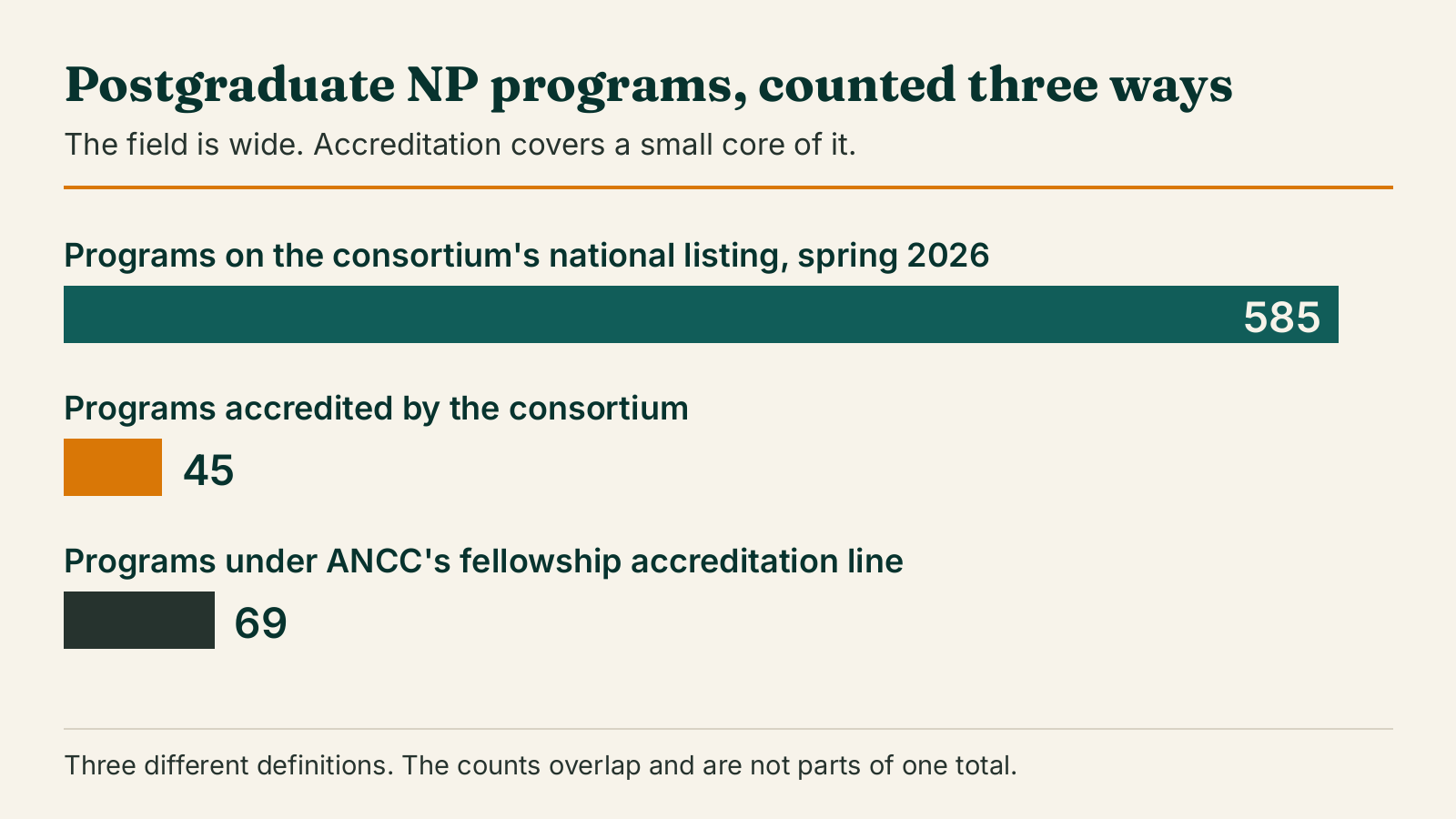
  • Imposter Syndrome as a New Nurse Practitioner. Fake It Till You Make It, and What Actually Builds Confidence in the First Year

    Imposter Syndrome as a New Nurse Practitioner. Fake It Till You Make It, and What Actually Builds Confidence in the First Year

    By Daniel Borkert, FNP-C
    Last reviewed October 30, 2026. Claims checked against the sources named below on October 29, 2026.

    In my first year as a nurse practitioner, imposter syndrome felt like I did not belong there. It felt like I did not know what I was doing. I would feel fear, and a knotted anxious feeling in my stomach, that I was going to do something wrong.

    Nothing about that year was unusual, and that is the point of this page. The feeling has a name, a research literature, and a shape that other clinicians have mapped. Most of what gets written about it offers either a percentage nobody can support or a pep talk nobody can use.

    This page sets out what the feeling is and what the evidence says about how long the first year takes. It also examines the advice new clinicians hear most and what the research says builds confidence. The short version is that confidence does not arrive first and competence second. It runs the other way.

    The short answer

    • The feeling is documented and named. Clance and Imes described the impostor phenomenon in 1978. The nurse practitioner literature frames it as a temporary, normal response to a role transition rather than a personal defect.
    • No honest percentage exists. The general systematic review found reported rates scattered across most of the possible range, depending on the instrument and cutoff used. The nursing review found no nurse practitioner specific figure of any weight.
    • Confidence is a byproduct. On the evidence, it follows repeated practice across a first year, time on a proficiency timeline measured in years, and support that is actually there. Asking and checking are part of the role, not evidence that you do not belong in it.

    The feeling has a name, and a history

    Clance and Imes built the original description from clinical work with more than 150 high achieving women. They included students, faculty, and professionals in fields including law, medicine, and nursing. Clance and Imes defined it as an internal experience of intellectual phoniness: a settled belief of not really being able despite degrees, honors, and praise.

    They called it a phenomenon on purpose. It is not a syndrome in the medical sense or a disorder. It appears as a diagnosis in neither standard diagnostic manual. From the beginning, it was found in people succeeding by every external measure. The feeling is not a reading of your record. It never has been.

    In a 2006 paper written for new NP graduates, the phenomenon is framed as a temporary and normal feeling that occurs at a role transition, rather than an abnormal one. The paper also names generalized anxiety, lack of self confidence, depression, and frustration at a self imposed standard. It is a narrative discussion, not a study, and reports no prevalence data of its own. That tells you how thin the NP specific literature on this feeling still is.

    A 2022 scoping review searched six databases and included eleven studies. It found the phenomenon present in nursing students and nurses. The research was concentrated on prevalence and related factors, with very few studies addressing how to resolve the feelings.

    A 2020 systematic review covered 62 studies and more than 14,000 participants. The rates reported in its studies ranged so widely, depending on the screening tool and cutoff chosen, that a single figure would misuse the review. The same review found the feelings common across sexes, ages, and professions, often alongside depression and anxiety. As of its search, no published study had evaluated any treatment. Anyone offering you a percentage, or a proven cure, is selling past the evidence.

    The named conversation lives mostly outside nursing’s own books. Open the standard first year nursing books published over the last forty years and imposter syndrome is named in none of their contents. The feelings are there under older names: reality shock, role transition, the dream against the reality.

    The named discussion sits in general psychology, where Clance’s book appeared in 1985, and in online communities. There, new graduates describe feeling dumb, feeling like a fraud, crying on lunch breaks and in cars. That is community testimony, not a finding. But it matches the sourced literature, and it is why this page will not promise an ending the evidence cannot date.

    How long does this last

    Ask in any community of new clinicians and one question comes back more than any other. How long until I feel confident, comfortable, like I know what I am doing, like a real provider. The community answers itself with numbers spanning six months to five years. That spread is honest in a way a single answer would not be.

    Patricia Benner’s model of skill acquisition, built on the Dreyfus brothers’ work, describes five stages from novice to expert. The novice works from context free rules and cannot yet use discretionary judgment. The competent practitioner, typically at two to three years in the same job, begins to feel mastery. The timeline relayed in the NP paper runs three to five years from novice to proficient, more than five to expert.

    A new NP in month three who feels like a beginner is, on the field’s own model, a beginner. That is accurate calibration rather than fraudulence. The model also explains the sharpest version of the feeling, the one the community names an identity crisis. Its stages attach to a domain, not to a person. An expert nurse who becomes a new provider re-enters at novice in the new domain, with a decade of expertise in the old one still intact.

    A grounded theory model of the move into the NP role, From Limbo to Legitimacy, describes four phases: Laying the Foundation, Launching, Meeting the Challenge, and Broadening the Perspective. They run roughly from the first month through the end of the first year and beyond. The model comes from interviews with 35 graduates. It is qualitative theory rather than measurement, and its underlying study was set in primary care.

    A second framework, Duchscher’s stages of new graduate transition, adds a detail worth expecting. Its first stage, dominated by what she calls transition shock, covers roughly the first three to four months. At approximately eight to nine months, the model predicts a second crisis, a dip after the first recovery, before the steadier stages arrive.

    That prediction is relayed here through the later literature that summarises the model. It matches what the community describes anecdotally and almost never warns about. Feeling worse again at month eight is a described feature of this transition, not a relapse into fraudulence.

    In a qualitative study of 23 first year NP graduates and 21 people who knew their practices, the new NPs described moving from overwhelmed to confident by the end of the first year. About a third of the NPs had changed employment within the period studied, naming conflict or problems with acceptance of their role. That finding is usually left out of the reassuring versions.

    The study is small, qualitative, and set in one province’s primary health care system, and those limits travel with it. The arc from overwhelmed to steadier is real and documented. The year is not only an interior event. Sometimes the setting, not the clinician, is what has to change.

    My own answer sits at the slower end of the community’s spread. It is worth giving, because nobody gave it to me. It took two to three years of consistent practice, closer to three to four, before it stopped feeling like acting and started feeling like real confidence. Through probably the first few years, the doubt did not fade on its own schedule either. It lingered until I had an answer, and then it would come back with the next question I could not answer yet.

    So, how long does this last. The worst of it is front loaded into the first months, with a second dip worth expecting near the end of the first year. Proficiency in the literature takes three to five years. A new NP not feeling proficient at month ten is behind no schedule the evidence recognizes. Confidence is not the gate you pass before the real work starts. It is a residue the work leaves behind.

    Fake it till you make it, examined

    Every new clinician hears the phrase, usually in training, usually kindly. Fake it till you make it. Online, it is inherited advice from nursing school and a coping strategy for high pressure moments. A minority of creators reject it outright. What the comment threads almost never do is distinguish the two things the phrase can mean. The whole question lives in that distinction.

    My own version of it was the first of those two things, though I could not have drawn the line at the time. In front of a patient, I could not appear super uncertain. Patients would not trust what I was telling them, and conversations would go quite poorly. So I expressed confidence while doubting inside. That is what the phrase meant in practice for me.

    As my clinical judgment and ability grew, the confidence changed character. It became based on something real instead of performed over the uncertainty.

    The turning point was not a technique. It was realizing I did not have to know all the answers all the time. It is okay to say I don’t know, I’ll look that up, I’ll get back to you, I’m not sure. Some questions have no certain answer at all. Saying so is not a failure of the performance. It is the end of needing one.

    Two realizations carried that. In post acute care, where I started, I would usually have a follow up opportunity the next day or in the following days. So I did not have to solve everything at once, especially problems the patient was not there for.

    And medicine is shared decision making. Patients do not necessarily want every problem solved, or solved my way, and most do not want extra medicines. I did not learn that nuance in a classroom. I learned it over time, from patients and from mentors.

    The first meaning is composure: projecting steadiness so a patient and a team have something to organize around. The second meaning is concealment. A clinician who hides a gap from the colleague who could fill it or the senior who could check it has not performed competence. She has removed the gap from every process that could have caught it.

    The phrase’s best known book length defender does not defend its plain meaning. Amy Cuddy’s Presence closes by retitling it, fake it till you become it. She rebuilds it as small nudges toward one’s own story rather than a performance of a false self. That is a cultural fact about the phrase, not evidence.

    The psychology underneath explains why. In Bandura’s self efficacy theory, the strongest source of a person’s judgment about their own capability is mastery: their own performed successes. Performed confidence adds nothing there. It touches only the weaker channels: watching others, encouragement, and the state of the body.

    Concealment is worse than neutral because it blocks the inputs that do work in a first year. Those include the mastery that comes from being checked and corrected, and the learning that comes from asking.

    A new NP must act in the role before feeling like the role. The transition literature’s first phase is precisely that gap between the credential and the felt legitimacy. Acting in the role is not faking. It is the job, with the checking and asking left fully switched on.

    The line the evidence supports is the same one. Act in the role, yes, at full stretch. Conceal a gap from the people and processes that exist to catch it, no.

    The test is one question. Does anyone who could help you know what you do not know? If the answer is yes, you are not faking anything. You are practicing, at your stage, in the open.

    What actually builds confidence

    If confidence is a byproduct, it is worth being specific about what it is a byproduct of. Bandura’s four sources double as a practical list.

    Mastery experiences first. Every case you work through, every decision you make and then verify, is a deposit in the one account that pays out in felt capability. This is why the community’s own best line on the subject, confidence does not come before experience, turns out to be the theory stated in plain words.

    Vicarious experience second. When a task is novel and you have had few chances to perform it yourself, watching a clinician like you handle it, and encouragement, carry relatively more weight than they will later. Early on, other people’s steadiness is one of the main channels open to you, not a consolation prize.

    Persuasion third, real but weak. That is why encouragement helps for an afternoon and mastery helps for a career. And the body’s state last. That is why a racing heart can talk you out of competence you demonstrably have.

    My own first year followed this same sequence, though I would not have named it that way. Early on, the mentors and the references mainly helped me get through the day. I would check what I was doing against UpToDate and ask other providers what they would do in a certain situation. The day would get done.

    As time went by, the order reversed. I was able to trust my judgment first, and then double check it against others, or against UpToDate and other resources. Same people, same tools, different relationship to them. The checking did not go away. It changed jobs, from carrying my decisions to auditing them. That change is most of what confidence felt like from the inside.

    What I did not expect is that the worry eventually reverses. My concern now is the opposite of the first year’s. I worry that I am overconfident, that I do not know what I do not know, and that still scares me. I keep learning new things, and each one shows me there was probably a bunch I did not know while I was acting on the best knowledge I had.

    The check I use now is the same sentence, grown up. I will need to look into it a little further. Saying it builds rapport rather than costing it, because I am not pretending to know an answer I do not have. It rarely needs saying, because common things occur commonly, and those I can usually address. The rest get looked into, out loud.

    One small study belongs here, the nursing review’s only FNP specific dataset. In a 2002 survey of 32 family nurse practitioner students, impostor scores correlated negatively with confidence about succeeding in the future role. Thirty two students, self report, relayed through the review’s table, so its value is directional only. As confidence is fed by real practice, the feeling tends to quiet, the opposite of the sequence the faking advice assumes.

    An integrative review of postgraduate NP residencies and fellowships, eleven studies in all, found increased confidence and preparedness as the major theme among participants. The review itself says the data on these programs’ efficacy is still scarce. That sentence travels with the finding wherever this page uses it. Where a first year is not deliberately structured, the new clinician has to build the same inputs by hand.

    Asking for help is part of the job

    Nothing in my first year mattered more than this, and it was not complicated. I had mentors who were always available to take my questions, even the very simple questions I might have, about how to round or how to do certain things.

    Simple questions are the ones whose answers run your whole day. A mentor who takes them seriously is not being kind. She is being useful at the exact point of maximum leverage.

    In a field study of 51 work teams, Edmondson studied a team’s shared belief that it is safe to take interpersonal risks, such as asking questions, seeking feedback, and discussing errors. That belief was associated with exactly that learning behavior, which in turn carried the team’s performance.

    Two cautions belong with that study. Its setting was manufacturing teams, not clinical ones, and its findings are associations, not proof of cause. Psychological safety, the name for that shared belief, is a property of a team, not a trait a new graduate can be told to have.

    Read with those cautions, the study still converts asking from a personality question into a structural one. A workplace that punishes questions is giving you information about itself, worth weighing when you choose where to work.

    In the Ontario first year study, mentorship by a colleague had a positive effect on the transition. Lack of orientation and mentorship made it harder, and the authors recommend formal mentorship for every new graduate. That is a qualitative finding from one study, not a measured effect. Nothing in this page’s research quantifies how much mentorship helps. Consultation and support are part of the role, not an exception to it.

    What asking looked like in the moment, for me, was a breath and a sentence. I’m not sure, I’ll have to look that up or get back to you. Or, I’ll have to talk to my attending physician. That was the whole move.

    The other tool I had from the beginning was active listening. My mind might be panicking, but I would force myself to repeat what the patient was saying back in different words. It gave me a way to think through what they were actually saying and to reflect empathy for their situation, while the panic ran underneath. Between the listening and the sentence, I could stay in the room honestly until the answer arrived.

    The fourth source of self judgment is the state of your own body. The fear I felt in my first year, and a knotted anxious feeling in my stomach, was not a report on my competence. It was one of the channels through which I was judging it, and channels can carry noise.

    Knowing the alarm is a channel and not a verdict does not switch it off. It stops it from being the only evidence you hear, and the asking and checking continue either way.

    One working day, ordered

    A short account of the practical side, from my own first year, belongs here. It is the ground the feeling stood on.

    Mornings began with a stack of overnight concerns, complaints, and questions from patients and families. At first the stack felt overwhelming, because everything in it seemed to want my attention at once.

    What I had to learn was to filter. Which items needed to be addressed. Which needed only to be reviewed. Which could wait until a follow up visit in a few days. Ordering the day, deciding in sequence rather than reacting in arrival order, kept the volume from becoming the overwhelm.

    The win I would name from that year is related. I learned to set a schedule and to set boundaries. I came in earlier and did paperwork while patients were still resting. There was a sweet spot for rounds, when patients were not occupied by other services. Paperwork went into the hours when they were busy with other things.

    Nobody handed me that system. Here it is enough to say that the day getting ordered and the feeling getting quieter were not separate projects.

    The honest summary

    Here is what this page can and cannot honestly tell you. The feeling is named, documented, and about fifty years into being studied. The year has a shape, harder at the start and again, for many, near its end. Proficiency takes years, which makes a struggling tenth month a normal tenth month.

    Confidence follows competence and support rather than preceding them. Asking and checking are how it gets built.

    This page cannot tell you a percentage, because the literature cannot support one. It cannot promise the feeling retires, because the clinicians furthest from their first year say it does not, entirely. What changes is your relationship to it. It stops being a verdict and becomes weather, noticed and worked through. The community of new graduates has a four word version of the whole page. You are not behind.

    Practice Brief signup. This page is part of a short series of practice guides for nurse practitioners beyond the boards. The Practice Brief is the email list that carries them.

    Frequently asked questions

    Is imposter syndrome a diagnosis?

    No. Clance and Imes called it a phenomenon deliberately. It appears as a diagnosis in neither the DSM-5-TR nor the ICD-11. It is a described pattern of experience, first documented in high achieving women in 1978, not a disorder and not a billable condition.

    How common is imposter syndrome among new nurse practitioners?

    Nobody knows. The nursing scoping review found no NP specific prevalence figure of any weight. The general review found reported rates varying so widely by instrument and cutoff that a single percentage would misrepresent it. The evidence supports that the feeling is common, documented across professions, and a normal feature of role transitions.

    Does the feeling go away?

    The sourced arcs say it eases as competence grows. The first year study found its graduates describing confidence by the end of the year. Community testimony adds the second half: clinicians well past their first year report the doubt still visiting, particularly at transitions. Expect it to quiet and to change character, from a verdict on you to a signal you know how to read. Do not expect a date after which it never returns.

    If I feel like an imposter, does that mean I am unsafe?

    The feeling by itself is not a safety finding. It is documented in successful clinicians from the first description onward. The staging model says a beginner’s slowness and rule bound checking are the stage working as designed.

    What deserves action is different in kind. A specific thing you do not know is a gap, and gaps have a procedure: look it up, ask, escalate, every time, without apology. A global feeling that you do not belong is weather, answered by the accumulation of checked, completed work. Confusing the two is where the risk actually sits.

    Change log and corrections

    This page carries a public change log. Every correction, addition, and re-verification is recorded here with its date and the source it was checked against.

    Date Section What changed Checked against
    October 30, 2026 First publication The page published with its statements drawn from the sources named below, each checked on October 29, 2026. The sources named in the Sources section

    Corrections: to report a suspected error, email daniel@boardandbedside.com naming the section and the source you believe is current. A reported error is checked against its source before any change is made, and the outcome is recorded here either way.

    Sources for this page

    Clance PR and Imes SA. The imposter phenomenon in high achieving women, dynamics and therapeutic interventions. Psychotherapy, Theory, Research and Practice 1978;15(3):241-247. The origin and definition source, from clinical work with more than 150 high achieving women, verified in this research across scholarly renderings of the paper.

    Clance PR. The Impostor Phenomenon, Overcoming the Fear That Haunts Your Success. Peachtree Publishers, 1985. The author’s own book length statement of the construct, the primary book source for the definition.

    Huffstutler S and Varnell G. The Impostor Phenomenon in New Nurse Practitioner Graduates. Topics in Advanced Practice Nursing 2006;6(2). The NP specific source, a narrative discussion paper, for the role transition framing, the feelings named with it, and the timeline it relays from Benner. It reports no prevalence data.

    Peng Y et al. The Impostor Phenomenon Among Nursing Students and Nurses, A Scoping Review. Frontiers in Psychology 2022;13:809031. Six databases, eleven studies, for the phenomenon in nursing, the research’s concentration on prevalence, the scarcity of work on resolution, and the Vance 2002 dataset in its Table 1, used here in relayed form.

    Bravata DM et al. Prevalence, Predictors, and Treatment of Impostor Syndrome, A Systematic Review. Journal of General Internal Medicine 2020;35(4):1252-1275. Sixty two studies, for the prevalence range finding and why no single figure is printed here, and the absence of any evaluated treatment as of the review.

    Brown MA and Olshansky EF. From Limbo to Legitimacy, A Theoretical Model of the Transition to the Primary Care Nurse Practitioner Role. Nursing Research 1997;46(1):46-51. The four phase model, read here in Huffstutler and Varnell 2006 and Sullivan-Bentz et al 2010, its sample read in a concept analysis. Qualitative theory; its study was set in primary care.

    Sullivan-Bentz M et al. Supporting Primary Health Care Nurse Practitioners’ Transition to Practice. Canadian Family Physician 2010;56(11):1176-1182. A qualitative study of 23 first year NP graduates and 21 coparticipants, for the overwhelmed to confident arc, the one third who changed employment, and the formal mentorship recommendation. Single province, primary health care setting.

    McDonough KE. Outcomes of Postgraduate Fellowships and Residencies for Nurse Practitioners, An Integrative Review. Journal of Professional Nursing 2024;53:95-103. Eleven studies, for confidence and preparedness as the major theme, carried here only with the review’s statement that efficacy data remains scarce.

    Duchscher JEB. Transition Shock, The Initial Stage of Role Adaptation for Newly Graduated Registered Nurses. Journal of Advanced Nursing 2009;65(5):1103-1113. For transition shock as the named first stage of entering practice. The companion stages model, with the predicted crisis at eight to nine months, is Duchscher 2008 as rendered in later literature, used here in relayed form.

    Bandura A. Self-efficacy theory, as stated in Artino AR Jr, Academic Self-Efficacy, Perspectives on Medical Education 2012, and Gale J et al 2021, used here in relayed form through those two agreeing sources; Bandura’s own texts were not opened in this research. Skill staging is Benner P, From Novice to Expert, American Journal of Nursing 1982, and the book of the same name, Addison-Wesley 1984.

    Edmondson A. Psychological Safety and Learning Behavior in Work Teams. Administrative Science Quarterly 1999;44(2):350-383. A field study of 51 manufacturing work teams, for the association between a team’s shared belief that interpersonal risk is safe and learning behavior. Correlational and team level, used with those cautions.

    Cuddy A. Presence, Bringing Your Boldest Self to Your Biggest Challenges. Little, Brown and Company, 2015. A cultural source only, for fake it till you make it and its closing chapter’s revision of it. Not an evidence source.

    Community listening, October 2026. First person accounts by new nurses and nurse practitioners in public online communities and creator content on Reddit, YouTube, Instagram, Facebook, and TikTok, used only as testimony, attributed as such where it appears. Private groups were not read. Figures circulating in community posts were not verified and are not used.

    Every statement on this page is drawn from the sources in this list, each checked on the date shown, and the sourcing is rechecked at every refresh.

    For clinician education only — not medical advice.
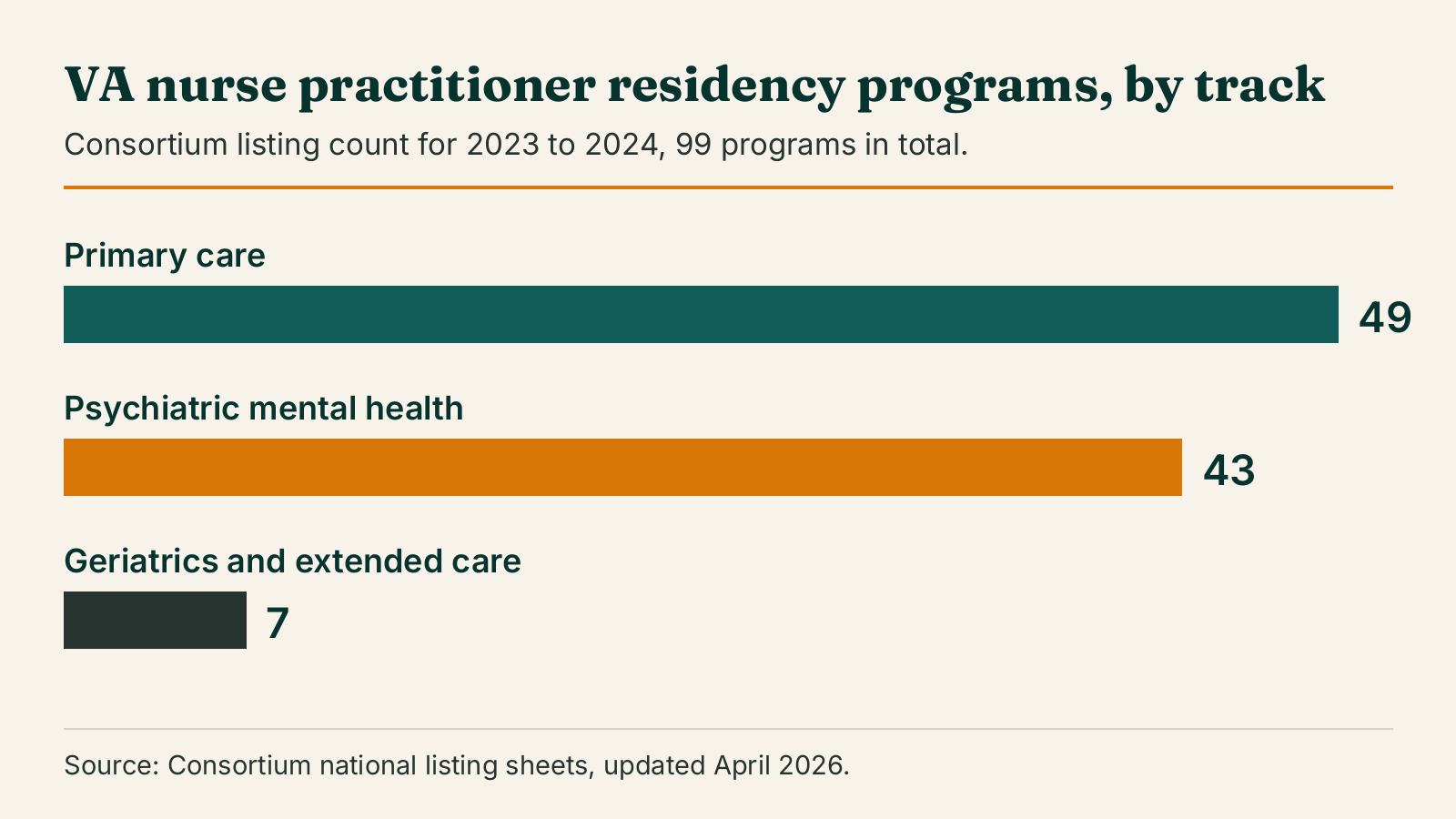
  • ANCC Certification Renewal. CE Hours, the Eight Categories, and the AANPCB Route Beside It

    ANCC Certification Renewal. CE Hours, the Eight Categories, and the AANPCB Route Beside It

    By Daniel Borkert, FNP-C
    Last reviewed October 29, 2026. Claims checked against the sources named below on October 28, 2026.

    Certification is the first credential a new family nurse practitioner earns, and renewal is the first recurring task that follows it. Five years after the exam, the credential comes due, and what it asks for depends on which body issued it. This page sets out both renewal routes as the two certifying bodies publish them, ANCC first and AANPCB beside it. A first renewal is easier to plan when the requirements sit in one place, in the bodies’ own terms, with the date each was checked.

    The short answer

    • ANCC certification is valid for five years and is renewed on or before the certification expiration date. Renewal requires 75 continuing education contact hours, 25 of them in pharmacology, plus at least one of ANCC’s eight professional development categories completed in full. Applications open up to one year before expiration, and ANCC allows no grace period after it (ANCC Certification Renewal Handbook and ANCC renewal pages, checked October 28, 2026).
    • AANPCB certification is also granted for a five year period. Its standard route requires 1,000 practice hours and 100 contact hours of advanced continuing education, 25 of them in advanced practice pharmacology, all inside the five year period. The alternative is to renew by passing the FNP certification examination again (AANPCB FNP Renewal Handbook and Recertification page, checked October 28, 2026).
    • The sharpest difference sits in the practice hours. On the AANPCB route they are required. On the ANCC route they are one optional category of eight.

    The ANCC figures in this answer are the current handbook’s figures. ANCC’s 2027 handbook takes effect for renewal applications submitted on or after February 1, 2027, and the changeover is set out in the next section.

    The ANCC cycle at a glance

    The ANCC requirements on this page describe ANCC’s current Certification Renewal Handbook. ANCC’s 2027 handbook takes effect for renewal applications submitted on or after February 1, 2027 (ANCC renewal page, checked October 28, 2026).

    ANCC’s Certification Renewal Handbook (effective September 10, 2025, Version 2 dated February 10, 2026) and ANCC’s renewal pages, checked October 28, 2026, state the frame the rest of the ANCC sections sit inside.

    The cycle and the deadline. ANCC certification is valid for five years and must be renewed on or before the certification expiration date. The handbook states the policy in its Applying section, and the FNP-BC credential page states the credential is valid for 5 years.

    The window. Renewal applications may be submitted up to one year before the certification expiration date. The renewal page and the FNP-BC page both state the one year window.

    Eligibility, the basics. The handbook and the renewal page state that to renew, a certificant must meet all of the following.

    • Hold a current ANCC certification eligible for renewal.
    • Maintain a current, active RN license, or the internationally recognized equivalent where applicable.
    • Complete the renewal activities during the current five year certification period.
    • Submit the renewal application before the certification expires.
    • Pay the renewal fee.

    Tracking and audit. Professional development activities must be entered and stored in the ANCC online account before the online renewal application is started. The stored information then transfers to the application. ANCC conducts random audits of renewal applications, and the handbook directs certificants to keep certificates and supporting documentation for the full certification cycle in case of audit.

    No grace period. ANCC policy allows no grace period and no backdating. What follows an expiration is covered in the If it lapses section below.

    The CE requirement at ANCC

    The mandatory continuing education sits in the handbook’s Eligibility Requirements and its Category 1 section, checked October 28, 2026. The figures in this section are the current handbook’s figures. ANCC’s 2027 handbook governs renewal applications submitted on or after February 1, 2027.

    The 75 and the 25. All certificants complete the mandatory 75 continuing education contact hours (CE CH). Certificants renewing a Nurse Practitioner or Clinical Nurse Specialist certification complete 25 hours of pharmacology as a portion of the mandatory 75 CE CH. All 75 CE CH must be directly related to the full scope of the certification role and specialty.

    The formally approved floor. The handbook states that at least 60 of the 75 CE CH must be formally approved continuing education hours. The handbook’s formally approved criteria are stated in the CME passage below, because one of them is where physician CME enters the ANCC route.

    How CME counts at ANCC

    The handbook’s Category 1 criteria, checked October 28, 2026, name the following as formally approved.

    • Continuing nursing education (CNE) approved for nursing contact hours by an accredited provider or approver of CNE.
    • Continuing medical education (CME) approved for AMA PRA Category 1 Credits.
    • Continuing education hours approved through the Joint Accreditation for Interprofessional Continuing Education.
    • Other healthcare disciplines’ contact hours applicable to the certification specialty are also acceptable.

    The handbook’s conversion formulas sit in the same section. One contact hour equals 60 minutes, or 1 AMA PRA Category 1 Credit. One academic semester credit equals 15 contact hours, and one academic quarter credit equals 12.5 contact hours. Read together, the criteria and the formula make the CME statement a sourced one. CME approved for AMA PRA Category 1 Credits is named in ANCC’s formally approved criteria, and one such credit converts to one contact hour.

    That conversion is ANCC’s. AANPCB’s renewal documents, checked the same day, name no AMA PRA equivalent. Their acceptability test is stated in the AANPCB section below, and the conversion does not carry over to that route.

    One of the eight categories

    In addition to the mandatory 75 CE CH, the handbook requires certificants to complete at least one of the eight certification renewal professional development categories in its entirety. The eight, with the completion figure the handbook states for each where the research behind this page verified one, are set out below (ANCC Certification Renewal Handbook, checked October 28, 2026). These are the current handbook’s categories and completion figures. The 2027 handbook governs renewal applications submitted on or after February 1, 2027.

    Category What completes it, as the handbook states it
    Category 1, Continuing Education Additional continuing education hours under this category, on top of the mandatory 75 CE CH.
    Category 2, Academic Credits Five semester credits, or six quarter credits, of academic courses applicable to the area of certification. Fewer credits may be converted to contact hours and reported under Category 1 instead.
    Category 3, Presentations One or more presentations totaling five clock hours in the certification specialty, as the primary presenter of a first time presentation, delivered in a structured teaching or learning framework.
    Category 4, Evidence-Based Practice or Quality Improvement Project, Publication, or Research An evidence-based practice or quality improvement project, a publication, or research, as the category describes.
    Category 5, Preceptor Hours A minimum of 120 hours as a preceptor providing direct clinical supervision or teaching to students in an academic program related to the certification specialty, or a minimum of 120 hours of clinical supervision in a formal fellowship, residency, or internship program.
    Category 6, Professional Service Two or more consecutive years of volunteer service during the certification period with an international, national, state, or local healthcare related organization in which the certification specialty expertise is required.
    Category 7, Practice Hours A minimum of 1,000 practice hours in the certification specialty, completed within the five years preceding the renewal application submission, through employment or as a volunteer. Nurse practitioners complete the hours in their certification role and population at the advanced level.
    Category 8, Assessment (Examination) Retake and pass the same examination as the certification. Testing is unavailable as a category where the certification examination is retired, or the certification is listed as Renewal Only.

    Two of the eight sit closest to ordinary practice for a practicing FNP, additional CE under Category 1 and practice hours under Category 7. The Category 7 figure deserves one underline, because it is the number readers most often misread across the two routes. At ANCC, 1,000 practice hours are an option a certificant may choose. They are not an ANCC requirement.

    Planning CE across the five year cycle

    The planning frame in this section is this page’s own arithmetic, labelled as such. It is not a certifying body rule. Spread evenly, the ANCC total of 75 hours across five years is 15 hours a year. The AANPCB total of 100 hours is 20 hours a year. The arithmetic only shows what steady pacing looks like against the sourced totals, so a first renewal can be planned as a routine instead of a project.

    When the hours must land. The ANCC handbook states the timing with an effective date attached, and this page keeps the date on it. Effective January 14, 2026, a certificant must accrue renewal activities during their designated 5 year certification period, prior to their renewal application submission (ANCC Certification Renewal Handbook, checked October 28, 2026). This is a current handbook statement; ANCC’s 2027 handbook governs renewal applications submitted on or after February 1, 2027.

    Tracking as you go. ANCC directs certificants to enter professional development activities in the ANCC online account before the application is started, and that account is the official tracker for the ANCC route. ANCC also conducts random audits, and its handbook directs certificants to keep certificates and supporting documentation for the full cycle. Any personal system a certificant keeps sits beside the body’s record, never in place of it.

    How steady pacing looks in one practice. My own certification sits with AANPCB, and my CE has never come from a push near the deadline. I earn credit hours continuously, in the course of ordinary practice, by looking things up. I used UpToDate for that earlier in my career, and I use OpenEvidence now. Each time I look something up and use it, the tool keeps track of a portion of credit automatically. Periodically I download a transcript of the accumulated credits and save it in my own files, so the record is in my hands if an audit ever asks for it. That is one clinician’s tracking habit, described as experience. It is not a rule, and nothing here is an endorsement of either tool by either certifying body.

    I was not surprised by anything at my first renewal, and I offer that plainly, because it is the reassurance a first renewal reader is usually looking for. For me, a renewal that had been accumulating for five years arrived as paperwork, not as a project.

    I would definitely recommend pacing CE across the cycle. I do not think I would have done anything different. It worked out quite well for me.

    The AANPCB route beside it

    AANPCB is the body that now trades as the Nurse Practitioners Certification Board, or NPCB, and it is the body that holds my certification. I have renewed once since I certified, and the process as I met it involved certifying my practice hours and my CE credits. Those requirements come from AANPCB’s FNP Renewal Handbook (dated June 4, 2026) and its Recertification, certify, and FAQ pages, checked October 28, 2026.

    The two routes at a glance, for a practicing FNP.

    ANCC AANPCB
    Cycle Five years Five years
    CE total 75 contact hours 100 contact hours of advanced CE
    Pharmacology 25 hours, inside the 75 25 credits, inside the 100
    Practice hours Not required. One optional category of eight, at 1,000 hours Required on the CE route, at 1,000 hours
    Second requirement One of the eight professional development categories, completed in full None beyond practice hours and CE on Option 1
    Renewal by examination Available as Category 8, retake and pass the same examination Option 2, with no CE or practice hour requirement
    Application window Up to one year before expiration Up to one year before expiration
    Renewal fee (ANCC) / renewal by CE (AANPCB) $375 non-member, $275 for ANA members $120 for members, $195 for non-members
    After expiration No grace period. Reactivation tiers at the two year line No published late window. Contact the body by email for instructions

    The ANCC figures in this table are from ANCC’s Certification Renewal Handbook and renewal pages, and the AANPCB figures from AANPCB’s FNP Renewal Handbook and its Recertification, certify, and FAQ pages, all checked October 28, 2026. The ANCC figures are the current handbook’s. ANCC’s 2027 handbook takes effect for renewal applications submitted on or after February 1, 2027.

    The cycle. FNP certification is granted for a five year period and is time limited. The minimum requirements for renewal must be met within the five year period of certification, and certificants must meet current renewal requirements before the certification expiration date to maintain certification and continue using the FNP-C credential.

    Option 1, practice hours. Renewal by clinical practice hours and CE requires a minimum of 1,000 practice hours as an NP in the population focus of the certification, performing one or more of the roles of direct patient care provider, administrator, educator, and researcher, during the five year certification period.

    On my own renewal, I think I just had to attest that I had that many practice hours. I calculated how often I was in the clinic over the past year, and I easily met my practice hours just from one year of work. The attestation model my recollection describes is the model the body’s FAQ states, in the attestation passage below.

    Option 1, the CE. The same route requires a minimum of 100 contact hours of advanced continuing education, of which 25 credits must be advanced practice pharmacology, completed within the five year certification period. Current RN licensure is required throughout the period of certification.

    Option 2, renewal by examination. A certificant may instead renew by taking and passing the FNP National Certification Examination. The handbook states that renewal by examination does not require the CE or practice hour requirements. The examination route is not available for certifications whose examinations are retired. The Recertification page names the ANP and GNP certifications as examples.

    Precepting, and a discrepancy in the body’s own pages. Precepting is optional under Option 1 and can replace up to 25 non-pharmacology CE credits. The Renewal Handbook and the FAQ page cap the conversion at a maximum of 120 preceptorship hours. The Recertification web page states a maximum of 125 preceptor hours for the same conversion. The two figures disagree inside the certifying body’s own published material, checked October 28, 2026. This page plans around the handbook and FAQ figure of 120, and a preceptor counting on the conversion should confirm the cap with the body before relying on either figure.

    Academic credits. Academic courses completed during the five year certification period may count toward renewal CE if they are relevant to NP practice. One semester credit equals 15 CE hours. A transcript is submitted if requested.

    Attestation and audit. AANPCB’s FAQ (checked October 28, 2026) states that certificants attest at application that they have met all renewal requirements, and that supporting documentation is not required unless the application is selected for audit. Processing time for complete applications is covered in the fees and timing section below.

    The CE acceptability test, and the CME boundary. The Renewal Handbook’s guidance on evaluating a CE activity asks three questions.

    • Is the content relevant to FNP practice?
    • Is the activity intended for advanced practice providers or healthcare professionals?
    • Is continuing education credit awarded by an accredited provider?

    The FAQ requires CE to be provided by an accredited organization, and names AANP, ANCC, or other approved providers as examples. The AANPCB documents opened for this page do not state that AMA PRA Category 1 credit counts toward AANPCB renewal; they describe the accredited provider test above. The ANCC conversion in the CME passage above is therefore stated for the ANCC route only.

    Finding and proving pharmacology hours

    Both routes on this page set the pharmacology share at 25 hours inside the CE total. Neither body assigns the hours, and the requirement is not met by pharmacology studied in the abstract. It is met by activities whose pharmacology content is identified as pharmacology when the renewal record is read, and the two bodies identify it in different ways. Where those hours are found, and what each body takes as proof of them, is the subject of this section. Its sources were checked on November 11, 2026, and its ANCC statements are the current handbook’s, under the February 1, 2027 changeover named above.

    At ANCC, the activity designates the hours. ANCC’s handbook calls them pharmacotherapeutic hours. Its Category 1 documentation passage directs certificants to enter the courses attended and the hours obtained in the Professional Development Record, and its note for APRNs entering their own hours gives the entry rule as a worked example. If a CE activity awarded 10 total contact hours, 5 of which were designated to be pharmacotherapeutic hours, the certificant enters 5 CE CH and 5 pharmacotherapeutic hours for that activity. The designation is made by the activity’s award, so the certificant’s task is to choose activities whose awards designate pharmacotherapeutic hours and to split the entry the way the example shows. If the record is audited, ANCC requires supporting documents such as the completion certificate showing the dates, the title, the number of contact hours, and the sponsoring organization, and the handbook directs certificants to maintain that documentation for the entire five year certification cycle (ANCC Certification Renewal Handbook, checked November 11, 2026).

    At AANPCB, the content defines the hours. AANPCB’s handbook defines its 25 advanced pharmacology hours by their content: pharmacology content should relate to pharmacotherapeutics, safe prescribing practices, or pharmacological management of acute and chronic conditions across the lifespan. The handbook sets out no designation and separate entry mechanism of the ANCC kind. The certificant judges an activity against that definition, and against the handbook’s three considerations for any CE activity, that the content is relevant to family nurse practitioner practice, that the activity is intended for advanced practice providers or healthcare professionals, and that continuing education credit is awarded by an accredited provider. The proof is held against audit. AANPCB may require supporting documentation for the activities claimed, including CE certificates, and its handbook directs applicants to retain documentation for at least two years following the renewal deadline (AANPCB FNP Renewal Handbook, checked November 11, 2026).

    Where designated hours are found. In AANP approved activities, the split is printed before the activity is taken. Approval statements state the contact hours and the pharmacology hours inside them in one sentence, and AANP’s 2026 National Conference hours document lists pharmacology hours session by session, with some sessions carrying none. AANP accredited providers publish in the same denomination. Pri-Med Institute, accredited by AANP as an approved provider of nurse practitioner continuing education (provider number 040308), maintains a catalogue page of AANP pharmacology contact hours. A listing that states its pharmacology hours is telling the certificant in advance what the renewal record can show (AANP CE Center activity approval statement and 2026 National Conference hours document, and Pri-Med, CE for AANP Pharmacology Contact Hours, checked November 11, 2026).

    The point of care exception. Credit earned at the point of care arrives without the designation. Wolters Kluwer, which operates UpToDate, states that UpToDate does not explicitly mark or separate specific pharmacology topics or credits on its CE certificates. Its stated procedure is that the certificant submits the activity log, which records the clinical search, the titles of topics reviewed, the contact hours earned, and the date of activity, alongside the awarded certificates, and self assesses which of the content aligns with the pharmacology component. Wolters Kluwer also states that use of UpToDate is acceptable to both bodies for renewal, pharmacology included, and directs certificants to the bodies for more information. Those acceptance statements are the vendor’s. What each body requires is stated in its own handbook, in the passages above, and a certificant whose pharmacology hours ride inside point of care credit holds the activity log and the self assessment as the evidence (Wolters Kluwer, UpToDate for Pharmacology Credit Requirement in NP Certification Renewal, checked November 11, 2026).

    One layer only. Hours proven for certification renewal are proven for that layer. A state board sets its own license renewal requirements, which can carry a pharmacology requirement of the state’s own, on the state’s own clock, and the separation between the two layers is set out in full in the section below on certification renewal and license renewal. An employer can also require training of its own, on its own terms. Satisfying the certifying body on pharmacology does not by that fact satisfy either of the other two, and hours intended to serve more than one layer have to be checked against each layer’s own test.

    Fees and timing in one place

    Fee and timing statements below come from ANCC’s FNP-BC page and Certification Renewal Handbook and from AANPCB’s certify page, Recertification page, and FAQ, checked October 28, 2026.

    ANCC renewal fees. The FNP-BC page’s renewal pricing table lists non-member $375, American Nurses Association members $275, American Association of Nurse Practitioners members $295, and GAPNA members $320. Prices include a $140 non-refundable administrative fee.

    ANCC expedited processing. Expedited review of a renewal application is available for an additional non-refundable fee, reducing processing time to three business days from the date payment is received, unless ANCC requires additional information to determine eligibility. The handbook section that describes the service does not state the fee amount, so this page states none. ANCC’s application screens carry the current figure.

    AANPCB renewal fees. Renewal by practice hours and CE costs $120 for members and $195 for non-members. Renewal by examination costs $240 for members and $315 for non-members. The member price reflects the $75 discount on certification and renewal application fees for AANP and AAENP members.

    AANPCB processing and the paper route. Most complete AANPCB renewal applications are processed within 3 to 5 business days. Incomplete or incorrect submissions delay processing. Renewal applications are encouraged online. A paper application is available for certificants who prefer it, and paper applications include a built in processing fee of $50 per submission.

    If it lapses

    Statements below come from ANCC’s Certification Renewal Handbook and AANPCB’s FNP Renewal Handbook, checked October 28, 2026.

    ANCC, no grace period and no backdating. ANCC policy does not allow a grace period or backdating of a certification period. A renewal application received after the expiration date receives a new renewal period under the reactivation policy, which results in a gap in certification dates that ANCC cannot backdate. Certificants must cease using the credential after expiration.

    ANCC reactivation, lapsed two years or less. An individual whose certification has lapsed within two years of the expiration date may reactivate by completing a reactivation application, meeting the renewal requirements in effect at the time of submission, and paying all required fees. The handbook sections behind this page do not publish a reactivation fee amount, so this page states the steps and no price.

    ANCC reactivation, lapsed more than two years. Where an examination for the certification is available, reactivation requires the reactivation application, the renewal requirements in effect at submission, testing and passing the examination, and all required fees. Where no examination is available, on Renewal Only certifications, a certification lapsed more than two years cannot be reactivated.

    AANPCB after expiration. AANPCB’s FNP Renewal Handbook states that individuals who allow their certification to expire may not use the NP-C credential or represent themselves as certified. NPs seeking renewal after certification expiration must contact NPCB by email for additional instructions and eligibility review. No late renewal window or late fee is published in the sources behind this page.

    Certification renewal is not license renewal

    Everything above is national certification renewal, the certifying bodies’ layer. State license renewal is a separate layer, run by state boards of nursing under state law, and renewing one does not by itself settle the other. This page states no state’s license CE hours, deadlines, or pharmacology requirements, because those figures belong to state sources. What a state authorizes, and how the state layer sits beside the national one, is covered in this site’s guide to NP practice authority by state.

    Frequently asked questions

    The ANCC answers in this section state the current Certification Renewal Handbook, checked October 28, 2026. ANCC’s 2027 handbook takes effect for renewal applications submitted on or after February 1, 2027.

    How many CE hours does ANCC renewal require, and how many must be pharmacology?

    The ANCC Certification Renewal Handbook states a mandatory 75 continuing education contact hours, with 25 hours of pharmacology as a portion of the 75 for NP and Clinical Nurse Specialist certificants (checked October 28, 2026). All 75 hours must be directly related to the full scope of the certification role and specialty, and at least 60 of the 75 must be formally approved hours. One of the eight professional development categories is also required, in addition to the 75.

    Does CME count toward ANCC renewal?

    Yes, on ANCC’s own text. The handbook’s formally approved criteria for Category 1 name continuing medical education (CME) approved for AMA PRA Category 1 Credits. The handbook’s conversion formula equates 1 AMA PRA Category 1 Credit with 1 contact hour (checked October 28, 2026). That statement belongs to the ANCC route. AANPCB’s renewal documents name no AMA PRA equivalent, as the AANPCB section above records.

    Do I need practice hours to renew with ANCC?

    No. Practice hours are an option at ANCC, not a requirement. Category 7 completes with a minimum of 1,000 practice hours in the certification specialty, and it is one of eight categories a certificant may choose (ANCC Certification Renewal Handbook, checked October 28, 2026). The contrast is the AANPCB route, where 1,000 practice hours are required on the renewal by CE route.

    How early can I renew?

    ANCC renewal applications may be submitted up to one year before the certification expiration date (ANCC renewal page and FNP-BC page, checked October 28, 2026). AANPCB’s FAQ states the same one year window and encourages early renewal to keep certification active without interruption (checked October 28, 2026).

    What happens if my certification expires?

    At ANCC, there is no grace period and no backdating. A late application is handled under the reactivation policy and leaves a gap in certification dates, with reactivation steps that change at the two year line, as the If it lapses section above sets out. At AANPCB, an expired certificant may not use the credential and must contact NPCB by email for instructions and an eligibility review.

    How do the ANCC and AANPCB renewals differ for an FNP?

    Both run five year cycles with a one year application window and a 25 credit pharmacology share. They differ in three places. AANPCB requires more CE, 100 contact hours against ANCC’s 75. AANPCB requires 1,000 practice hours on its CE route, where ANCC makes practice hours one optional category of eight. And their lapse handling differs, ANCC publishing a reactivation ladder at the two year line where AANPCB publishes an email contact route. Every figure in this answer is stated with its source in the sections above, checked October 28, 2026.

    How long does AANPCB take to process a renewal?

    AANPCB’s FAQ states that most complete applications are processed within 3 to 5 business days, and that incomplete or incorrect submissions delay processing (checked October 28, 2026).

    Change log and corrections

    This page carries a public change log. Every correction, addition, and re-verification is recorded here with its date and the source it was checked against. If any source behind a section passes 12 months without re-verification, the affected section is named here as due for recheck until it is re-verified. The first scheduled recheck for this page is already dated. Every ANCC statement is rechecked against ANCC’s 2027 Certification Renewal Handbook, which takes effect for renewal applications submitted on or after February 1, 2027.

    Date Section What changed Checked against
    October 29, 2026 First publication The page published with its statements drawn from the certifying body sources named below, each checked on October 28, 2026. The ANCC statements describe the current Certification Renewal Handbook (effective September 10, 2025, Version 2 dated February 10, 2026), and the page names the February 1, 2027 changeover wherever the framework’s shape is stated. The ANCC and AANPCB sources named in the Sources section
    November 11, 2026 Finding and proving pharmacology hours A section added between The AANPCB route beside it and Fees and timing in one place, on where pharmacology hours are found and what each body accepts as proof of them. It states ANCC’s pharmacotherapeutic designation and separate entry rule, AANPCB’s content definition and three considerations, the labeled pharmacology denomination in AANP approved catalogues, and the point of care exception. No existing statement on the page was changed. ANCC Certification Renewal Handbook and AANPCB FNP Renewal Handbook, AANP CE Center and Pri-Med pages, and Wolters Kluwer’s CE support page, checked November 11, 2026

    Corrections: to report a suspected error anywhere on this page, email daniel@boardandbedside.com naming the section and the source you believe is current. A reported error is checked against the certifying body’s current document before any change is made, and the outcome is recorded in this log either way.

    Sources for this page

    American Nurses Credentialing Center. Certification Renewal Handbook (effective September 10, 2025, Version 2 dated February 10, 2026), for the five year cycle and the expiration deadline, renewal eligibility, the mandatory 75 CE CH and the 25 pharmacology hours, the eight professional development categories and their completion figures, the formally approved criteria and conversion formulas, the January 14, 2026 accrual rule, tracking and audits, no grace period and no backdating, the reactivation tiers, and expedited processing. (checked October 28, 2026)

    American Nurses Credentialing Center. Nursing Certification Renewal page, for the one year application window, the renewal eligibility summary, tracking renewal activities, and the 2027 Certification Renewal Handbook changeover effective for applications submitted on or after February 1, 2027. (checked October 28, 2026)

    American Nurses Credentialing Center. Family Nurse Practitioner Certification (FNP-BC) page, for the five year validity statement, the one year window, the Track Professional Development section, and the renewal pricing table with its $140 administrative fee note. (checked October 28, 2026)

    AANPCB (Nurse Practitioners Certification Board). FNP Renewal Handbook (dated June 4, 2026), for the five year certification period, Option 1 practice hours and CE, the preceptorship conversion cap of 120 hours, renewal by examination, the continuing education evaluation guidance, and expired certification. (checked October 28, 2026)

    AANPCB. Recertification page, for the Option 1 and Option 2 statements, the 125 preceptor hour figure named in the discrepancy passage, and the paper application processing fee. (checked October 28, 2026)

    AANPCB. Certification (certify) page, Application Fees table, for the renewal fees by route and membership and the $75 member discount note. (checked October 28, 2026)

    AANPCB. FAQ page, Renewal Certificants section, for the one year application window, attestation and audit, the 3 to 5 business day processing time, the 120 hour preceptorship cap, and the academic credit conversion. (checked October 28, 2026)

    American Association of Nurse Practitioners. AANP CE Center activity approval statement and 2026 National Conference contact and pharmacology hours, for the practice of stating pharmacology hours inside an activity’s credit statement. (checked November 11, 2026)

    Pri-Med Institute. CE for AANP Pharmacology Contact Hours, for Pri-Med’s accreditation by AANP as an approved provider of nurse practitioner continuing education (provider number 040308) and its pharmacology contact hours catalogue. (checked November 11, 2026)

    Wolters Kluwer. UpToDate for Pharmacology Credit Requirement in NP Certification Renewal, CE support page, for the statement that UpToDate does not mark or separate pharmacology topics or credits on its CE certificates, the activity log procedure and self assessment, and the vendor’s acceptance statements with their direction to confirm with the bodies. (checked November 11, 2026)

    Every statement on this page is drawn from the sources in this list, each checked on the date shown, and the sourcing is rechecked at every refresh.

    For clinician education only — not medical advice.
  • NP Practice Authority by State. Full, Reduced, and Restricted Practice, Verified from State Sources

    NP Practice Authority by State. Full, Reduced, and Restricted Practice, Verified from State Sources

    By Daniel Borkert, FNP-C
    Last reviewed October 28, 2026. Claims checked against the sources named below on October 27 and 28, 2026.

    Every map of nurse practitioner practice authority promises a simple answer. One color per state, one label per state, and the reader is expected to know what they may do on Monday morning. The trouble is that the label is the least reliable part. Two states can carry the same label while one of them runs practice through a signed agreement the other has never heard of. A state with a reassuring label can still split its own rules by tier, by registration, or by years in practice.

    I practice in Washington, as a contracted primary care provider in nursing facilities. Washington’s rule calls an ARNP a licensed independent practitioner, and that phrase has real text underneath it. This page exists to show the text. Each state covered here is presented in its own board or statute source’s terms, with the source named and the date the entry was checked. States that have not been verified that way are listed as not yet covered, with no summary at all, because a shallow entry is worse than an honest gap.

    The short answer

    • Practice authority is set by each state, not by any national rule. Each state decides the legal scope of practice, the roles it recognizes, and the criteria for entering advanced practice.
    • States use different required documents and different words. A standardized procedure, a prescriptive authority agreement, an established protocol, and a written practice agreement are four different documents in four different states, and in several of the states covered here, no such document appears in the sources read.
    • This page covers eight states verified against board or statute sources, Washington, Oregon, Idaho, California, Texas, Florida, New York, and Arizona. Every entry names its source and its verification date.
    • Where an entry raises a decision, this page does not settle it. The reader’s state board is the licensing authority for scope questions, and its current text is the starting point. Other layers, a contract, a facility, a payer, federal law, can carry their own answers. This page reports what the sources say. It does not advise any clinician on their own practice.

    This page is general information for education. It is not legal advice, and it is not a substitute for the reader’s state board of nursing, which is the final authority on who is recognized to practice in that state.

    How to read this page

    Each state entry uses the same fields, in the same order:

    • Regulator and license: the board that regulates the role, and the license or certification name it issues.
    • What the source says: the authority language itself, quoted or closely tracked from the board or statute text.
    • Required document: the document the state requires the practitioner to practice under, if any. Where no required document appears in the source read, the entry says so in those words.
    • Transition or registration: any hours, years, or registration step the source attaches to fuller authority.
    • Prescribing: what the source says about prescribing, where it supports a separate note. California and New York carry none, because their sources support no distinct prescribing statement beyond the position and threshold text in their entries.
    • Source and verified date: the text the entry stands on, and the date it was checked. The full source list, with links, sits at the foot of the page.

    Three labels appear in this page’s title because readers search by them. They come from the American Association of Nurse Practitioners, which sorts each state’s practice environment into one of three categories. In AANP’s own wording, read on its State Practice Environment page on October 28, 2026:

    • Full Practice means “state practice and licensure laws permit all NPs to evaluate patients; diagnose, order and interpret diagnostic tests; and initiate and manage treatments, including prescribing medications and controlled substances, under the exclusive licensure authority of the state board of nursing.”
    • Reduced Practice means “State practice and licensure laws reduce the ability of NPs to engage in at least one element of NP practice. State law requires a career-long regulated collaborative agreement with another health provider in order for the NP to provide patient care, or it limits the setting of one or more elements of NP practice.”
    • Restricted Practice means “State practice and licensure laws restrict the ability of NPs to engage in at least one element of NP practice. State law requires career-long supervision, delegation or team management by another health provider in order for the NP to provide patient care.”

    Those labels are an association’s shorthand, not law. They are useful for orientation and unreliable for detail. A single AANP label does not convey how California, Florida, and New York actually work, because authority in those states changes with the practitioner’s tier or registration, so their entries show the tier or the track inside the entry instead of leaning on one label for the whole state.

    Verified, on this page, means the entry was checked against the named board or statute source on the date shown. It does not mean the law froze on that date. If any entry passes 12 months without re-verification, this page names the affected entries as due for recheck until they are re-verified.

    If you find what you believe is an error anywhere on this page, the correction route sits with the change log at the foot of the page.

    The national framework

    Who sets authority

    There is no uniform national model of APRN regulation in force. The APRN Consensus Model, the profession’s own framework document, states the position plainly: each state independently determines the APRN legal scope of practice, the roles that are recognized, the criteria for entry into advanced practice, and the certification examinations accepted for entry level competence assessment. Licensing boards, governed by state statutes and regulations, are the final arbiters of who is recognized to practice within a given state. That is why this page is organized by state and why no entry here borrows another state’s logic.

    The state layer itself has two parts. NCSBN, the body through which state boards of nursing act together, describes safe and competent practice as grounded in the law as written in two places, the state nurse practice act and the state rules and regulations. Its Find Your Nurse Practice Act tool routes the reader to the same two layers for every state. The act sits in the state statute or code and is reached through the board’s website. The rules sit in the state administrative code. Every entry on this page points at one or both of those layers.

    Licensure, role, and population focus

    The Consensus Model shortens its regulatory model to LACE, four parts. Licensure is the granting of authority to practice. Accreditation is the formal review and approval of education programs. Certification is the formal recognition of the knowledge, skills, and experience demonstrated against the profession’s standards. Education is the formal preparation in graduate or post graduate certificate programs.

    Under that model, an APRN is licensed as an independent practitioner in one of four roles. The roles are certified registered nurse anesthetist, certified nurse midwife, clinical nurse specialist, and certified nurse practitioner. Each role sits within at least one of six population foci. The foci are family and individual across the lifespan, adult gerontology, pediatrics, neonatal, women’s health and gender related, and psychiatric mental health. Education, certification, and licensure must be congruent in role and population focus. An APRN may specialize, but cannot be licensed solely within a specialty area, and specialty competence is not assessed or regulated by boards of nursing.

    The practical consequence is that a license answers two questions at once, what role and what population, and the authority in every entry below is bounded by that congruence. An entry describes what the law says about the role; it does not widen anyone’s population focus.

    Three layers, state law, workplace rules, and contract

    In AANP’s framing, NP scope of practice is not setting specific. Its position statement on nurse practitioners in primary care, carrying the Consensus Model’s position, ties scope to the needs of the patient rather than to the building the patient is in. That is a framework position, not a rule of every state, and a state’s own text can still attach conditions to a setting, as California does for the 103 NP group setting.

    That produces three layers a practicing NP actually lives under. The first is state law, which is what this page reports. The second is the workplace layer, facility policy, medical staff rules, and credentialing, which can be narrower than state law without changing it. The third is the contract layer, what an employment or services agreement says between the parties. The entries below describe the first layer only.

    From my own seat, the layers are not equally felt. I practice as a contracted NP in Washington post-acute facilities, and the day to day constraint I feel is federal Medicare rules, not Washington scope law. That is one clinician’s experience of the layers, offered as experience. The legal statements on this page come from the sources, not from my practice.

    The words states use for the same idea

    The documents that restrict or channel practice have different names in different states, and the name is part of the fact. In the eight states verified for this page, the required document is a standardized procedure in California, a prescriptive authority agreement in Texas, an established protocol in Florida, and a written practice agreement with written practice protocols in New York. In Washington, Oregon, Idaho, and Arizona, no such document appears in the sources read for this page.

    That is why this page never uses one state’s document name as if it were every state’s. Each entry names the document its own state uses, in that state’s words, or states that none appears.

    The eight verified states at a glance

    State How the source describes authority Required document, if any Transition or hours requirement in the source read
    Washington Licensed independent practitioner (WAC 246-840-300) None appears None appears
    Oregon Independently responsible and accountable (OAR 851-055-0020) None appears None appears
    Idaho Licensed independent practitioner (IDAPA 24.34.01.200) None appears None appears
    Arizona Expanded scope including independent decisions (A.R.S. 32-1601(23)) None appears None appears
    California Three positions: standardized procedure default, 103 NP group setting, 104 NP independent (Board of Registered Nursing) Standardized procedures for the default position 4,600 hours or 3 years for 103 NP; at least 3 further years or 4,600 hours as a 103 NP in good standing for 104 NP
    New York Independently responsible, written documents until the 3,600 hour threshold is passed (Education Department guidance and Education Law 6902) Written practice agreement and written practice protocols Passing 3,600 hours ends the written document requirement under the current text, which runs to July 1, 2030
    Florida Protocol default with a registered autonomous track in primary care only (Fla. Stat. 464.012, 464.0123) Established protocol, maintained on site 3,000 supervised hours plus coursework to register as autonomous
    Texas Prescribing authority delegated by a physician (22 TAC 222.5) Prescriptive authority agreement None in the source read; the agreement is career-long as written

    Washington

    Regulator and license. Advanced registered nurse practitioner (ARNP) license under RCW chapter 18.79, regulated by the Washington State Board of Nursing. The four ARNP roles named in rule are certified nurse practitioner (CNP), certified registered nurse anesthetist (CRNA), certified nurse midwife (CNM), and clinical nurse specialist (CNS).

    What the source says. Washington’s rule, WAC 246-840-300, states the ARNP’s status in its own words: “As a licensed independent practitioner, an ARNP provides a wide range of health care services including the diagnosis and management of acute, chronic, and complex health conditions, health promotion, disease prevention, health education, and counseling to individuals, families, groups, and communities.” The same subsection lists what the ARNP may do within the scope of the ARNP’s education, training, and experience. On that list: examine patients and establish diagnoses; admit, manage, and discharge patients to and from health care facilities; order, collect, perform, and interpret diagnostic tests; manage health care through a plan of care; prescribe therapies and medical equipment; prescribe medications when granted prescriptive authority under the chapter; refer patients; and perform procedures within the ARNP’s scope under the certifying body standards the rule points to. The rule also grounds ARNP practice in the nursing process and “the use of independent judgment,” and makes the ARNP responsible for functioning within the scope of the role for which a license has been issued, following the standards of care defined by the applicable certifying body.

    Required document. None appears. Neither RCW 18.79.250 nor WAC 246-840-300, both read in full on October 27, 2026, contains a collaborative agreement requirement, a physician supervision requirement, or a transition to practice hours requirement for ARNPs. That finding covers the scope statute and the scope rule. It does not cover facility credentialing, payer enrollment, or employer policy, none of which is state practice authority law.

    Transition or registration. None appears in the texts read. Practice is conditioned on licensure in the role, the ARNP’s education, training, and experience, and the certifying body’s standards.

    Prescribing. The statute’s own list of what an ARNP license allows includes prescribing: an ARNP may “prescribe legend drugs and Schedule V controlled substances, as defined in the Uniform Controlled Substances Act, chapter 69.50 RCW, and Schedules II through IV subject to RCW 18.79.240(1)(r) or (s) within the scope of practice defined by the board.” Prescriptive authority itself is a grant under the chapter, separate from the license: the rule’s list says “prescribe medications when granted prescriptive authority under this chapter.”

    Terminology note. The RCW page carries a further version of the section marked effective June 30, 2027, in which the regulator is named as the board where older text says the commission. This entry uses the board terminology.

    Source and verified date. WAC 246-840-300 and RCW 18.79.250, Washington State Legislature. Verified October 27, 2026.

    Oregon

    Regulator and license. Nurse practitioner licensed by the Oregon State Board of Nursing. The Nurse Practice Act is ORS chapter 678, and the rules are OAR chapter 851, division 55 for nurse practitioners.

    What the source says. Oregon’s scope rule, OAR 851-055-0020, states the NP’s accountability in its own words: “The nurse practitioner is independently responsible and accountable for the continuous and comprehensive management of a broad range of health care.” The listed scope includes assessment; diagnosis of health or illness status; management of acute and chronic phases of illness; admission of clients to hospitals and other health services; counseling; consultation and collaboration; referral; management and coordination of care; and “prescribing, dispensing, and administration of therapeutic devices and measures, including legend drugs and controlled substances as provided in the Nurse Practice Act, consistent with the definition of the practitioner’s specialty category and scope of practice.” The same rule bounds the scope by preparation. The NP provides services only within the scope for which the NP is educationally prepared and for which competency has been established and maintained. The NP is also responsible for recognizing the limits of knowledge and experience, and for resolving situations beyond NP expertise by consulting with or referring clients to other health care providers.

    Required document. None appears in OAR 851-055-0020 as read.

    Transition or registration. None appears in the rule as read.

    Prescribing. The Board’s own prescriptive authority guidance states the practical consequence in plain terms: “APRNs are independent providers and prescribers in Oregon. Cosignature by a physician is not required.” That sentence comes from the Board’s Prescriptive Authority booklet, which is its 2018 edition. The rule text above is the controlling source; the booklet is corroborating board guidance, carried here with its edition date.

    Source and verified date. OAR 851-055-0020, rule text as republished by Cornell Legal Information Institute, and the Oregon State Board of Nursing Prescriptive Authority booklet, 2018 edition. Verified October 27, 2026.

    Idaho

    Regulator and license. Advanced practice registered nurse licensed by the Idaho Board of Nursing under Idaho Code title 54, chapter 14, with Board rules at IDAPA 24.34.01.

    What the sources say. Idaho’s Board rule states the status directly: “The advanced practice registered nurse is a licensed independent practitioner who shall practice consistent with the definition of advanced practice registered nursing, recognized national standards and the standards set forth in these rules.” The same section assigns the APRN responsibility and accountability for assessment, diagnosis, and management of patient conditions, including “the prescribing and dispensing of pharmacologic and non-pharmacologic agents.” Idaho’s statutory definition authorizes the core of practice inside the definition itself. An APRN “is authorized to perform advanced nursing practice, which may include the prescribing, administering and dispensing of therapeutic pharmacologic agents, as defined by board rules.” The same definition limits those acts to the ones the Board provides for and the ones the individual is educationally prepared to perform, and it says the APRN “collaborates with other health professionals in providing health care.” The definition lists the four roles, including certified nurse practitioner. The word collaborates in that definition describes professional conduct. No required agreement, supervising physician, or hours requirement appears in the definition as read.

    Required document. None appears in Idaho Code 54-1402(1) or in IDAPA 24.34.01 section 200, subsections .04 and .05, as read on October 27, 2026.

    Transition or registration. None appears in the texts read.

    Prescribing. A separate subsection of the Board rule states: “All advanced practice registered nurses may prescribe and dispense pharmacologic and non-pharmacologic agents pursuant to applicable state and federal laws.”

    Source and verified date. Idaho Code 54-1402(1) and IDAPA 24.34.01 section 200, rule and code text as republished by Justia. Verified October 27, 2026.

    California

    California does not carry one position. It carries three, and this entry shows all three rather than a single state label.

    Regulator and license. Nurse practitioner certified by the California Board of Registered Nursing.

    The three positions. The default position: a California NP works under standardized procedures unless certified under Business and Professions Code section 2837.103 or section 2837.104. The Board’s rulemaking text states the default in those terms, and standardized procedures are the required document that links the default position to physicians. Assembly Bill 890 (chapter 265, statutes of 2020) created the other two positions, which the Board describes as categories of NP who “can practice without standardized procedures or physician supervision.” A 103 NP works under section 2837.103 and must work in a group setting with at least one physician and surgeon. A 104 NP works under section 2837.104 and may work independently within the population focus of the NP’s national certification. Independent, for the 104 NP, is not the whole sentence: the Board notes that section 2837.104(c) requires a 104 NP to conduct a certain level of consultation, collaboration, and referral to other healing arts providers based on the clinical condition of the patient receiving care.

    Required document. Standardized procedures, for the default position. The 103 NP and 104 NP positions are defined by their distance from that requirement.

    Transition to practice. For 103 NP certification, the Board defines the transition to practice as 4,600 hours or three full-time equivalent years of clinical practice experience and mentorship. The hours must be completed in California, within five years before the applicant applies for 103 NP certification, after certification by the Board as an NP, and in direct patient care. The Board verifies completion through attestations from providers who cannot have a familial or financial relationship with the applicant and who attest under penalty of perjury. The second stage is practice as a 103 NP: according to the Board, citing its regulation at 16 CCR 1482.4, a 103 NP must practice in good standing for at least three full-time equivalent years or 4,600 hours in direct patient care before becoming a 104 NP. Good standing, in the Board’s definition, means practice under a current, active, and unrestricted license. Unrestricted means the applicant was not subject to disciplinary action by the Board, including probation, suspension, or public reproval. Those hours are practice as a 103 NP, additional to the 4,600 hour transition used to qualify as a 103 NP; the two clocks do not overlap. A 104 NP applicant who holds a Doctor of Nursing Practice may apply certain doctoral direct patient care hours toward the three year requirement. The hours must be provided during the doctoral part of that education, fall in the applicant’s area of national certification, and not have been credited toward the master’s degree. The second stage figure rests on the Board’s guidance page citing its regulation; the statute text itself, on the official California Legislative Information host, returned an access error in both research passes, on October 27 and October 28, 2026, and that limitation is recorded here rather than filled from a secondary guide.

    Source and verified date. California Board of Registered Nursing, Initial Statement of Reasons documents for the NP certification regulations and for section 1444.5, and the Board’s Assembly Bill 890 guidance page. Default position, categories, and transition verified October 27, 2026; second stage confirmed October 28, 2026.

    Texas

    Regulator and license. Advanced practice registered nurse licensed by the Texas Board of Nursing. Texas is the delegation example among the eight states here: prescribing authority runs through an agreement with a physician. The governing texts are Texas Occupations Code chapter 157, subchapter B, and Texas Board of Nursing rule 22 TAC chapter 222.

    What the sources say. The Board’s rule defines the document in its first sentence: “The prescriptive authority agreement is a mechanism by which an APRN is delegated the authority to order or prescribe drugs or devices by a physician.” The statute frames the same delegation: “A physician may delegate to an advanced practice registered nurse or physician assistant, acting under adequate physician supervision, the act of prescribing or ordering a drug or device as authorized through a prescriptive authority agreement between the physician and the advanced practice registered nurse or physician assistant, as applicable.” An APRN is eligible to enter the agreement only with full licensure and a valid prescriptive authorization number, an active license in good standing, and mutual disclosure of any prior disciplinary action.

    Required document. The prescriptive authority agreement.

    How the agreement runs. The rule lists what the agreement must contain.

    • It must be in writing and signed and dated by the parties.
    • It must state the names, addresses, and all professional license numbers of the parties.
    • It must state the nature of the practice and the practice locations or settings.
    • It must identify the types or categories of drugs or devices that may, or may not, be ordered or prescribed.
    • It must provide a general plan for consultation and referral, and a plan for patient emergencies.
    • It must state the general process for communication and sharing of information.
    • It must designate any alternate physicians.
    • It must describe a prescriptive authority quality assurance and improvement plan, including chart review and periodic meetings between the APRN and the physician.

    Around the agreement, the operating requirements include these.

    • The periodic quality assurance meetings must include sharing of information on patient treatment and needed changes in care plans. They must be documented, and they must take place at least once a month.
    • The agreement must be reviewed at least annually, dated, and signed.
    • The agreement must be made available to the Board of Nursing, the Texas Medical Board, or the Physician Assistant Board not later than the third business day after a request.
    • An APRN who is a party retains a copy until the second anniversary of the agreement’s termination.
    • No party may by contract waive, void, or nullify any provision of the rule or of Occupations Code sections 157.0512 or 157.0513. The statute, read at section level on October 28, 2026, agrees with the rule on each of these points, including the monthly meeting floor in its subsection (f).

    The delegation cap. Occupations Code section 157.0512, subsection (c), sets the cap in its own words: “Except as provided by Subsection (d), the combined number of advanced practice registered nurses and physician assistants with whom a physician may enter into a prescriptive authority agreement may not exceed seven advanced practice registered nurses and physician assistants or the full-time equivalent of seven advanced practice registered nurses and physician assistants.” Subsection (d) holds the exceptions: the cap does not apply where the prescriptive authority is exercised in a practice serving a medically underserved population or in a facility-based practice in a hospital under section 157.054. A related provision is the one most relevant to this site’s post-acute readers: section 157.054(b)(4) states that delegation in a long-term care facility must be by the medical director and is limited to not more than seven APRNs or physician assistants or their full-time equivalents.

    Transition or registration. None in the source read. The agreement is career-long as written, not a step that expires with experience.

    Source and verified date. Texas Board of Nursing rule 22 TAC 222.5, text as republished by Justia, and Texas Occupations Code sections 157.0512, read as republished by FindLaw after the official statutes host returned only its index in both research passes, and 157.054, text as republished by Public Law. Rule and section 157.054 verified October 27, 2026; section 157.0512 read October 28, 2026.

    Florida

    Florida does not carry one position either. It carries a default track and a registered track, and this entry shows both.

    Regulator and license. Advanced practice registered nurse licensed by the Florida Board of Nursing under Florida Statutes chapter 464.

    The default track. The statute states it directly: “An advanced practice registered nurse shall perform those functions authorized in this section within the framework of an established protocol that must be maintained on site at the location or locations at which an advanced practice registered nurse practices, unless the advanced practice registered nurse is registered and practicing under s. 464.0123.” In a group practice the protocol is with at least one physician in the group, and a practitioner licensed under chapter 458, 459, or 466 maintains supervision for directing the specific course of medical treatment.

    Required document. The established protocol, maintained on site at the practice location, for the default track.

    The registered track, eligibility. The Board registers an APRN as an autonomous APRN if the applicant holds an active, unencumbered license under section 464.012 and has not been subject to disciplinary action within the five years immediately preceding the registration request. The applicant must also have completed at least 3,000 clinical practice hours, which may include clinical instructional hours provided by the applicant, within the five years immediately preceding the request, while practicing as an APRN under the supervision of an allopathic or osteopathic physician holding an active, unencumbered license. The coursework requirement is three graduate level semester hours in differential diagnosis and three in pharmacology, completed within the past five years.

    The registered track, scope. An APRN registered under section 464.0123 may “engage in autonomous practice only in primary care practice, including family medicine, general pediatrics, and general internal medicine, as defined by board rule”; may perform the general functions of an APRN under section 464.012(3) related to primary care; may admit, manage, and discharge patients at a health care facility; may provide a signature or certification otherwise required by law to be provided by a physician, with a stated exception; and may not perform any surgical procedure other than a subcutaneous procedure. Psychiatric and other specialty practice sits outside the autonomous track as written, since the track reaches primary care practice only, as defined by board rule. That is one reason Florida cannot be summarized with a single label. Certified nurse midwives have a separate autonomous track for the acts listed in section 464.012(4)(c).

    Prescribing. Within the protocol framework, the statute’s list of general functions includes prescribing, dispensing, administering, or ordering any drug. One condition applies to controlled substances. An APRN may prescribe or dispense a controlled substance only if the APRN has graduated from a program leading to a master’s or doctoral degree in a clinical nursing specialty area with training in specialized practitioner skills. Further limits exist elsewhere in Florida law; this entry carries only what the cited text supports, and detailed questions route to the Board.

    Financial responsibility. One dated fact, stated without advice. An APRN registered under section 464.0123 must demonstrate financial responsibility. The routes the section names include obtaining and maintaining professional liability coverage of not less than $100,000 per claim with a minimum annual aggregate of not less than $300,000, or an irrevocable letter of credit in the same amounts. The section also states exemptions.

    Amendment check. A 2026 Florida bill, SB 462, would have amended section 464.0123. The Florida Senate’s official bill page records that SB 462 died in Health Policy on March 13, 2026, and that its identical House companion, HB 375, also died. Section 464.0123 stands unamended by that bill, checked October 28, 2026.

    Source and verified date. Florida Statutes 464.012 and 464.0123, official text from Online Sunshine (Florida Legislature), captured October 28, 2026; the October 27 research pass read republications of the same sections, which stay named in the production record. Florida Senate bill page for SB 462 (2026). Statute verified October 27, 2026; amendment check October 28, 2026.

    New York

    Regulator and license. Nurse practitioner certified by the New York State Education Department, Office of the Professions, under Education Law section 6902 and 8 NYCRR 64.5. New York certifies NPs in specialty areas that include family health, adult health, gerontology, pediatrics, psychiatry, and women’s health, among others.

    What the sources say. The Education Department’s practice guidance states the posture in its own words: “New York State Education Law holds nurse practitioners (NPs) independently responsible for the diagnosis and treatment of their patients and does not require an NP to practice under physician supervision.” Responsibility is independent from the start. What changes with experience is the paperwork and, under the current text, the collaboration requirement itself, which is the distinctive feature of New York’s approach.

    Required document. Written practice protocols and a written practice agreement with a collaborating physician, until the experience threshold below is met. Per the Education Department, the written agreement contains provisions for five things.

    • Referral and consultation.
    • Coverage for emergency absences of either party.
    • Resolution of disagreements on diagnosis and treatment, with the collaborating physician’s judgment prevailing if the agreement does not address it.
    • Peer review by the collaborating physician of patient records no less often than every three months.
    • Identification of the written practice protocols. A copy of the agreement is kept at the practice setting and made available to the Education Department for inspection.

    The threshold. In the same guidance: NPs “must practice in accordance with written practice protocols and a written practice agreement with a collaborating physician unless and until the NP has completed 3,600 hours of experience,” consisting of practice as a licensed or certified NP under the laws of New York or another state, or while employed by the United States Veterans Administration, the United States Armed Forces, or the United States Public Health Service. “Thereafter, the NP may practice independently.” The implementing regulation, 8 NYCRR 64.5, states the same threshold.

    After the threshold, under the current text. The statute itself, read on October 28, 2026, settles what the guidance leaves open. The currently effective paragraph (b) of Education Law section 6902(3), marked effective until July 1, 2030, reads: “a nurse practitioner, certified under section sixty-nine hundred ten of this article and practicing for more than three thousand six hundred hours shall not be required to comply with the requirements of paragraph (a) of this subdivision relating to collaboration with a physician, a written practice agreement and written practice protocols.” Under the text in force, then, past 3,600 hours the written agreement, the written protocols, and the collaboration requirement itself fall away. No continuing collaborative relationship duty, and no attestation form, appears in the currently effective paragraph. A separate version of paragraph (b), under which the NP would maintain collaborative relationships with physicians and an attestation form describing them, is carried on the same statute page marked effective July 1, 2030. It is future text, not current law, and the current framework should be read with its date attached: it runs to July 1, 2030.

    Source and verified date. New York State Education Department, Office of the Professions, Practice Requirements for Nurse Practitioners, and 8 NYCRR 64.5, verified October 27, 2026; Education Law section 6902, New York State Senate Open Legislation, read October 28, 2026.

    Arizona

    Regulator and license. Registered nurse practitioner (RNP) certified by the Arizona State Board of Nursing under Arizona Revised Statutes title 32, chapter 15. Arizona is included as the long-standing exemplar among the eight because its independence is written into the statutory definition of the role itself, not into a recent transition program.

    What the source says. Arizona’s statutory definition gives the RNP “an expanded scope of practice within a specialty area” that includes “making independent decisions in solving complex patient care problems” and “diagnosing, performing diagnostic and therapeutic procedures, and prescribing, administering and dispensing therapeutic measures, including legend drugs, medical devices and controlled substances within the scope of registered nurse practitioner practice on meeting the requirements established by the board.” Certification requires completion of a board approved or recognized nurse practitioner education program and, for applicants after July 1, 2004, national certification from a board recognized certifying body.

    The limit inside the definition. The same definition carries its boundary in its own words: the RNP recognizes “the limits of the registered nurse practitioner’s knowledge and experience by consulting with or referring patients to other appropriate health care professionals if a situation or condition occurs that is beyond the knowledge and experience of the registered nurse practitioner or if the referral will protect the health and welfare of the patient.”

    Required document. None appears in the statutory definition at A.R.S. 32-1601(23), read in full on October 27, 2026. Scope detail for Arizona also sits in Arizona Administrative Code R4-19-508, which was not opened in the research passes behind this page; this entry rests on the statutory definition and says so.

    Transition or registration. None appears in the definition as read.

    Source and verified date. A.R.S. 32-1601(23), Arizona State Legislature. Verified October 27, 2026.

    States not yet covered

    The states and district below have not been verified against their board or statute sources for this page, so they carry no summary here. Entries are added in dated tranches, and each addition is recorded in the change log at the foot of the page.

    Alabama, Alaska, Arkansas, Colorado, Connecticut, Delaware, District of Columbia, Georgia, Hawaii, Illinois, Indiana, Iowa, Kansas, Kentucky, Louisiana, Maine, Maryland, Massachusetts, Michigan, Minnesota, Mississippi, Missouri, Montana, Nebraska, Nevada, New Hampshire, New Jersey, New Mexico, North Carolina, North Dakota, Ohio, Oklahoma, Pennsylvania, Rhode Island, South Carolina, South Dakota, Tennessee, Utah, Vermont, Virginia, West Virginia, Wisconsin, Wyoming.

    Washington in practice

    The Washington entry above is the law layer. This section is the same state from inside one clinician’s working arrangement, and the two are kept separate on purpose. The rule text is Washington’s. What follows is my experience, in my words, and it is not a statement of what Washington requires.

    One line of the rule does more work in my setting than any other. WAC 246-840-300 lists, among the things an ARNP may do, “admit, manage, and discharge patients to and from health care facilities.” That sentence, verified on October 27, 2026, is the rule text facility based ARNP practice in Washington is read against, including post-acute contract practice of the kind I work in. What it means for any individual contract is a question for that contract and for the board, not for this page.

    Asked whether a facility, a medical director, or another physician has ever questioned or tried to narrow what I was doing beyond what Washington law allows, my answer is no. That is the whole of it, reported as it was given.

    That is one clinician’s arrangement in one state. A different contract can look different, and nothing in this section should be read as the shape of anyone else’s.

    Reading your own state’s entry

    Whether your state is one of the eight above or one of the states not yet covered, the reading method is the same, and it starts at the board.

    Two layers sit behind every entry here. The nurse practice act sits in your state’s statute or code, reached through the board’s website. The rules sit in the state administrative code. The board’s guidance pages sit on top of both and are worth reading, with the act and the rules as the controlling text underneath.

    Each entry names the required document, if the state uses one. Some states run practice through a document with a specific name, a standardized procedure, a prescriptive authority agreement, an established protocol, a written practice agreement. In others, no such document appears in the sources read for this page. Searching for one state’s document name inside another state’s law mixes the two up, which is why each entry on this page uses the state’s own term.

    The layers separate cleanly. What state law authorizes is one question. What a facility’s bylaws, credentialing, or medical staff rules allow in that building is a second question, and it can be narrower. What your contract says is a third. The three answers can differ, and the narrowest can shape a working day without changing what state law authorizes.

    My own order, when I have thought about picking up work in a different state or a different kind of setting, is to look at state scope of practice and the employer first. What has stayed with me from those looks is surprise at how much tighter some other states are, on independent practice and on prescribing limits alike, than the Washington text I work under. I name no state there, because the point is the habit, not the comparison. My own habit is the state layer and the employer layer before anything else, in that order.

    Nothing on this page substitutes for your own state board’s reading of its current text. Boards answer scope questions for their licensees. On licensure and scope, the board’s reading of its current text carries the most weight. A contract, a facility, a payer, or federal law can add requirements of their own on top of it. Certification renewal is the national layer that runs beside licensure, and the companion guide works through ANCC certification renewal and the AANPCB route beside it.

    Get the one-page state pay sheet and the practice and career brief that follows from this one. Join the Practice Brief list below.

    Frequently asked questions

    What does full practice authority mean?

    It is AANP’s label for the least restricted of its three practice environment categories. The full wording sits in the how to read section above. In short, it covers states whose law lets NPs evaluate and diagnose patients, order and interpret diagnostic tests, and initiate and manage treatments, including prescribing medications and controlled substances, under the exclusive licensure authority of the state board of nursing. The label is an association’s summary of a state’s law, not the law itself, which is why every entry on this page stands on its state source instead.

    Do Washington ARNPs need a collaborative agreement?

    No such requirement appears in the two texts this page read for Washington’s scope. RCW 18.79.250 and WAC 246-840-300, both read in full on October 27, 2026, contain no collaborative agreement requirement, no physician supervision requirement, and no transition to practice hours requirement for ARNPs. Practice under those texts is conditioned on licensure in the role, the ARNP’s education, training, and experience, and the certifying body’s standards, and prescriptive authority is a separate grant under the chapter. Facility credentialing, payer enrollment, and employer policy are different layers and are not answered by the scope texts.

    What is a prescriptive authority agreement?

    It is Texas’s required document. The Texas Board of Nursing’s rule defines it as “a mechanism by which an APRN is delegated the authority to order or prescribe drugs or devices by a physician.” The agreement is written, signed, and reviewed at least annually; its quality assurance meetings are documented and take place at least once a month; and Occupations Code section 157.0512, subsection (c), caps a physician at agreements with seven APRNs and physician assistants combined, or the full-time equivalent of seven, with stated exceptions. Other states use different documents with different names, and in four of the eight states on this page, none appears in the sources read.

    What is a standardized procedure?

    It is California’s required document for the default position. Under the Board’s rulemaking text, a California NP who is not certified as a 103 NP or a 104 NP works under standardized procedures. The two AB 890 categories are defined by their distance from that default. A 103 NP practices in a group setting with at least one physician and surgeon, after a 4,600 hour or three year transition to practice. A 104 NP may work independently within the population focus of the NP’s national certification, after at least three further years or 4,600 hours of practice as a 103 NP in good standing.

    Why do California, Florida, and New York not fit one label?

    Because in each of them, authority changes with the practitioner’s own position. California runs three positions side by side, from standardized procedures to the independent 104 NP. Florida runs a protocol based default beside a registered autonomous track that reaches primary care only. New York holds its written agreement and protocols in place until the practitioner passes 3,600 hours of experience and then, under the current statute, lets them fall away. A single label per state would hide exactly the fact a reader needs, so the entries show the tier or the track instead.

    Does New York’s written practice agreement last a whole career?

    No, under the text in force. Education Department guidance has the written practice agreement and written practice protocols in place unless and until the NP completes 3,600 hours of experience, and states that thereafter the NP may practice independently. The statute text read on October 28, 2026 confirms that past that threshold the collaboration requirement itself falls away. The current version of that paragraph is marked effective until July 1, 2030, and a different version takes effect on that date, so the answer carries its date with it.

    Why does this page not say how many states have full practice authority?

    Because the counts published by the sources this page checked disagree with each other, and counts in this field move most years. Rather than repeat a number this page cannot stand behind, it verifies states one at a time against their own sources and shows its work per state. When a state’s entry is here, its source and date are here with it.

    Is scope of practice different in different settings?

    Not at the law layer, in AANP’s framing. Its position statement ties scope to the population focus and the needs of the patient, not to the building the patient is in. That is a framework position, not a rule of every state, and a state text can still attach conditions to a setting. California’s 103 NP must practice in a group setting, for example. What changes by setting is everything layered on top of the law, facility policy, medical staff rules, credentialing, and contract terms, any of which can narrow a working day without changing what state law authorizes. A state entry on this page answers the law question only.

    How do I check my own state?

    The two layers sit on your state board of nursing’s website: the nurse practice act in the state statute or code, and the rules in the state administrative code, with the board’s own guidance pages alongside them. NCSBN’s Find Your Nurse Practice Act tool routes to both layers for every state. For licensure and scope, the board itself is the confirming source. A point that turns on a contract, a facility, a payer, or federal law confirms with the authority that owns that layer.

    Change log and corrections

    This page carries a public change log. Every correction, addition, and re-verification is recorded here with its date and the source it was checked against. If an entry passes 12 months without re-verification, the affected entries are named here as due for recheck until they are re-verified.

    Date State or section What changed Checked against
    October 27, 2026 Launch tranche, all eight states All eight states verified in depth against board and statute sources; the remaining states listed as not yet covered. The board and statute sources named in each entry
    October 28, 2026 Framework, California, Texas, New York, Florida Verification completed. AANP definitions read on the live page; California’s second stage figure confirmed; Texas 157.0512 read at section level, including the subsection (c) cap; New York 6902 read, including the July 1, 2030 marks; Florida SB 462 confirmed not enacted. Snapshots archived for every source, 23 files, with disclosed republications where the official host could not be read directly (the Oregon rule, the Idaho code and rule, the Texas rule and sections 157.0512 and 157.054), each named in its entry. AANP State Practice Environment page; California Board of Registered Nursing AB 890 guidance; Texas Occupations Code 157.0512; New York Education Law 6902; Florida Senate bill page for SB 462

    Corrections: to report a suspected error anywhere on this page, email daniel@boardandbedside.com naming the state and the source you believe is current. A reported error is checked against the current controlling source before any change is made, and the outcome is recorded in this log either way.

    Sources for this page

    APRN Consensus Model. Consensus Model for APRN Regulation, Licensure, Accreditation, Certification and Education, APRN Joint Dialogue Group Report, July 7, 2008, for the state by state structure of APRN regulation, the LACE model, the four roles and six population foci, and the congruence of education, certification, and licensure.

    National Council of State Boards of Nursing. Find Your Nurse Practice Act, for the premise that practice is grounded in the state nurse practice act and the state rules, and for the route to each state’s act and rules.

    American Association of Nurse Practitioners. State Practice Environment, read directly on October 28, 2026, for the Full Practice, Reduced Practice, and Restricted Practice category definitions quoted on this page.

    American Association of Nurse Practitioners. Nurse Practitioners in Primary Care, position statement revised October 2025, for the statement that NP scope of practice is not setting specific.

    Washington State Legislature. WAC 246-840-300, for the licensed independent practitioner language, the list of ARNP activities including admit, manage, and discharge, and the prescriptive authority grant.

    Washington State Legislature. RCW 18.79.250, for the activities allowed under an ARNP license, including the prescribing text for legend drugs and Schedules II to V.

    Oregon Administrative Rules. OAR 851-055-0020, Scope of Practice for Licensed Nurse Practitioners, text as republished by Cornell Legal Information Institute, for the independently responsible and accountable language and the preparation bound.

    Oregon State Board of Nursing. Prescriptive Authority booklet, 2018 edition, held in the Oregon State Library digital collections, for the statement that APRNs are independent providers and prescribers in Oregon and cosignature is not required.

    Idaho Code. Section 54-1402(1), text as republished by Justia, for the statutory definition of advanced practice registered nurse.

    Idaho Administrative Code. IDAPA 24.34.01, section 200, text as republished by Justia, for the licensed independent practitioner standard and the prescriptive and dispensing authorization.

    California Board of Registered Nursing. Initial Statement of Reasons for the nurse practitioner certification regulations, for the standardized procedure default.

    California Board of Registered Nursing. Initial Statement of Reasons, Independent Practitioner Supervision in Disciplinary Guidelines (16 CCR 1444.5), December 11, 2025, for the Board’s description of the 103 NP and 104 NP categories.

    California Board of Registered Nursing. Assembly Bill 890 guidance page, for the 103 NP transition to practice definition and attestations, and, citing 16 CCR 1482.4, for the second stage requirement and the Doctor of Nursing Practice allowance.

    Texas Board of Nursing. Rule 22 TAC 222.5, text as republished by Justia, for the prescriptive authority agreement definition, required contents, and operating requirements.

    Texas Occupations Code. Section 157.0512, text as republished by FindLaw, for the delegation framing, the subsection (c) cap, the subsection (d) exceptions, and the subsection (f) monthly meetings.

    Texas Occupations Code. Section 157.054, text as republished by Public Law, for the long-term care facility delegation provision at subsection (b)(4).

    Florida Statutes. Section 464.012, official text from Online Sunshine (Florida Legislature), Chapter 464 Part I, for the established protocol default and the general functions including the controlled substance degree condition.

    Florida Statutes. Section 464.0123, official text from Online Sunshine (Florida Legislature), Chapter 464 Part I, for autonomous registration eligibility, scope, and financial responsibility.

    The Florida Senate. Senate Bill 462 (2026), official bill page, for the bill’s death in Health Policy on March 13, 2026 and the identical House companion HB 375.

    New York State Education Department, Office of the Professions. Practice Requirements for Nurse Practitioners, for the independently responsible posture, the 3,600 hour threshold, and the written practice agreement contents.

    New York Codes, Rules and Regulations. 8 NYCRR 64.5, for the regulation stating the same 3,600 hour threshold.

    New York State Senate, Open Legislation. Education Law section 6902, read October 28, 2026, for the two versions of subdivision 3, paragraph (b) and their July 1, 2030 effective marks.

    Arizona State Legislature. A.R.S. 32-1601(23), for the registered nurse practitioner definition, including independent decisions, prescribing, and the limits clause.

    Full claim by claim sourcing is kept with this page’s production file and checked at every refresh.

    For clinician education only — not medical advice.